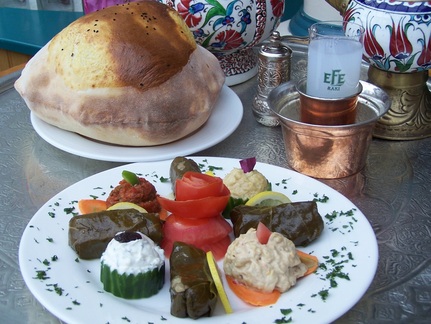
When the best cuisines in the world are judged it comes as a surprise to most people that Turkish cuisine has been rated as one of the three great cuisines of the world, along with French and Chinese. However, if you take a look back in time, the explanation for the extraordinary Turkish food is more understandable. It was during the 500 years of Ottoman rule that Turkish culinary skills were developed. Access to fresh ingredients was easy and infinite varieties of fish, poultry, fruit, and vegetables and a countless number of spices were used. At the same time, many people from different cultures settled in the country and this brought further inspiration to the cooking. Istanbul Kebab House has brought this unique food culture to Vermont for the first time. We look forward to doing business in Vermont for many years to come.
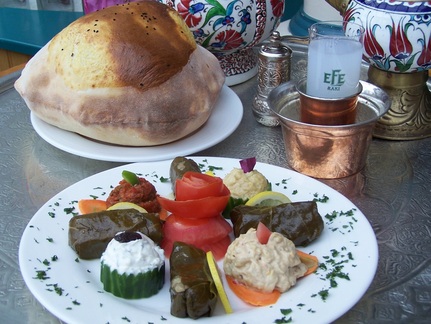
Doner Kebab

Döner kebab is fillets of meat stacked on a vertical spit and roasted on a vertical grill. Döner means "turning" in Turkish. The vertical spit is rotated, or turned, in front of the heat source (charcoal, gas or electric). When the meat directly opposite the heat source is properly roasted, the spit is rotated so that the cooked meat may be sliced off with a special doner knife, and an uncooked portion of meat exposed to the fire. Because the meat is vertical, it is self-basting, which helps to account for its rich flavor. The supremo of döners is Iskender Kebap ("Alexander's Roast Lamb"), named for a chef in the city of Bursa who created the dish. The lamb has originally raised on the thyme covered slopes of Mount Uludag, in Bursa, and is roasted à la döner, spread atop diced flat pide bread, then topped with savory tomato sauce and browned butter and served with a dollop of yogurt on the side.
Anatolian Turkish Wine
Poised on the border between Europe and Asia and arguably part of the cradle of civilization, Turkey boasts a rich and ancient history ... and a key role in the early history of wine. Then called Anatolia, Turkey was home to cultivated vineyards and commercial wine industry as far back as 6,000 years ago. Producers are in areas of the Marmara, Aegean Coast, Northeast (Narince, Tokat), Southeast (Okuzgozu, Bogazkere), Gallipoli (Bordeaux).
Kavaklıdere Winery, the first private sector wine producer in Turkey, founded by Cenap And in 1929 in Ankara, has steadily developed to become Turkey’s leading wine producer.
The Kavaklıdere company owns 617.5 hectares of vineyards in the most important wine-producing area of Anatolia, where professional wine growers strives to maintain the perfect grapes-soil-climate equation and increase the potential of the vines that produce the grapes that have been successful in the production of Anatolian wines for hundreds of years and to introduce wines from international grape varieties grown in Anatolia’s varied micro-climates to achieve their best potential when they are transformed into wine.
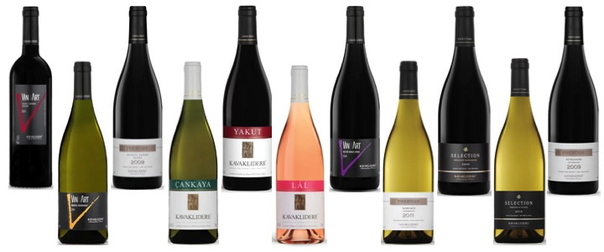
Istanbul Kebab House proudly serves 11 different varieties of Kavaklıdere wine - as shown in the picture above. This is currently the only Turkish wine available in Vermont.
Turkish Coffee
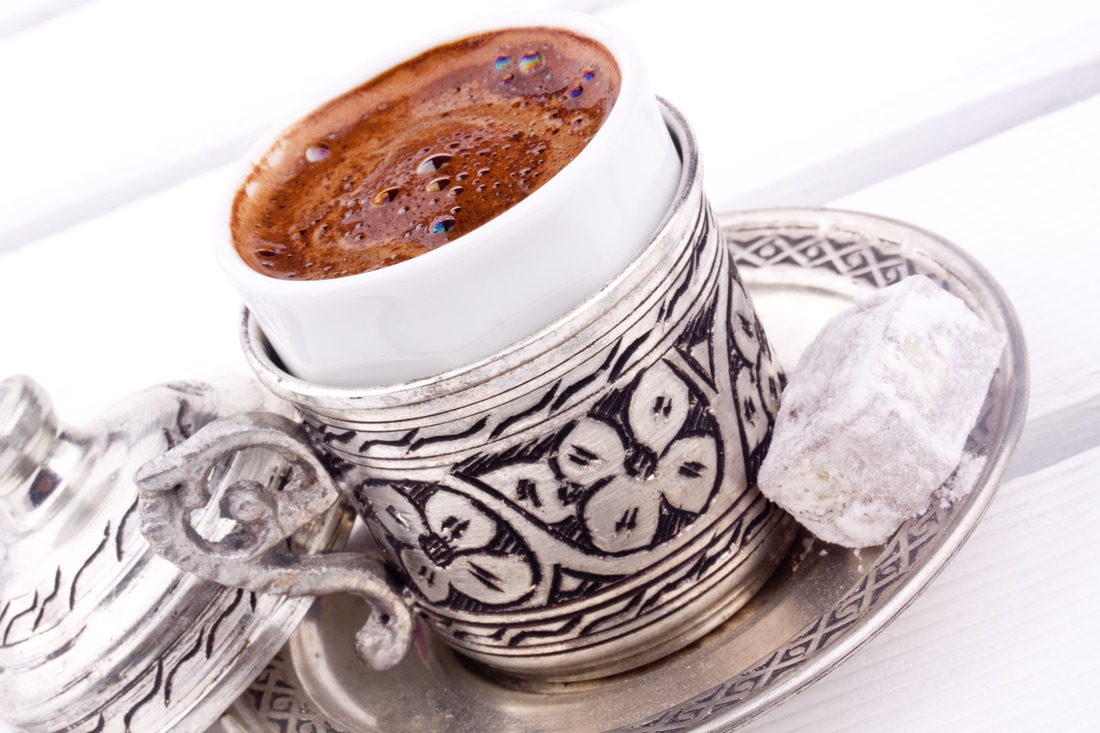
World-famous Turkish coffee (Türk kahvesi) is made by pulverizing freshly medium-roasted beans in a mortar and pestle, or grinding them very fine in a cylindrical brass coffee mill (kahve degirmeni). Put the coffee powder (about one teaspoon per demitasse cup of coffee) into a special copper pot with a wide bottom, narrower neck, a spout, and a long handle called a cezve. Add sugar and a Turkish coffee cup (fincan) of cold water for each cup of coffee you're making, then heat the brew to frothing three times. (When the froth reaches the cezve's narrow neck, it's a sign to remove the pot from the heat and let the froth recede.) After the third froth-up, pour off a bit of the froth into each cup. Bring the liquid still in the cezve to the froth-point once again, then pour it immediately, muddy grounds and all, into the Turkish coffee cups, which are smaller than demi-tasse cups. Wait at least a minute for the grounds to settle before you pick up the tiny cup and sip. Enjoy the rich, thick flavor, but stop sipping when you taste the grounds coming through. Leave the “mud” in the bottom of the cup.
Turkish Food History
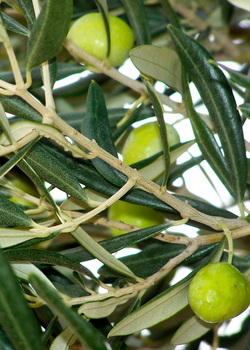
The food of Turkey is often said to be some of the best in the world. The traditional foods have survived over a thousand years for many reasons, but one of the strongest reasons is the delightful Mediterranean climate. The positioning of the country between the Mediterranean Sea and the Far East has helped the Turkish people to have total control over the many major trade routes. The perfect climate has allowed crops and animals to grow strong. These advantages have helped the country to establish a strong history and flavorful foods. The traditional Turkish cuisine was already established by the 1400s, which was the start of the beginning of the Turkish, or Ottoman Empire's reign of 600 years. Foods like fish in olive oil, yogurt salads, and stuffed vegetables have become the basis of Turkish foods. With time, the empire actually spread from northern Africa to Austria and the water and land routes helped people to import and export many exotic ingredients of the world.
Come to Sahan Mezopotamian Street Food to taste some delicious foods. We offer kebab, coffee, and many more.
Source: istanbulkebabhousevt