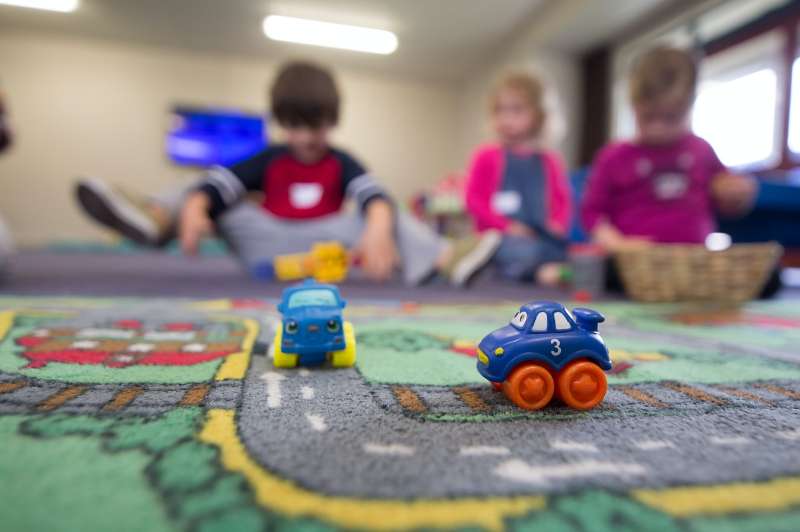
Play is a platform for future well being
Children learn more in their early years of development than at any other stage of their life. Play, a primary occupation in the early years is a foundation or ‘training ground’ that allows children to use their creativity while developing imagination, physical skills, social skills and cognitive and emotional strength. Play contributes to healthy brain development. It is through play that children learn to engage, interact with and master the world around them. This learning underpins much of children’s future wellbeing.“When you asked me what I did in school today and I say, ‘I just played.’ Please don’t misunderstand me. For you see, I am learning as I play. I am learning to enjoy and be successful in my work. Today I am a child and my work is play.” (Anita Wadley, 1974).
What are your favourite memories of playing from your childhood? Maybe building a treehouse, cops and robbers, going on adventures, playing superheros, playing mums and dads, shops and schools, playing with siblings, neighbours or extended family. Think about these interactions and play opportunities and how during these times you were developing life skills without even realising it; Making decisions, solving problems, developing competence in a skill, possibly developing a sense of self, learning how to express and manage feelings, controlling impulses, negotiating with your playmates & building social relationships.
‘Whenever children say “let’s pretend”, a new landscape of possibilities for learning is revealed. When children pretend, they try on new feelings, roles and ideas. They stretch their minds along with their imaginations.’ (Curtis and Carter, 2008)
In order to understand the complexities of play and fine tune the definition, play can be categorised into types based upon developmental purposes which each serves and how each relates to and supports children’s learning.
Pretend Play
When a child imagines something. They impose a meaning on what they they are doing that is beyond what can be seen (beyond the literal) e.g. dressing up, creating play scenes (make believe, symbolic, imaginative) for example they are on a swing but the swing is a boat and the stick they are holding is a telescope that they are using to search for the pirates.Pretend play contributes to language development, narrative language, abstract thought, logical sequential thought, creation of stories, social competence with peers, self-regulation, social and emotional well-being, creativity, and the ability to play with others in the role of ‘player’.
“Pretending helps a child step back from a problem and think about it from multiple angles. It helps him see different options for finding a solution.” (Carlson, 2016)
Michelle Garcia Winner, founder of the Social Thinking® methodology, and colleagues have identified that Pretend play builds Shared, Collaborative, Imaginative Play. They describe this as the capacity to engage in abstract, flexible play where the children are sharing their imaginations, negotiating roles, perspective taking, and adjusting their play plans based on their own and others’ shared thinking and behaviors. Shared, Collaborative, Imaginative Play contributes to the development of executive functions such as problem solving skills and classroom readiness skills, such as working in groups, reading intentions, shared thinking, and regulating attention, thoughts and actions to match the situation or environment they are in.
Gross Motor Play
Play using the whole body (large muscle groups) to build muscle strength and coordination e.g. climbing, running, jumping, riding a bike it also teach children social skills such as turn taking and accepting winning and loosing.
Fine Motor Play
Activities using the hands to build up strength and coordination for developing skills such as threading, drawing and cutting.
Sensory Play
Play with mud, slime, sand, water, dough to build tolerance for manipulating different textures, and develop discrimination (what is soft, hard, wet, dry, smooth, grainy, big or small).
Visual Perceptual Play
Play using puzzles, mazes, books, card games to build looking, thinking and problem solving skills for writing and reading.
Auditory Play
Listening games, I spy, rhythm and music for building listening skills.The amount of time children spend playing each day has dropped considerably over the last two decades having many repercussions on children’s learning and social emotional development. With increasingly busy lives, academic, social, sporting and financial pressures, play appears to have taken a back seat in terms of family/community and school priorities. Kids are showing higher levels of stress, anxiety and depression. A healthy balance between work and play for children is paramount to their development and long term health and well being.
So how can we advocate for playful, healthier, happier, well adjusted, flexible superheros of the future:
Some children have difficulty learning to play and need help developing play skills. Signs of difficulty can be:
Occupational Therapists can help children develop their play skills. Through information gathering, observation and assessment Occupational Therapists seek to understand a child’s current play skills, their strengths and challenges, and then work together with the child and family to develop a plan to build play skills so your child can reap the benefits of play!
source: growonchildrensot