Every country has its fair share of amazing food and then there are some dishes that make you think twice before you even consider eating them. You’ll need a strong stomach! There is a long list of bizarre food around the world surely — Cuisses de grenouilles or Malaeng Tord — to name a few. They may seem weird to those unfamiliar with the culture or are against eating some weird parts of a sheep, lamb or cow. This article focuses on some very bizarre food from Turkey.
Some local Turkish delicacies include roasted sheep’s head, boiled sheep head or fried giblets or smoked beef tongue. How about a dessert made with chicken breast?! It tastes actually amazing and was supposedly also eaten this way by Fatih Mehmet, the Ottoman Sultan that took Constantinople and ended the Eastern Roman Empire/Byzantium. Next, there’s a long list of sour and pungent fermented drinks. Hungover? Are you ready to try some tripe and trotter’s soup or some roasted intestines in between a sandwich?
Some of the above actually taste great and are not as bad as they sound. Nonetheless, there are a few dishes that are hard to stomach, even for those living in the country we’d say! Let’s check them out below!
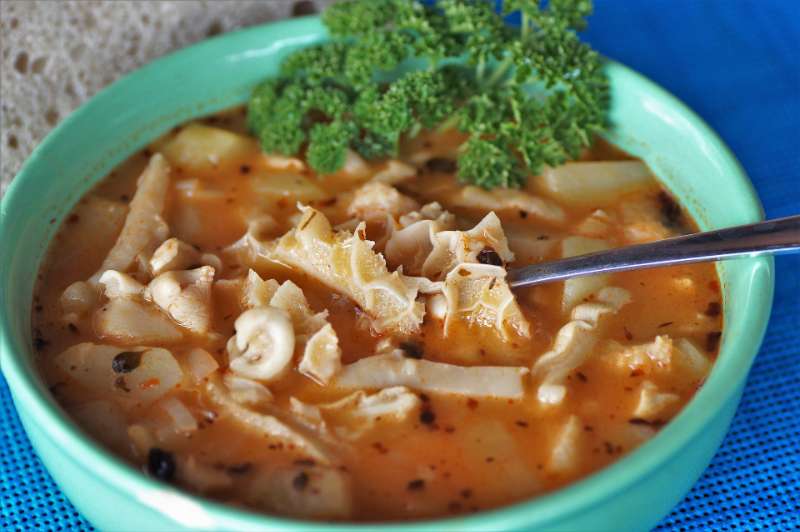
İşkembe Çorbası or Tripe Soup

İşkembe çorbası is a traditional soup that’s made with pieces of tripe, flour and egg yolks. Served with vinegar, red pepper and garlic, the bold tangy flavour actually tastes amazing, until you realize the main component of the dish.
In Istanbul, if you ever see restaurant advertising itself as just an ‘İşkembecisi’, then do give it a try. The shop specializes in this one dish! Otherwise, you can easily find it listed in Çorbasici shops as it’s one of the most popular soups in the country.
Tavuk Göğsü or Chicken Breast Dessert

At first, finding “Tavuk Göğsü” (which translates as ‘chicken breast’) on the dessert menu can seem weird, but this Turkish milk dessert can quickly become your favourite! You can hardly taste the chicken!
A fascinating pudding (from where Kazandibi is also prepared), shredded chicken breast that’s fresh is used and added to milk, corn-starch and rice flour. The addition of the chicken adds chewiness and one can hardly taste it — certainly one of the most interesting Turkish desserts out there!
Yoghurt Soups

There are a variety of unusual yoghurt-based soups that may seem weird to the uninitiated. Some are served hot and others cold. Typical yoghurt soups are cooked with yoghurt, flour, herbs, egg yolk, rice and chickpeas.
This particular type of soup is called Yayla çorbası or Highland Soup. The soup is also a good choice for those suffering from colds. It’s usually served with lots of dried mint on top. Another traditional soup called Toyga çorbası is made with de-husked wheat, flour and spices, with the addition of yoghurt and boiled chickpeas.

On the other hand, Tutmaç çorbası is similar to dumplings and noodle yoghurt soups of other Turkic speaking countries. However, it differs a little in Turkey. There are no dumplings in the recipe. Instead, eriste (vermicelli or home-made noodles) and lentils are used in the Turkish version, with yoghurt and meat.
A cold version of a yoghurt soup that was popular in the old days of the Ottoman Empire exists in the country today. A more popular version called Cacık (similar to Tarator and Tzatziki) is enjoyed in the summer months depending on the thickness of the concoction (with yoghurt and cucumbers), it can be served as a side or as a mezze dish, a dip or a bowl of soup.
Soup made with the yoghurt-based drink ayran called Ayran Aşı (Ayran vaccine – a comical name with the soup having supposed medicinal properties) is served cold or hot. If you temper the dish with olive oil, mint and red pepper flakes you serve it hot, while the cold version uses dried mint, thyme and dill as a garnish on top.
Turşu Suyu or Pickle Juice

Turşu (Torshi) encompasses a variety of vegetables that are pickled with either vinegar or lemon juice and fermented so they can be enjoyed later. It’s a staple in Turkish households and part and parcel of Turkish food culture. It’s enjoyed almost every day, especially with meat dishes.
The most common pickles are made from local cultivars of vegetables and fruits. Cilantro seeds, bay leaves and a good amount of vinegar are included in homemade varieties. You can find olives, gherkins, red (similar to pimentos) peppers, carrots, green pepper varieties and red/normal cabbage as pickles in Turkey.
However, it’s the unusual pickle varieties such as green beans, okra, eggplant, green almond, garlic, cauliflower, green tomatoes, onions and corn, to name a few, that are bewildering! And frankly, look inedible, perhaps not for everyone!
Pickled juice is another beverage – an acquired taste, in our humble opinion – that’s enjoyed on the streets of Turkey. Tangy and salty in taste, the drink is enjoyed alongside turşu slices and served cold. It’s available in most pickle shops or in small decorative carts on Istanbul’s seaside promenades.
Next, we have fermented fruit juice – sour, tangy and boldly acidic – these types of drinks are a thing in Turkey! For example, ‘Şalgam suyu‘ or fermented carrot juice made with red or purple pickled carrots is a rather famous variety of fermented drink (other than ayran and kefir) from the cities of Mersin and Adana. Other regional variations exist with different fruits such as grapes, called ‘Hardaliye‘, from the Trakya region.
Çiğ Köfte

Çiğ köfte is the Turkish version of steak tartar (a la Turca). It traditionally utilizes raw ground meat (lamb or beef), bulgur, onions, tomato and red pepper paste, lemon juice and spices. Parsley, mint and green onions are also added once the bulgur and onion paste is kneaded extremely well.
A spicier version of this köfte has Urfa pepper, also called ‘İsot‘, added in which has a high heat pungency.

At first, it can seem a bit weird as there’s nothing quite like a raw bulgur köfte, but the taste is quite addictive balancing the spiciness and the chewiness of the bulgur with the heavy use of red pepper paste. It can quickly become your favourite snack!
Available throughout the country today, the non-meat version of çiğ köfte is enjoyed as a wrap. Greens such as iceberg lettuce, fresh parsley, fresh mint, pomegranate molasses and lemon are added. Ayran is usually consumed alongside to counter the heat and spiciness. At sit-down restaurants serving Turkish fare, it’s served as an amuse-bouche with greens and lemon slices.
Boza

A fermented drink made from grains, Boza served as a substitute for alcoholic drinks in the past due to its non-existent alcohol content. In Ottoman times, an alcoholic version of Boza existed and was even prohibited at times.
Boza is enjoyed with cinnamon powder sprinkled and even roasted chickpeas on top! It’s consumed primarily during the winter months. The drink has a soupy consistency and looks like pudding! On the other hand, the taste is pungent, sour and acidic. It’s an acquired taste to the uninitiated to be sure!
Today, it can be enjoyed year-round in Istanbul. The legendary boza maker and family-business Vefa Bozacısı is quite well-known! They should be on your to-do list if you ever want to try this interesting but addictive (so they say) drink!
Source: discoverwalks.com