Every country has its fair share of amazing food and then there are some dishes that make you think twice before you even consider eating them. You’ll need a strong stomach! There is a long list of bizarre food around the world surely — Cuisses de grenouilles or Malaeng Tord — to name a few. They may seem weird to those unfamiliar with the culture or are against eating some weird parts of a sheep, lamb or cow. This article focuses on some very bizarre food from Turkey.
Some local Turkish delicacies include roasted sheep’s head, boiled sheep head or fried giblets or smoked beef tongue. How about a dessert made with chicken breast?! It tastes actually amazing and was supposedly also eaten this way by Fatih Mehmet, the Ottoman Sultan that took Constantinople and ended the Eastern Roman Empire/Byzantium. Next, there’s a long list of sour and pungent fermented drinks. Hungover? Are you ready to try some tripe and trotter’s soup or some roasted intestines in between a sandwich?
Some of the above actually taste great and are not as bad as they sound. Nonetheless, there are a few dishes that are hard to stomach, even for those living in the country we’d say! Let’s check them out below!
Sakatat or Offal

Translating as ‘offal’ in Turkish, Sakatat generally refers to all kinds of cow, sheep or lamb meats that are not typically used in everyday cuisine. Almost nothing goes to waste in Turkey, with regional varieties employing different preparation methods, local ingredients and spices. The meats are fried, boiled, stuffed or rolled, grilled on skewers and then wrapped in a dürüm with onions and spices such as sumac, paprika or cumin. Different cooking methods and tastes can be found, especially in the East and Southeast of the country.
Kidneys, liver, brain and lamb hearts or beef tongue can be found in the list of Sakatat. While it is enjoyed by some, most people in the country, especially in the cities, very rarely consume offal, usually only on special occasions such as Kurban Bayram or Eid al-Adha.
Şırdan or Stuffed Abomasum

If you can stomach the appearance of the food itself (that looks like the human intromittent organ!), it’s believed to be quite tasty — you be the judge, if and when you decide to try it!
Sheep abomasum and stomach is stuffed with rice, oil, spices (so it’s actually a ‘dolma’ variety) and cooked for at least 8 hours. It is then eaten by sprinkling some salt, cumin and pepper on top. It’s considered an Adana delicacy, along with Mumbar (below); so much so that it features heavily in the Tastes of Adana Festival held every year in October.

In Istanbul, you have to visit speciality restaurants that only specialize in this type of offal called “Şırdancı” (where you can also find other types of cooked offal meats). Bon appetit?!
Mumbar Dolması or Stuffed Sheep/Lamb Intestines

If stuffed sheep intestines or sausages with loads of spices are your thing or it piques your curiosity, you can try it in Turkey and it’s another type of dolma! The preparation involves cleaning the small intestines of sheep or lamb meticulously. They are then stuffed with bulgur or rice, ground meat, onions, tomato paste, parsley and lots of spices such as sweet purple basil, dried mint and paprika. It is usually consumed in the South-eastern provinces.
We’re not so sure about the taste as we’ve never tried it and the pictures don’t look so appetizing at all. Nonetheless, if you’re the adventurous food traveller like Food Ranger Trevor James, you can sometimes find it on the rotating menu of Çiya in Kadıköy.
Kuzu Kelle or Sheep’s Head
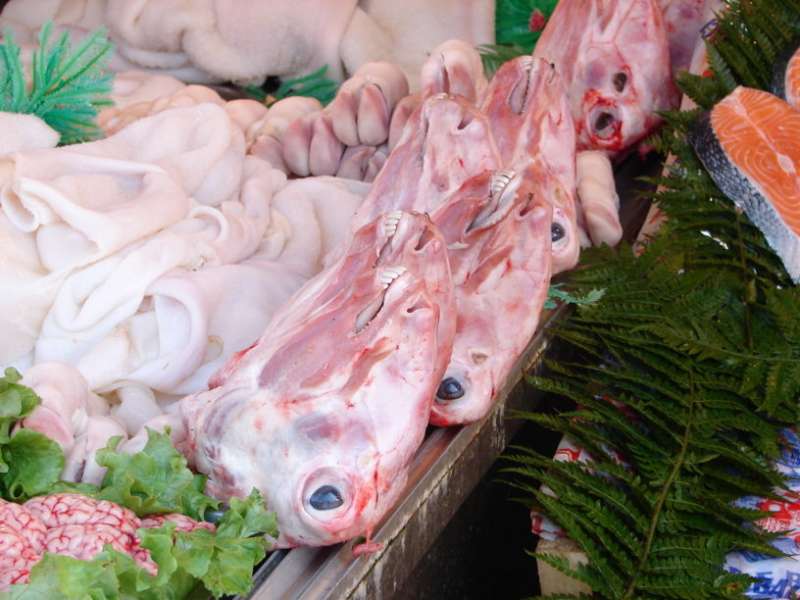
Roasted sheep’s head is an authentic delicacy in Turkey. The meat is extracted from the head by the shop seller/restaurant before it’s served.

On the other hand, Kelle söğüş or boiled sheep meat is considered a delicacy in the Aegean city of Izmir. It’s enjoyed alongside pickles.

Furthermore, there are smoked meat cuts such as Füme Dil and Söğüş Dil or smoked or boiled tongue that can also be found in some speciality shops. If you’re the adventurous kind, keep an eye for displays of sheep head in most neighbourhood butcher shops. Some even roast them for you beforehand.
Ciğer or Fried Liver

Edirne in Turkish Thrace was one of the capitals of the Ottoman Empire before Constantinople. The city has some great remnants with historical monuments, mosques and a bedestan and bazaar. In terms of food culture, Edirne is known for its fried liver delicacy called ‘Edirne Ciğer’. Aydin Tava Ciğer or Meşhur Edirne Ciğercisi in the old quarters of the city is where you can try this dish!
Beef or calf liver is thinly sliced, dipped in a batter and then deep-fried until it’s crispy and perfectly crunchy. Fried dry red chilli peppers, onions and pickles are served alongside the dish.
Another dish that’s also popular in Istanbul is Albanian-style liver or Arnavut Ciğer brought to the Ottoman Empire by Albanian immigrants. Small cubes of beef or veal liver are pan-fried in oil and spices such as sumac and red pepper. Served with oven-baked potato cubes, onions and parsley, it’s an acquired taste, to be honest.
Paça Çorbalar

The word Paça generally refers to a few varieties of soups made with cow, sheep, veal, goat or lamb’s head, feet or in general, offal.
Sheep’s head (Kelle paça) soup and trotters (Ayak paça) soup are some of the most popular traditional soups in Turkey. Other varieties can be found on menus in different parts of the country such as cow or sheep tongue (Dil paça). These soups are consumed throughout the cold months, especially when the country sees tons of snow.

The soup is boiled for hours first with just meat until it melts off the bone. It is then thickened and flavoured with a roux of butter, flour and egg yolks. The soup can be had as is and sometimes served with the trotters swimming in the broth — good luck! If you prefer a more tangy acidic taste then vinegar and garlic are usually provided.
Try these soups, if you dare, at speciality restaurants called “Paçacı” followed by their masters’ or cooks’ names (ustalar) such as Paçacı Necip Usta or Paçacı Mahmut — some are open 24 hours a day!
Kokoreç or Roasted Intestines

This street food comprises lamb intestines wrapped around offal and is not for the faint of heart! Grilled to perfection on a horizontal rotisserie, the intestines are served inside sandwich bread. Salt, oregano, cumin, chilli powder and tomatoes can also be requested to go with your sandwich. Different cities have their own versions offering a spicier version or ones where you can taste the meat more.
Either way, give Kokoreç a try when you’re next in Istanbul or Izmir. In Istanbul, you can find it at Şampiyon Kokoreç in Beyoğlu and Kokoretto in Kadıköy as a late-night hangover cure.
Source: discoverwalks.com