Turkey sits at the crossroads of east and west and Turkish food is a mixture of cuisines that has resulted in some of the finest dishes in the world.
Traditional Turkish food is among the richest cuisines in the world. The variety of Turkish cuisine comes from a rich culinary history and culture due to its prime location on the cusp of both western and eastern worlds. Turkish food is considered one of the world’s three main cuisines and it sits aside the Chinese and French traditions.
Turkey is, for the most part, a Muslim country and you won’t find much pork or pork products here. Sorry, no bacon in Turkey.
However, Turkish cuisine has been very dependant on meat products for centuries. The main meats consumed in Turkey prior to modern days was horse and sheep. Turks also planted and harvested fruits and vegetables including wheat, barley, maize, corn, rice, and planted apples, grapes, watermelon, melon, and berries.
There is a long tradition of feasting and celebration in Turkish culture and this was very dependant on the seasons, the community and the types of foods available to become the centrepiece of a feast.
In the Palaces and finer homes, meals were taken twice a day and served on trays placed in a central position on the floor or a small table. The plates the individual dishes came on were generally solid gold. There were no “dining rooms” as we know them in Western culture.
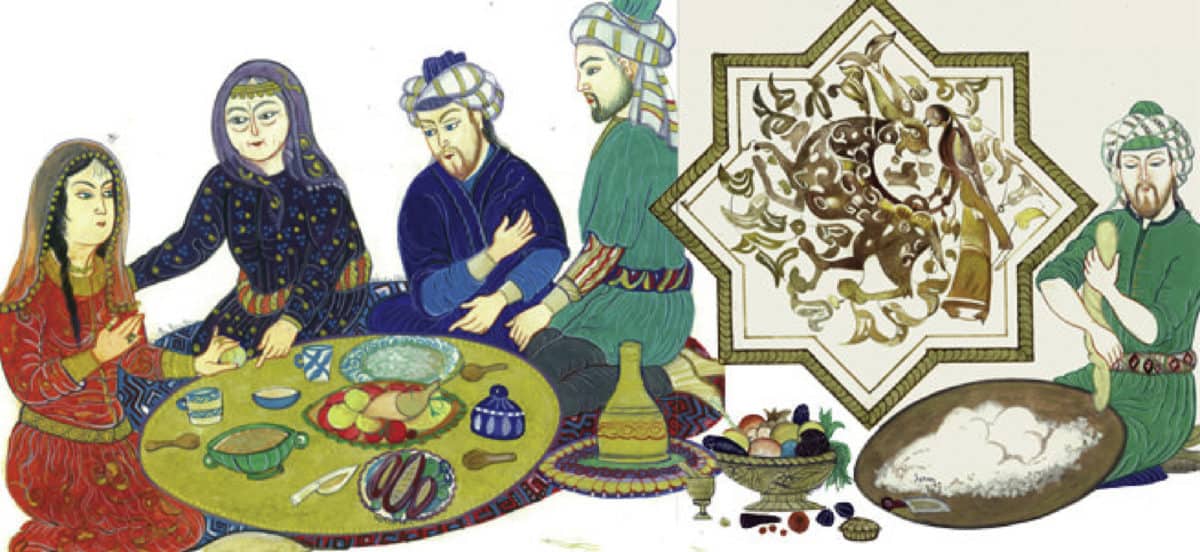
Meats were served whole and were extremely tender and could be torn into pieces for consumption. Vegetables and side dishes were served alongside the meats. Wine and sherberts were served for beverages although a more alcoholic drink was available although due to religious reasons was not served in every household.
Turkish food is also not particularly spicy as it is a combination of Middle Eastern, Central Asian, and Balkan cuisines and of course the history and tradition of the Ottoman Empire.
Turkish food is somewhat difficult to quantify. You have what appears to be Greek and Cypriot meze stuffed vine leaves, Hummus and grain pilafs, and sweet items like Baklava. Mediterranean tomatoes, olives and olive oils, rosemary and other Mediterranean herbs and spices. Asian influences from yoghurts and vegetables such as Japanese eggplants and of course sesame oil and seeds.
Come and visit Sahan Mezopotamian Street Food Restaurant in Auburn and experience the best-tasting Turkish Food!