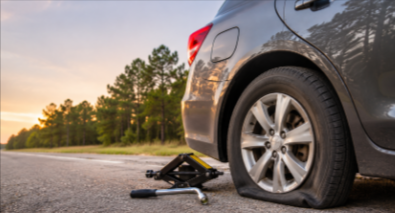
A flat tire is one of the most common reasons drivers end up stranded, and one of the easiest to underestimate. Plenty of people can change a tire in a dry driveway on a calm afternoon. Doing it on the shoulder of I-59 at night, in the rain, with traffic flying past, is a different job entirely.
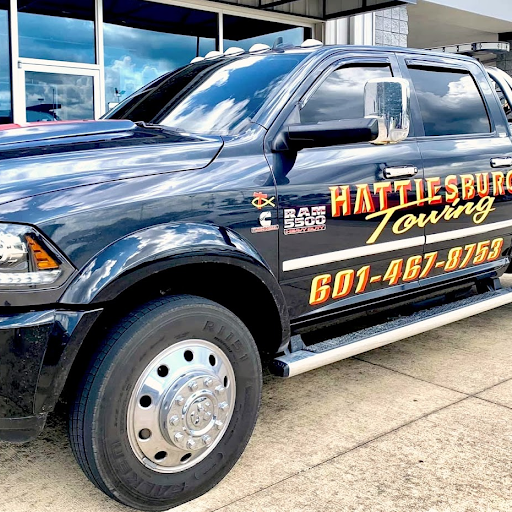
This guide helps you decide whether to change it yourself, how to do it safely if you do, and when it makes more sense to have a local roadside service like Hattiesburg Towing handle it for you.
First, get somewhere safe
The moment you feel the car pulling, thumping or wobbling, switch on your hazard lights, hold the wheel firmly and slow down gradually. Don't brake hard. Then ease to the right and stop somewhere safe.
A flat, firm, level spot away from traffic is ideal, such as a parking lot or a quiet side street. If you're on a highway like I-59 or US-98, you may not have that choice. Pull as far onto the shoulder as you can and turn your wheels away from the road. If there's no safe place to work, this is the point to call for a flat tire change instead of trying it beside moving traffic. Keep driving slowly a short distance to reach a safer spot only if you have to, but know that doing so will damage the tire and may harm the wheel.
When it's safe to change it yourself
Changing a tire yourself makes sense when a few things are true. You're on solid, level ground away from moving traffic. It's daylight or you have good lighting. Your car has a usable spare, along with a jack and a lug wrench. And you're physically comfortable lifting and tightening the wheel.
If any of those is missing, stop and call for help. A tire swap isn't worth a risk to your safety, and a roadside driver can have the spare on in a fraction of the time it would take you.
How to change a flat tire
If everything above checks out, here's the basic process. Your owner's manual will show your car's jack points and any quirks, so check it before you start.
Prepare the car. Park on level ground, put the car in park (or in first gear with a manual), and set the parking brake. Keep your hazards on. If you have wheel wedges or a heavy object, place it behind a tire on the opposite end of the car.
Loosen the lug nuts first. Before lifting the car, use the wrench to loosen each lug nut about a quarter to half a turn. They're much harder to break loose once the wheel is in the air and can spin freely.
Jack up the car. Place the jack at the manufacturer's recommended spot and raise the car until the flat tire is just clear of the ground. Never put any part of your body under a car held up only by a jack.
Swap the wheel. Remove the lug nuts completely, pull the flat wheel off, and mount the spare. Hand-tighten the nuts to start.
Lower and tighten. Lower the car until the tire touches the ground, then tighten the nuts firmly in a star pattern rather than around the circle. This seats the wheel evenly. Lower the car fully and give each nut a final tightening.
Check the spare. Make sure the spare has enough air, and stow your flat tire and tools before you leave.
If a lug nut won't budge or the jack feels unstable at any point, stop. That's a good moment to put the tools down and make the call rather than push through.
What to know about spare tires
Not every spare is the same, and this is where many drivers get caught out. A full-size spare behaves like your normal tires. A compact temporary spare, often called a "donut," doesn't. It's designed for short, slow trips, usually with a speed limit of around 50 mph printed on the sidewall and a limited distance, often 50 to 70 miles. Always check the label and your owner's manual.
Plan to head straight to a tire shop rather than carrying on as normal. Driving long distances on a temporary spare, especially at highway speed, is a common way to turn a simple flat into a bigger repair bill. And if you open the trunk and find the spare is flat, missing or damaged, changing the tire isn't an option. In that case you'll need a tow to a tire shop.
When it isn't safe to change it yourself
Some situations call for a professional. Call for help if you are on a busy highway or a narrow shoulder with traffic close by, if it's dark or storming, or if the ground is soft, sloped or muddy. The same goes if you don't have a usable spare or the spare is also flat, if the wheel is damaged or the lug nuts are stuck or locked, or if you're simply not confident or physically able to do it safely.
Run-flat tires are another case. They're built to be driven a limited distance after losing air, but the damage isn't always obvious, so it's worth having them checked rather than guessing.
In all of these situations, a roadside driver is the safer option. They bring the right equipment, work with proper lighting and warning signals, and know how to do the job without putting you next to the traffic.
A faster, safer option
This is exactly the kind of situation where a local roadside service earns its keep. Hattiesburg Towing offers flat tire changing around the clock: a driver comes to you, swaps on your spare safely, and gets you moving again without you standing next to traffic. If the spare isn't usable, they can tow the vehicle to the shop of your choice through their tow truck services.
They're open 24 hours a day, every day, holidays included, with a local dispatcher answering every call. They cover Hattiesburg, Petal, Oak Grove, Purvis and the I-59 and US-98 corridors. You can also see their full range of roadside assistance services on their website.
Frequently asked questions
Can I drive on a flat tire to reach a shop?
It's best not to. Even a short distance can ruin the tire and damage the wheel and suspension. If you must move, go very slowly and only far enough to reach a safe spot, or call for a flat tire change where you are.
How fast and how far can I drive on a spare?
It depends on the spare. A compact temporary spare usually has a speed limit of about 50 mph and a limited distance, so check the label and your owner's manual. A full-size spare is closer to a normal tire.
Is it safe to change a tire on the highway shoulder?
Generally, no. Traffic passes close by, and the ground is often uneven. If you can reach a flat, level spot away from traffic, change it there. Otherwise, call for help and wait in a safe place. A roadside service can do the swap for you.
What if I don't have a spare, or it's flat too?
Then you'll need a tow to a tire shop. Call a local towing company, tell them where you are, and ask them to take the vehicle to the shop you choose. Hattiesburg Towing's tow truck services are available 24/7.
Does Hattiesburg Towing change flat tires at night and on holidays?
Yes. Flat tire changing is available 24 hours a day, 365 days a year, and a local dispatcher answers every call.
Final thoughts
A flat tire doesn't have to ruin your day. If you're somewhere safe, have a good spare and the right tools, changing it yourself is a useful skill. If you're on a busy road, it's dark, or you're not sure, calling for help is the safer choice.
Flat tire in Hattiesburg, Petal, Oak Grove or Purvis? Call Hattiesburg Towing at (601) 620-7334. A local dispatcher is standing by 24/7.