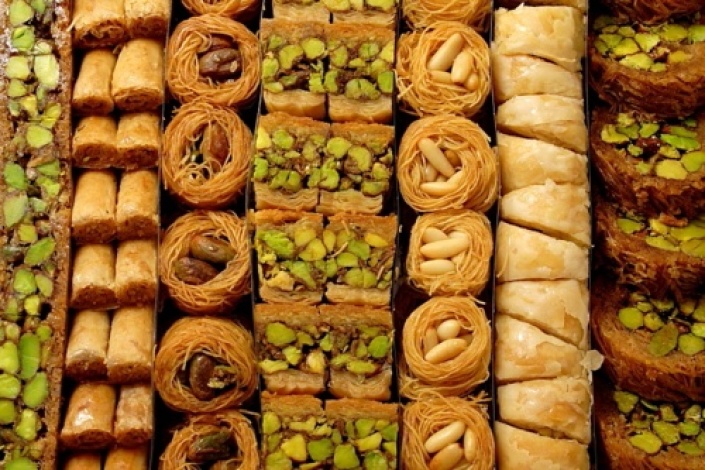
Turkish snacks, especially pastries, are probably one of the richest over all pastries in the world. Here are 10 most popular Turkish pastries you should at least try once in your life.
10. Gaziantep baklavası
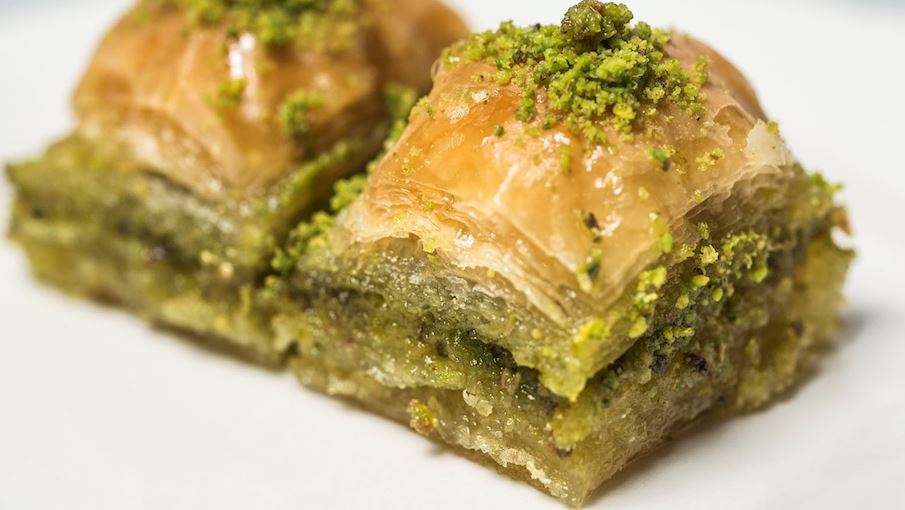
The ancient Anatolian city of Antep, today known as Gaziantep, is Turkey's gastronomic capital famous for being home to the world’s finest pistachios and the delicious Antep baklavası. Originally an Ottoman legacy, baklava is regarded as one of the greatest creations from the pastry chefs at Topkapı Sarayı, the major royal residence of Ottoman sultans from the 15th to the 19th century. Baklava was traditionally prepared for Eid-al-Fitr, also known in Turkey as Ramazan or Şeker Bayramı, a religious holiday when Muslims celebrate the ending of Ramadan, the Islamic holy month of fasting. Today, this Turkish treat is available year-round, and with more than 500 baklava bakeries in the city of Gaziantep, it is definitely not to be missed, especially during the pistachio harvest from midsummer to September, when these emerald-colored nuts are just the right size for baklava.
9. Lokma
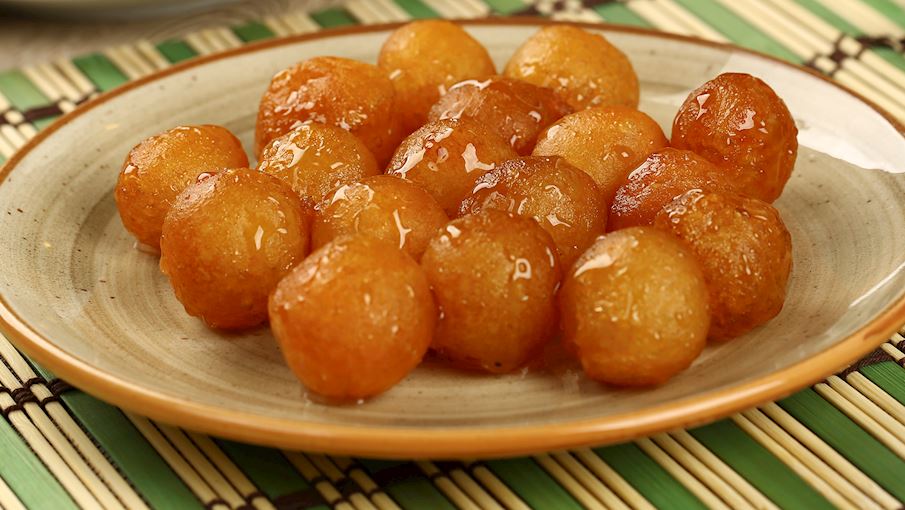
This internationally known, decadent, and sugar-packed dessert is usually made with a mixture of flour, sugar, yeast, and salt, which is deep-fried and then bathed in syrup or honey. The origin of lokma fritters is ancient but often debated. It is presumed that they first appeared in Greece or Turkey, though some suggest Arabic origin. The dish is considered to be one of the oldest recorded desserts in Greek history. It is said that the pastries were even given to winning Olympians as a treat and were called honey tokens. Loukoumades, or loukmades in Cyprus, can be found throughout the streets of Greece, in shops selling nothing else but this caloric dessert.
8. Sigara böreği
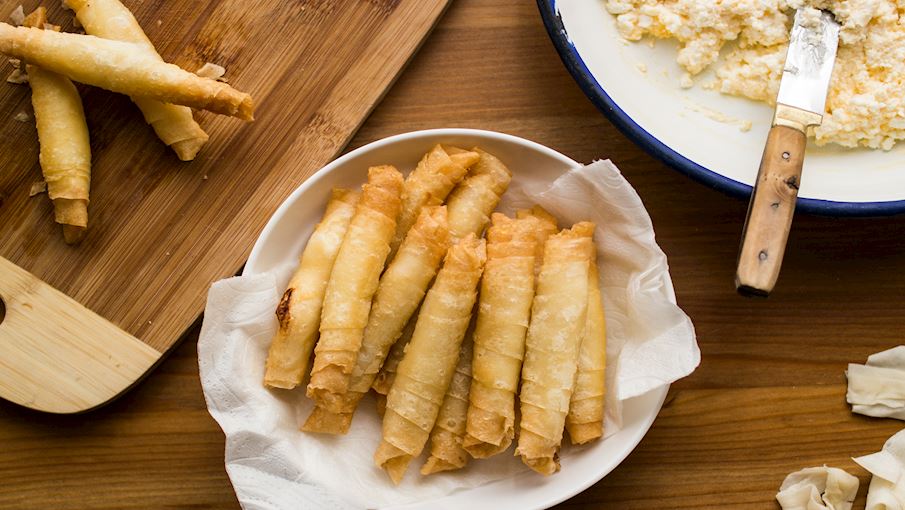
The cylindrical sigara böreği is a famous Turkish deep-fried pastry. These small, crispy rolls of thin dough are stuffed with a creamy mixture of cheese and parsley. They are traditionally made with sheets of thin yufka dough, a common ingredient in many boregi varieties, or with a thicker phyllo dough. Mixed with fresh parsley and (sometimes) eggs, the cheese is spread on the triangle-shaped dough, which is then shaped into a cigar. After it is fried, sigara böreği turns into a satisfying delicacy, with a crispy outer layer and a velvety filling. The combination of cheese and parsley is the most traditional choice for the filling, but there are numerous other varieties available, featuring feta cheese, potatoes, leeks, spinach, and fresh herbs such as mint or dill. Just like other boregi varieties, this small, tube-shaped delicacy is usually enjoyed as street food, and can be found in many specialized boregi shops or restaurants.
7. Güllaç
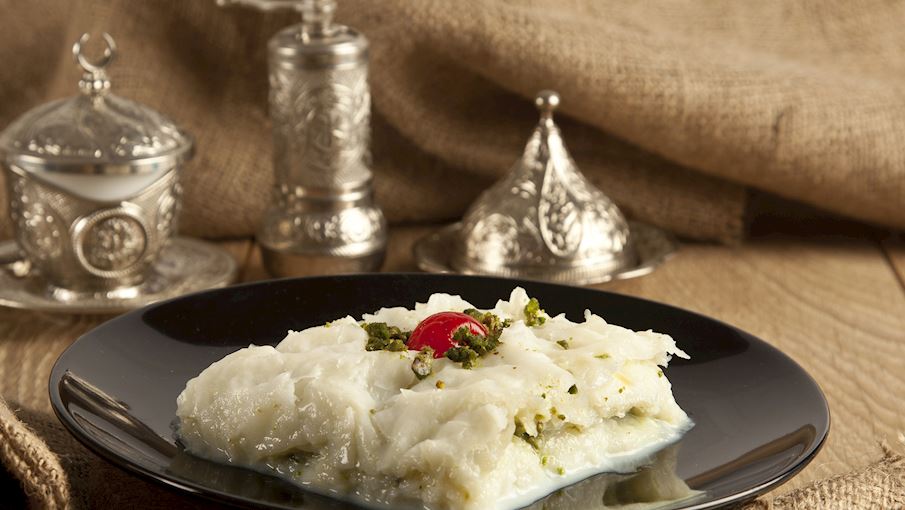
Güllaç is a unique Turkish dessert that is the most popular during Ramadan. It consists of numerous layers of thin, cornstarch pastry which is soaked in rosewater-infused milk and stuffed with walnuts. Güllaç provides a healthier alternative to the sugar-laden lokma, baklava, and tulumba, which are mostly consumed after the fasting. The dessert dates back to the 15th century, its name derived from the words güllü and aş, meaning rosy dish. Originally, it was a staple at the palace during Ramadan, where it was a staple of the royal menu, especially for the circumcision ceremonies. It is recommended to garnish the dessert with pomegranate seeds and ground nuts such as pistachio, hazelnuts, or walnuts, giving it an additional, crunchy texture. Today, this light and easy dessert can be found at most Middle Eastern markets.
6. Su böreği
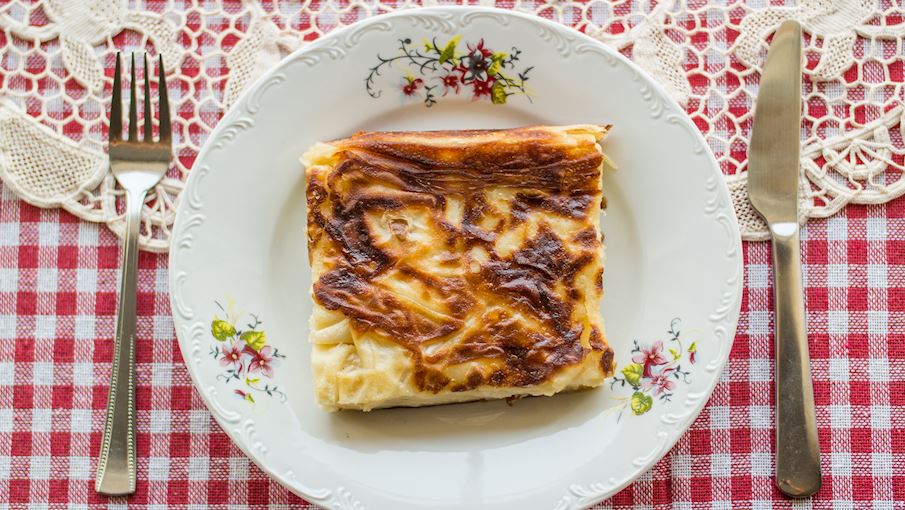
Su böreği is a variety of Turkish borek that has a reputation of being one of the most difficult boreks to prepare. It is traditionally filled with cheese and parsley. The dough sheets need to be soaked in a combination of water, olive oil, milk, and eggs before baking, making the borek tender and juicy. Su böreği can be found at most borek shops throughout the country.
5. Kunefe

Kunāfah consists of two crunchy layers of shredded and buttered kataifi or knefe dough, filled with a luscious cheese cream that's often flavored with orange zest and cardamom, then drenched in a sugar syrup infused with lemon juice and orange blossom water. Turkish künefe is traditionally made with Hatay, Urfa, or Antep cheese. It is usually topped with pistachios and is best served warm. Elegant and amazingly simple to make, this dessert is nothing short of what cheese-filled pastry dreams are made of. Some authors speculate that it originated from the pre-Islamic Syria, while others claim that the Palestinian city of Nablus is its birthplace - hence the name kanafeh nabulsieh. Nevertheless, this decadent dessert has been a part of a long culinary tradition in Turkey and Egypt, and it is listed as one of Egypt's national dishes.
4. Katmer

A type of sweet börek, katmer is a specialty of Gaziantep, or simply Antep – Turkey's gastronomic capital and a rich melting pot of diverse cultures and cuisines nestled in southeastern Anatolia – an ancient city whose claim to fame is being home to world’s finest pistachios and the delicious Antep baklavası. Katmer is what most locals start their day with: in fact, there are bakeries and cafés in Gaziantep open from early morning until noon serving katmer for breakfast. Traditionally, it is also the first meal eaten by newlyweds after their first wedding night, as it represents the sweetness they hope to find in their marriage.
3. Açma
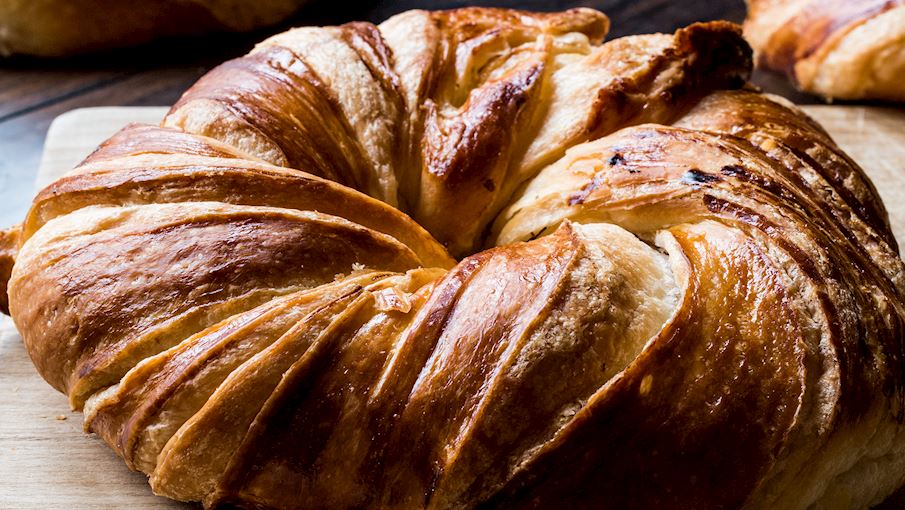
Açma is a type of Turkish pastry characterized by its soft and flaky texture. The soft dough is traditionally twisted and rolled up into a bagel, which can be made in a sweet or savory version. It consists of flour, sugar, salt, yeast, yogurt, milk, eggs, butter, and olive oil. This pastry can be easily found in most Turkish bakeries, where it is often sprinkled with sesame seeds.
2. Baklava

The remarkable baklava is a luscious dessert created with layers of thin phyllo dough intertwined with chopped nuts, all doused in a sweet, viscous syrup. The popularity of baklava has long surpassed borders, regions, and ethnic groups to become a dessert whose origin and invention is claimed by numerous countries. It is probable that it has an Assyrian origin, dating back to the 8th century, from where it spread out throughout the region all the way to Greece. The Greeks altered the recipe and created the thin sheets, known today as phyllo dough, but modern-day baklava is believed to be an original Turkish creation.
1. Börek
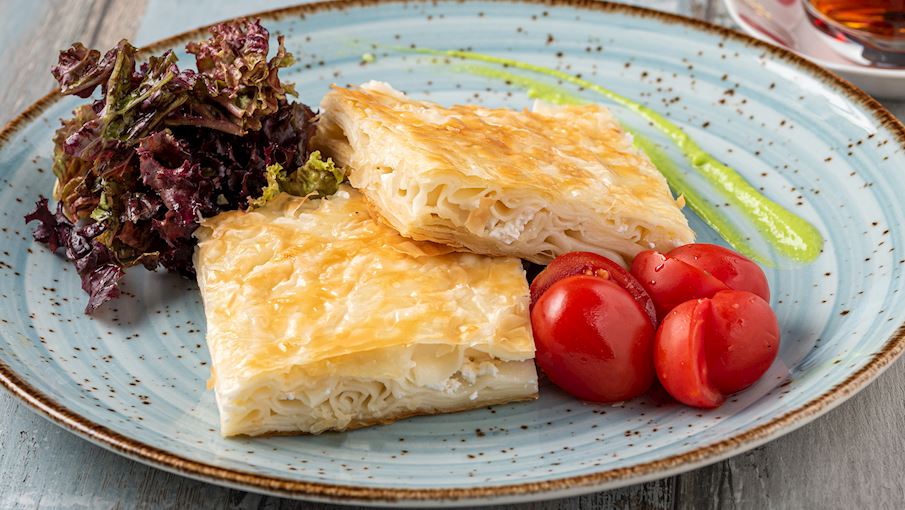
Börek is a baked dish consisting of a savory or sweet filling wrapped in yufka - thinly stretched sheets of dough made with flour, water, and salt. Heartier than phyllo, but thinner than a tortilla, hand-made yufka is typically brushed with butter before baking. Although many countries have their own versions of this satisfying dish, it was probably invented during the Ottoman Empire in the Anatolian Provinces, an area that nowadays belongs to Turkey. Some sources suggest that börek might be even older, a descendant of the Eastern Roman (Byzantine) Anatolian dish known as en tyritas plakountas, consisting of layered dough filled with cheese, its recipe dating back to 160 BC. Source: tasteatlas.com