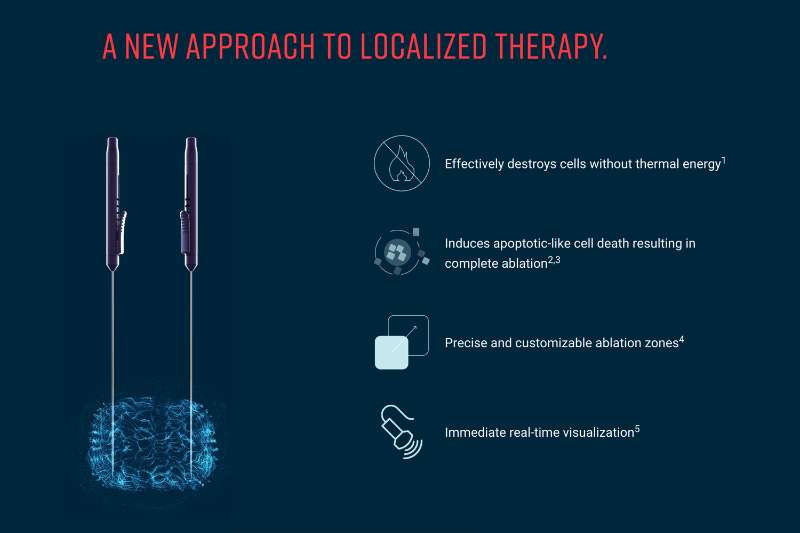
NanoKnife is an innovative, minimally invasive treatment option for prostate cancer, offering a precise and effective alternative to traditional surgery or radiation. This cutting-edge procedure uses Irreversible Electroporation (IRE)—a technique that delivers controlled electrical pulses to destroy cancerous cells while preserving surrounding nerves, blood vessels, and healthy tissues.
At Maple Urology, Dr. Garbens specializes in NanoKnife therapy as a targeted approach for patients with localized prostate cancer, ensuring fewer side effects and a quicker recovery. Unlike conventional treatments, NanoKnife does not involve incisions, radiation, or heat, making it an excellent choice for those seeking a non-thermal, tissue-preserving solution.
How It Works
NanoKnife works by delivering high-voltage electrical pulses through fine needle probes placed around the tumor. These pulses create microscopic pores in cancerous cells, triggering cell death while leaving surrounding structures intact. This approach significantly reduces the risks of urinary incontinence, erectile dysfunction, and other complications commonly associated with traditional treatments.
Related Products

IV Services
Recharge your body with our walk-in IV therapy services. We offer IV hydration, vitamin infusions, immune boosters, and hangover drips for quick recovery.
SmartMed Health Walk-In Clinic and TeleHealth Services | Pompano Beach, FL 33062
Telemedicine
Access fast, secure, and convenient virtual urgent care with our Telemedicine services. Connect with licensed providers from the comfort of your home.
SmartMed Health Walk-In Clinic and TeleHealth Services | Pompano Beach, FL 33062

PIP & Workers Comp
Injured in an auto or work accident? SmartMed provides expert care for PIP & Workers' Comp claims, handling evaluations, treatment, and documentation.
SmartMed Health Walk-In Clinic and TeleHealth Services | Pompano Beach, FL 33062

Medication Dispensing
Get your prescriptions immediately at our urgent care. We offer on-site medication dispensing for common medications and vaccines to save you time.
SmartMed Health Walk-In Clinic and TeleHealth Services | Pompano Beach, FL 33062