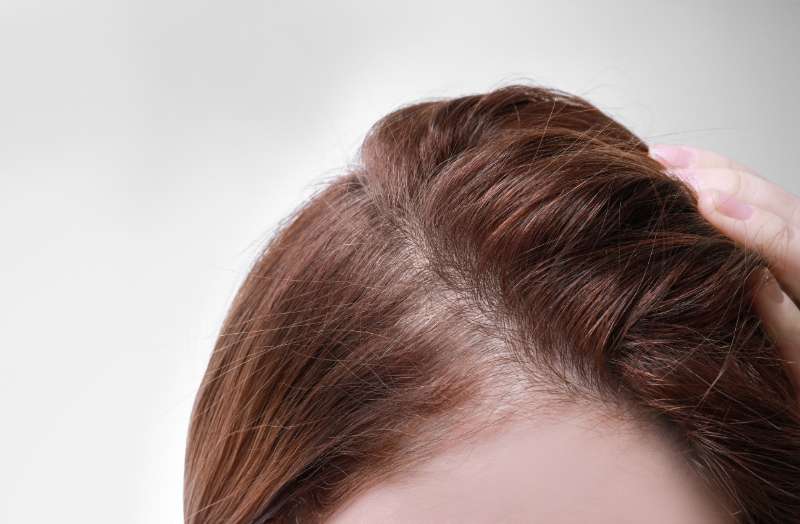
Noticing a wider part or a thinner ponytail is unsettling, and most women assume it is just stress. Sometimes it is. Often it is not. Women's hair thinning rarely has a single cause, which is why the most effective women hair thinning treatment starts with finding out what is driving it.
TL;DR: Key Takeaways
• Women's hair thinning is driven by multiple potential factors including genetics, hormones, telogen effluvium, nutrition, and styling stress.
• Female pattern hair loss presents as diffuse thinning across the scalp rather than a receding hairline.
• Top evidence-backed treatments include topical minoxidil, microneedling, PRP (Platelet-Rich Plasma), and targeted prescription options.
• Combining modalities (like microneedling with minoxidil or PRP) often produces better clinical results than single-product approaches.
• Results take time, typically requiring 3 to 6 sessions spaced four weeks apart for procedural therapies like PRP.
Table of Contents
• Why Is My Hair Thinning as a Woman?
• How Is Women's Hair Thinning Different From Men's?
• What Is the Best Treatment for Women's Hair Thinning?
• Does Combining Treatments Work Better?
• How Long Does It Take to See Results?
• Can You Slow Thinning at Home?
• When Should You Get It Assessed?
• The Bottom Line
Why Is My Hair Thinning as a Woman?
Several things can contribute at once:
• Female pattern hair loss: A genetic, hormone-influenced condition in which follicles gradually shrink, so hairs grow finer and shed more. According to the American Academy of Dermatology, it affects up to 40% of women by age 50 and nearly half by age 70.
• Hormonal shifts: Pregnancy, the postpartum period, perimenopause, menopause, and thyroid conditions can all disrupt the hair growth cycle.
• Telogen effluvium: A temporary, widespread shedding that typically appears two to three months after a trigger such as illness, surgery, crash dieting, or a major stressor.
• Nutrition and medication: Low iron or vitamin D, restrictive diets, and some medications can play a part.
• Styling and scalp health: Tight hairstyles, heat damage, and scalp irritation can make thinning look worse, even when the underlying cause is something else.
Female pattern hair loss is the most common cause of hair loss in women and can meaningfully affect quality of life, so it is worth getting an accurate diagnosis before starting any treatment.
How Is Women's Hair Thinning Different From Men's?
Male pattern hair loss usually shows up as a receding hairline and a thinning crown. In women, the thinning is typically diffuse: density drops across the top of the scalp, the part widens, and the frontal hairline is usually preserved.
What Is the Best Treatment for Women's Hair Thinning?
There is no single answer, because the best option depends on the cause. These are the main choices and how strong the evidence is for each.
• Topical Minoxidil: Minoxidil has been the first-line, evidence-backed option since the 1990s. It is not a guaranteed fix: roughly 40% of patients do not respond to it on its own.
• Prescription Options: For some women, a physician may prescribe anti-androgen medications alongside minoxidil, particularly when hormonal sensitivity is a factor. These decisions belong with your doctor, who can weigh the benefits and risks for your situation.
• Microneedling: Microneedling creates controlled micro-injuries in the scalp that trigger a repair response. A recent network meta-analysis found that microneedling combined with minoxidil was among the most effective combination therapies studied in women, adding roughly 22 more hairs per square centimetre than minoxidil alone after 24 weeks. As with most comparisons in this field, the evidence quality is moderate at best, so treat it as promising rather than proven.
• PRP (Platelet-Rich Plasma): PRP uses growth factors from your own blood plasma to stimulate dormant follicles. It is typically delivered as a series of sessions rather than a one-off treatment, and it is often combined with other approaches. Learn more aboutPRP for hair.
• Exosome Therapy and Supplements: These are newer, adjunctive options. The evidence for them is still emerging compared with minoxidil, microneedling, and PRP, so they are best seen as add-ons rather than first-line treatments.
Does Combining Treatments Work Better?
Often, yes. Hair follicles respond to several signals at once, and many clinics now pair a medication such as minoxidil with in-clinic treatments like microneedling and PRP. At Beyond Medical Aesthetics in Markham, for example, the Hair Restoration Program combines PRP, growth factors, and microneedling in a structured series spaced about four weeks apart.
How Long Does It Take to See Results?
PRP protocols typically involve a minimum of three sessions and sometimes up to six, spaced about four weeks apart, followed by maintenance every six to eight months. Most women notice early changes in shedding and thickness over the first few months, with fuller results building across the whole series rather than after a single visit.
Can You Slow Thinning at Home?
• Be gentle with your hair: avoid tight styles and excessive heat.
• Use a scalp-friendly, sulfate-free shampoo suited to your hair type.
• Make sure your diet includes enough iron, protein, and vitamin D, and ask your doctor to check your levels if shedding is significant.
• Manage stress where you can, since stress-triggered shedding often appears months later.
When Should You Get It Assessed?
Consider an assessment if you notice more hair than usual on your brush or in the shower over several weeks, your part looks wider, your ponytail feels thinner, or over-the-counter products have not helped after a few months. If shedding is sudden, patchy, or comes with scalp pain or irritation, see a physician first to rule out an underlying medical cause.
The Bottom Line
Women's hair thinning has many causes, and the most effective plan is built around yours. Start with an accurate diagnosis, be realistic about timelines, and choose treatments that have real evidence behind them. If you are in the Markham or Toronto area, the team at Beyond Medical Aesthetics offers hair thinning assessments and treatment plans. You can read their complete guide to women's hair thinning treatment or learn more about their hair loss treatments.
Beyond Medical Aesthetics
4591 Highway 7, Unit 220A, Markham, ON L3R 1M6
Phone: 289-800-1110