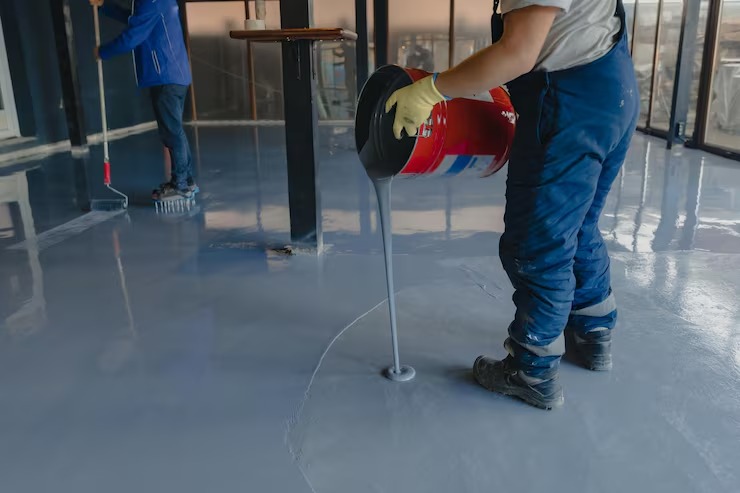
For many years, epoxy was primarily seen in aircraft hangars, hospital corridors, and industrial warehouses. It was respected for its utility but rarely considered a design choice for a family residence. However, a significant shift is occurring in modern home design. Homeowners are moving away from traditional carpet, timber, and tiles in favour of something more resilient and visually striking. The rise of epoxy flooring for homes is not just a passing trend; it is a response to the need for surfaces that can handle the complexities of modern life while looking exceptional.
The Appeal of a Seamless Surface
The first reason for the increasing popularity of epoxy floors is associated with the appeal of a seamless surface. Most conventional floors are associated with grout lines, joins, and seams, which are notorious for harbouring dust, allergens, and moisture. Such floors are often hard to clean over time and can disrupt the flow of a room.
Epoxy floors, being seamless, create a single surface that not only gives a room a larger appearance but is also hygienic since it is not porous and does not support bacteria and mold. The appeal of a seamless surface is particularly attractive to families with kids and pets since a simple sweep and mop are all that is needed to maintain a floor in pristine condition, much like it was on the day of installation.
Durability That Outlasts Trends
Almost every day, many different types of people walk over flooring in their homes or apartments and use different heavy appliances on the floors. Many traditional materials show their age through scratches, stains, or fading. Professional epoxy systems are engineered to withstand these daily pressures.
When installed by experienced epoxy flooring contractors, these floors are built in multiple layers. For example, at Urban Concrete Floors, a meticulous 10-step system is followed. The use of high-quality resins and polyaspartic top layers creates a surface that is not only thicker but also more resistant to impacts. This professional-grade finish ensures that the floor is resistant to UV rays, which would otherwise cause discolouration of the surface.
Versatility in Design and Application
Perhaps the most surprising reason for opting for epoxy over other options is its flexibility in terms of design.
Epoxy is no longer a flat grey colour. Homeowners can now choose from a vast palette of colours and textures.
Urban Stone Finishes: These systems use decorative vinyl flakes to create a granite-like appearance that adds depth and slip resistance, making them ideal for garages, laundry rooms, and "man caves."
Polished Pewter and Overlays: For those who prefer the industrial elegance of concrete but have an unsuitable slab, epoxy-based overlays can mimic the look of premium polished concrete. These can be applied over existing tiles or timber, as long as the substrate is sound.
Custom Tones: The ability to mix and match tones enables the creation of a one-of-a-kind floor that will match the interior tones of the home, giving the homeowner the personalisation that pre-manufactured floors cannot match.
A Practical Solution for Renovations
A major obstacle in home renovations involves the height and weight of the new floors.Removing old tiles or timber can be a labour-intensive and messy process.A big benefit of contemporary epoxy systems is that they can be applied directly on top of old surfaces.
Homeowners save time and produce less debris by avoiding the need for roadside demolitions! Because the coating is relatively thin, though incredibly strong, it rarely interferes with door clearances or existing skirting boards, making the transition much smoother than installing thick hardwood or stone.
The Importance of Professional Installation
Although there are many "do-it-yourself" epoxy kits currently available in the market, many homeowners are beginning to understand that the longevity of the floor is completely up to the preparation and quality of materials. Professional epoxy flooring contractors use industrial grinding tools to ensure that the resin bonds perfectly to the floor. This completely eliminates peeling and bubbling that is common in low-grade applications.
By investing in a professionally installed floor, homeowners are also able to enjoy long-term warranties and peace of mind that their floor is "fit for purpose." Whether it is a busy hallway or a tough workshop garage, a properly applied epoxy floor for home is a design element that is not only beautiful but also functional. As the focus of home design continues to lean towards minimalism and durability, epoxy remains at the forefront of the modern Australian home.
FAQs:
1. What is better than epoxy flooring?
Polyaspartic coatings are considered better than epoxy flooring because they dry faster, are more UV resistant to prevent yellowing, and are more flexible to prevent cracking from temperature fluctuations.
2. Does epoxy flooring get dirty?
Yes, epoxy flooring does get dirty, but it is very easy to maintain because dirt does not get stuck in the grouts, unlike other flooring options.
3. What does it cost to epoxy a 3000 square foot floor?
In 2026, the cost of epoxy flooring for a 3,000 square foot (approx. 278 square metres) floor is estimated to be between $16,500 and $33,000, equivalent to $60 to $120 per square metre.