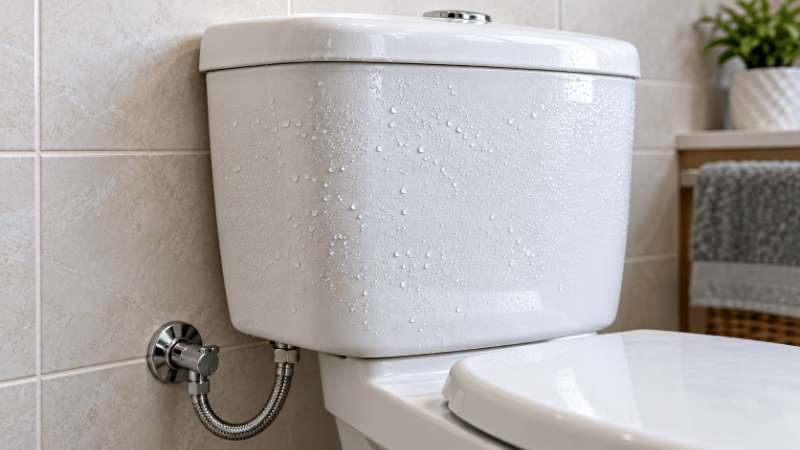
A toilet tank usually sweats because humid bathroom air meets the cold tank surface, causing water droplets to form. That moisture is condensation, much like the water on a cold drinking glass. However, a wet tank or floor can also indicate a plumbing leak, so check where the water starts before deciding what to do.
You might notice beads of water after a shower or a damp patch behind the toilet. Neither means you automatically need a new toilet. The useful first step is to separate moisture forming on the surface from water escaping through a component.
What Causes a Toilet Tank to Sweat?
Cold water entering the tank cools the porcelain. If the surface drops below the surrounding air’s dew point the temperature at which moisture starts condensing water collects on the outside.
Michigan State University Extension’s guidance on household moisture identifies toilet tanks and cold water pipes as common condensation surfaces.
Several conditions can make tank sweating more noticeable:
Humid bathroom air: Showers and baths add moisture to the room.
Cold incoming water: A colder tank surface makes condensation more likely.
Limited ventilation: Moist air lingers when the bathroom cannot dry out.
Frequent flushing: Repeated refills introduce more cold water.
A running toilet can contribute, too. If water keeps escaping from the tank into the bowl, the tank repeatedly refills with cold water. That can keep its exterior cold enough for condensation to continue.
Is Your Toilet Sweating or Leaking?
The strongest clue is where the moisture first appears, rather than where it eventually collects. Water can travel down the tank and pool near the toilet base.
These clues help narrow the possibilities; they do not confirm a diagnosis. A toilet can have condensation and a leak at the same time.
If the water appears to come from a fitting or seal, Handyman Connection’s guide to diagnosing and repairing toilet leaks explains the common sources.
How to Check Where the Moisture Starts
You can gather useful information without taking the toilet apart.
Dry the tank exterior and nearby floor. Wipe around the supply connection and accessible tank joints so existing water does not confuse the check.
Watch the surface while the toilet is idle. Notice whether fresh beads appear across the porcelain or water returns at one particular point.
Observe one normal flush, provided there is no obvious active leak. Look for fresh dripping around connections or water emerging near the base.
Note the bathroom conditions. Does the moisture mainly return after showers, or does it continue when the room is dry?
Listen after the refill finishes. Water running or the tank refilling again without another flush deserves attention.
A photo of the first wet spot and a note about timing can help a professional investigate.
Do not tighten fittings or tank bolts simply because they are nearby. The water may have run down from somewhere else, and overtightening can damage components or crack porcelain.
What Can Reduce Toilet Tank Condensation?
The right approach depends on whether the main cause is humid air, a persistently cold tank or an accompanying plumbing fault.
Reduce Moisture in the Bathroom
Run the bathroom exhaust fan during showers and leave it running afterward to help the room dry. If mirrors, walls and the tank remain wet, check whether the fan is actually removing air. Fan noise alone does not prove it is working properly.
A small humidity meter can help you spot persistent moisture. The US Environmental Protection Agency recommends keeping indoor relative humidity below 60%, ideally between 30% and 50% where possible. That is a general moisture-control target, rather than a guarantee that a particularly cold tank will stay dry.
Air conditioning or a dehumidifier may help when indoor humidity stays high. Opening a window can help when outside air is drier; it may be less useful on a humid day.
Check Whether the Toilet Keeps Running
A toilet that refills between uses needs a separate check. Kohler’s troubleshooting guidance explains that internal leakage can lower the tank water level and trigger another refill.
Addressing that fault may reduce repeated cold-water refills as well as water waste. Ventilation alone will not repair it.
Ask About Insulated Tanks or Anti-Sweat Valves
If condensation continues after humidity and running-toilet issues have been addressed, ask a qualified plumbing professional about suitable options.
Some toilet models have insulated tanks designed to reduce condensation. Any replacement tank or liner must suit the toilet and allow its internal components to operate correctly.
An anti-sweat valve is another option for some installations. American Standard explains that it mixes a small amount of warm water into the tank supply to reduce condensation. A professional should assess compatibility and installation requirements.
An anti-sweat valve serves a different purpose from the anti-scald devices used to manage hot-water temperatures at showers or taps.
When Does Persistent Moisture Need a Plumbing Inspection?
Arrange an inspection if you notice:
Water repeatedly dripping from a fitting or tank joint.
A visible crack in the tank or bowl.
Water appearing at the base after flushing.
Constant running or refilling between uses.
Recurring puddles despite reducing bathroom humidity.
Soft flooring, swelling, staining or a persistent musty smell.
If water is actively escaping, stop using the toilet. Close its supply valve if it is accessible and turns easily; do not force a seized valve. Get prompt help if you cannot control the flow.
Even condensation needs attention when it repeatedly wets the floor. Wipe up the water and address the cause instead of leaving a towel in place to absorb it indefinitely.
Handyman Connection’s plumbing services include work on leaking toilets and supply lines. If the source remains unclear, contact your local team to discuss an assessment and confirm which services are available in your area.
Frequently Asked Questions
Can condensation leave water around the toilet base?
Yes. Droplets can run down from the tank and collect near the base. However, water there can also come from a leak. Trace where it first appears rather than assuming the base seal has failed.
Can a toilet sweat and leak at the same time?
Yes. Surface condensation does not rule out a leaking connection, tank joint or internal component. Moisture that keeps returning at a specific point needs checking.
Does a sweating toilet tank need replacing?
Not necessarily. Reducing humidity or correcting a running-toilet fault may help. Replacement is a separate decision based on the toilet’s condition, compatibility of available parts and whether other measures resolve the problem.
Need Help With a Wet or Leaking Toilet?
If moisture keeps returning and you’re unsure whether it’s condensation or a leak, contact your local Handyman Connection team. Our plumbing services cover leaking toilets, supply lines and other common fixture problems. Tell us what you’ve noticed and request an estimate for the work needed. Service availability varies by location.