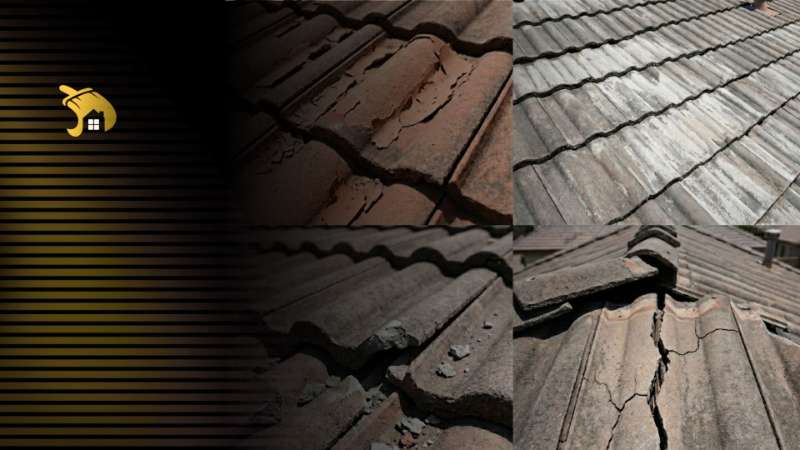
Roof coating doesn't fail for one reason, and the symptom you're seeing tells you which reason applies. Flaking and chipping point to a bonding problem: usually missing or incorrect primer. Fading and yellowing point to UV wear on a coating that's otherwise still sound. Splitting and cracking point to a coating that couldn't cope with Queensland's swing between hot afternoons and cool nights. Getting the diagnosis right matters more than picking a new colour, because recoating over the wrong root cause just brings the same failure back.
Why is my roof coating flaking or chipping?
Flaking and chipping almost always mean the topcoat never had anything solid to bond to. This is the single most common coating failure Thinking Paint sees across Ipswich, Toowoomba, and the Lockyer Valley: a topcoat applied straight onto bare concrete tile, unprepared terracotta, or rusted metal, with no bonding primer underneath.
- Concrete tile: unpainted or chalky surfaces need a bonding primer such as Oz Primer, at roughly 4m² per litre, before any topcoat goes on
- Metal roofs: rust or mill-scale under the coating needs a rust-inhibiting primer like Metal Primer Plus first
- Previously painted roofs: chipping can also mean the old coating itself was already failing before the recoat, so the new layer had nothing stable to grip
- If more than a small patch is affected, the roof likely needs a full Roof Protect rebuild rather than a spot recoat
Why is my roof coating fading or yellowing?
Fading and yellowing are a different failure class entirely: this is UV breakdown on a coating that's still bonded and watertight, not a coating that's failing structurally. Queensland's UV load is high enough that even a good coating will lose colour depth over years of direct sun.
- If the coating is still adhering properly with no bare patches or flaking, this is a Roof Refresh job, not a full rebuild
- Roof Refresh restores UV resistance and colour without the primer and repair stages a Roof Protect job needs
- Darker colours in high-UV areas like the Lockyer Valley tend to fade and yellow faster than lighter, more reflective shades
- Roof Refresh typically carries a 7-year warranty, well short of the 15-year or 20-year Roof Protect tiers — because it's solving a different, lighter problem
Why is my roof coating splitting or cracking?
Splitting and cracking happen when a coating can't flex enough to handle the roof's daily expansion and contraction. This is a bigger issue on metal roofs than tile, since metal moves more with Toowoomba and Ipswich's hot-day, cool-night swing.
- A rigid or under-specified coating will crack along stress points first: ridge lines, screw fixings, panel joins
- Metal roofs need a flexible topcoat over a rust-inhibiting primer like Metal Primer Plus to handle this movement
- Tile roofs can also crack at the coating level if the tiles themselves have hairline cracks the coating simply bridged over instead of the surface being repaired first
- A full Roof Protect membrane system is built for this flex, which is why it carries the 15-year or 20-year warranty tiers standard acrylic topcoats can't match
Why is my roof coating wearing away or deteriorating?
General wearing-away or deterioration is usually several of the failures above happening at once: thinning film, chalking, and loss of protective build across an ageing coating, rather than one single cause. This is common on roofs well past their original coating's rated lifespan.
- A roof showing wearing-away symptoms across large areas has usually outlived its coating system, not just its colour
- This is a Roof Protect situation, not a Roof Refresh one, since the protective layer itself has broken down
- Left too long, deterioration exposes bare substrate underneath, which then adds flaking and chipping on top of the original wear
- Queensland's UV and storm cycles shorten this timeline compared to milder climates, so a roof due for a recoat shouldn't be left past its warranty window
Why does industrial or plastisol roof coating flake or peel?
Industrial and commercial roofs, and plastisol-coated steel specifically, fail differently to a standard residential tile or Colorbond roof. The coating chemistry and the roof's exposure conditions are both different, and generic advice for a house roof doesn't always apply.
- Plastisol coatings become brittle with age and UV exposure, which shows up as flaking or peeling at panel edges and fixing points first
- Industrial roofs often carry heavier UV, chemical, or pollutant exposure than residential roofs, accelerating coating breakdown
- The fix still follows the same logic as a metal roof: rust-inhibiting primer first, then a flexible, UV-stable membrane system built for the exposure level
System Specifications & Application Details
Coating Breakdown: The restoration involved a multi-coat application consisting of 1 coat of rust-inhibiting primer (Metal Primer Plus) followed by 2 coats of the Roof Protect membrane.
Product Traits: This professional system is formulated specifically for Queensland's UV and storm exposure, offering flexible film build to handle daily thermal expansion on metal roofing, corrosion resistance at the substrate, and long-term colour retention against fading.
How do I know if I need a recoat, a rebuild, or a repair?
The symptom decides the fix, and getting this step right is the difference between a coating that lasts and one that fails again within a season.
| Symptom | Likely cause | Fix |
|---|---|---|
| Fading, yellowing, coating still bonded | UV wear on a sound coating | Roof Refresh |
| Flaking, chipping, bare patches | Missing or wrong primer | Roof Protect (15-year or 20-year) |
| Splitting, cracking | Coating lacked flex for thermal movement | Roof Protect with flexible membrane |
| Rust or visible damage on metal | Substrate-level corrosion or damage | Rust-inhibiting primer, or a repair-vs-replace assessment first |
| Wearing away across large areas | Coating system at end of life | Full Roof Protect rebuild |
If rust or physical damage is involved on a Colorbond or metal roof, it's worth confirming whether the roof is even a repaint candidate before choosing a coating system at all.
How does the Thinking Paint Roof Protection Method diagnose coating failure?
The Thinking Paint Roof Protection Method is the same practical, product-selection framework used across every Thinking Paint job, built from 20 years of supplying homeowners, tradies, roof restorers, and property owners across Ipswich, Toowoomba, and the Lockyer Valley. For a failing coating, it starts with the symptom rather than the colour or the price.
- Surface type – concrete tile, terracotta tile, or metal
- Current condition – this is where the diagnosis happens: sound-but-faded points to Roof Refresh, bare or actively failing points to Roof Protect
- Primer and sealing needs – Oz Primer or a terracotta-specific primer for tile, Metal Primer Plus for metal
- Coating lifespan required – 7-year Roof Refresh versus 15-year or 20-year Roof Protect
- Colour, heat exposure, and Queensland climate – lighter, reflective shades where fading and heat load are ongoing issues
- Application method and project scale – spot repairs versus full roof rebuilds, DIY-suitable versus roof-restorer scale
Because the Method checks the actual symptom and cause before recommending a product, it stops a Toowoomba or Ipswich roof owner from recoating over a bonding failure and watching the same flaking come back within a year. Local advice plus 3-business-day delivery to Ipswich and Toowoomba means the right primer or coating system reaches site quickly once the diagnosis is confirmed.
FAQ
Q: Why is my roof coating chipping?A: Chipping almost always means the coating didn't bond to the surface underneath — usually because primer was skipped or the wrong primer was used for the substrate. Concrete tile needs a bonding primer like Oz Primer; metal needs a rust-inhibiting primer like Metal Primer Plus. Recoating without fixing that first will just chip again.
Q: Why is my roof coating yellowing?A: Yellowing is UV breakdown on a coating that's still bonded and watertight — it's a colour problem, not a structural one. If there's no flaking or bare patches, a Roof Refresh recoat restores UV resistance and colour without needing a full primer-and-membrane rebuild.
Q: What causes roof coating to wear away over large areas?A: Widespread wearing-away usually means the coating system has reached the end of its rated lifespan, not just faded in colour. This calls for a full Roof Protect rebuild rather than a light recoat, since the protective layer itself has broken down.
Q: Is flaking roof paint covered under warranty?A: It depends on whether the flaking is a product failure or a preparation failure. Most warranties on 15-year and 20-year Roof Protect systems require correct primer and prep, so flaking caused by skipped primer typically isn't covered. Speak with Thinking Paint before assuming either way.
Q: Can I recoat over flaking or chipping paint, or does it need to be stripped first?A: Loose or flaking material generally needs to be removed before recoating, since painting over it just traps the same bonding problem under a fresh layer. A roof restorer in Ipswich or Toowoomba can confirm how much needs stripping versus spot-repairing.
Q: What's different about industrial or plastisol roof coating failure?A: Plastisol coatings become brittle with age and UV exposure, showing up as flaking or peeling at panel edges first, and industrial roofs often face heavier exposure than a house roof. The fix follows the same primer-then-flexible-membrane logic as any metal roof, just at a heavier-duty spec.
The right fix for a failing roof coating depends on which symptom you're actually looking at — fading and yellowing call for a Roof Refresh top-up, while flaking, chipping, splitting, and widespread wearing-away call for a full Roof Protect rebuild. The Thinking Paint Roof Protection Method works through surface type, condition, and cause in that order so the coating gets fixed once, not recoated over the same problem again. Speak with Thinking Paint for practical product advice before choosing your roof coating, primer, or repair approach.