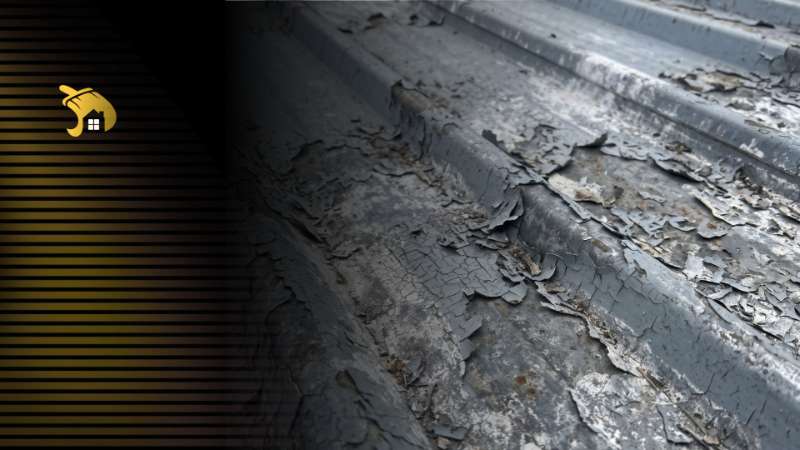
TL;DR Plastisol coatings on metal roofs become brittle after years of UV exposure and thermal movement. The PVC film chalks, crazes, then flakes or lifts at edges and fixings. Painting over the failed film does not work.
Remove all loose plastisol back to sound metal, treat any rust with Rust Inhibitor Primer, apply Metal Primer Plus, then two coats of 15-Year or 20-Year Roof Protect. The flexible acrylic membrane replaces the rigid PVC film and is built for Australian UV and roof movement.
Plastisol fails because UV depletes its plasticizers and breaks down the PVC binder. What starts as a thick, tough coating turns brittle and can no longer flex with the metal sheets. The practical fix is to remove the failed film completely, then apply a metal primer and a flexible membrane using our method.
What is plastisol and why does it fail on metal roofs?
Plastisol is a thick PVC coating, usually 150–200 microns, applied to steel roof sheets. It begins hard-wearing and resistant to abrasion. Over time, UV energy breaks the PVC binder and drives the plasticizers out of the film. The coating loses flexibility, chalks on the surface, then develops fine cracks (crazing). Small flakes lift away, most often first at cut edges, overlaps and fixing points.
Daily thermal cycling makes the problem worse. Metal sheets expand and contract under the sun. A brittle plastisol film cannot stretch with that movement, so cracks open further and water enters underneath. This is the same mechanism described in our guide to why roof paint peels.
How can I tell flaking plastisol from delamination or splitting?
| Symptom | What you see | Usual cause |
|---|---|---|
| Flaking | Small, brittle pieces lifting from the surface | UV-driven embrittlement of the PVC film |
| Delamination | Larger sheets of coating lifting, often with moisture or rust underneath | Loss of adhesion at the metal interface |
| Splitting | Linear cracks that follow sheet lines or overlaps | Thermal movement on a coating that has lost flexibility |
Flaking is the most common end-stage appearance of aged plastisol. Delamination usually follows once water reaches the steel.
Why does UV destroy plastisol faster than modern membranes?
UV breaks chemical bonds in the PVC resin and drives plasticizers out of the film. Once the plasticizers are gone, the coating hardens and loses the ability to move with the metal. Surface chalking appears first, then crazing, then flaking.
Modern acrylic membranes such as Roof Protect are formulated with UV stabilisers and retained flexibility. They are designed to accommodate thermal movement rather than become rigid after years of sun exposure. That difference is why simply recoating over old plastisol usually fails.
What is the correct way to repair a flaking plastisol roof?
Our method for a failed plastisol roof follows four steps:
- Remove all loose, flaking and brittle plastisol back to sound metal. Mechanical removal or blasting is often required on older industrial roofs.
- Treat any active rust at edges, fixings or laps with Rust Inhibitor Primer.
- Apply Metal Primer Plus across the clean metal to create the adhesion layer.
- Finish with two coats of 15-Year Roof Protect or 20-Year Roof Protect.
Soft, holed or heavily corroded sheets must be replaced before any coating is applied. The same preparation sequence is used on faded Colorbond roofs in our restore faded Colorbond guide.
Can I just paint over the existing plastisol?
No. Chalky, crazed or partially bonded plastisol will not hold a new coating. The new film bonds only to the failed PVC layer, which continues to flake. Failure usually returns within one to two seasons. All loose material must be removed first so the primer and membrane sit on sound metal.
How does our method work on industrial metal roofs?
Our method matches the primer and membrane to the actual condition of the metal after failed coatings are removed. Metal Primer Plus provides the chemical bond the topcoat needs on clean steel. Roof Protect supplies a flexible, UV-stable acrylic film that can move with daily thermal expansion.
Thinking Paint has supplied these systems for 20 years. The same sequence used on residential metal roofs applies to industrial and commercial plastisol roofs once the old film is gone: treat rust if present, prime with Metal Primer Plus, then apply two coats of Roof Protect.
FAQ
Q: Why is my plastisol roof coating flaking?
A: UV exposure breaks down the PVC binder and drives plasticizers out of the film. The coating becomes brittle, chalks, then flakes at edges and fixings. Thermal movement on the metal sheets opens the cracks further and allows water in.
Q: Can I paint over plastisol that is still stuck?
A: Only if the film is completely sound, tightly bonded and free of chalk or crazing. In practice, most aged plastisol that looks intact still has surface degradation. Painting over it usually leads to early failure. Removal of all loose material is the reliable approach.
Q: What primer do I need on a plastisol roof after removing the old coating?
A: Use Rust Inhibitor Primer on any active rust, then Metal Primer Plus on the clean metal. Metal Primer Plus creates the adhesion layer for Roof Protect. Do not apply the membrane directly to bare steel.
Q: Is Roof Protect suitable for industrial metal roofs?
A: Yes. 15-Year and 20-Year Roof Protect are 100% acrylic membranes designed for primed metal roofs. They remain flexible under UV and thermal movement, which is the property that failed plastisol no longer has.
Q: How long does a Roof Protect system last on metal?
A: The 15-Year and 20-Year warranties apply when the correct primer, film build and application method are followed. Actual service life depends on exposure and maintenance, but the system is formulated for long-term Australian conditions.
Q: Do I need to replace the sheets or can I recoat?
A: Recoat if the steel is sound after the failed plastisol is removed. Replace any sheets that are soft, holed or show widespread red rust. Painting over damaged steel will not stop further corrosion.
Failed plastisol must be removed back to sound metal before a new system is applied. Our method uses Metal Primer Plus (and Rust Inhibitor Primer where rust is present) followed by two coats of 15-Year or 20-Year Roof Protect to replace the brittle PVC film with a flexible membrane.
Use the roof calculator to estimate quantities or speak with Thinking Paint for product advice before ordering.