For families in the Camden and Narellan area, finding a dentist in Narellan they trust for the long haul is only half the equation. The other half is understanding what actually drives oral health outcomes day to day — because the habits built between appointments matter just as much as the appointments themselves.
Most people's approach follows a fairly predictable pattern. Brush twice a day, floss occasionally, and book a check-up when something starts to hurt or when enough time has passed that guilt becomes motivating. That pattern keeps things functional for a while, but it's not the same as the consistent habits that produce genuinely good oral health over the long term. The difference between the two tends to become clearer as people get older.
The good news is that long-term oral health is less complicated than most people assume. It doesn't require expensive interventions or an elaborate routine. It requires a small number of habits done consistently and well, combined with regular professional care that addresses what daily habits can't.
What Actually Happens Between Dental Visits
The mouth is a constantly active environment. Bacteria feed on sugars and carbohydrates from food and drink, producing acids that attack tooth enamel and contribute to plaque — the sticky film that coats teeth throughout the day. Plaque that isn't removed through brushing and flossing hardens into tartar within days, and tartar can't be removed at home regardless of how thoroughly you brush.
Left unaddressed, that cycle creates the conditions for tooth decay and gum disease, both of which develop gradually and without obvious symptoms in their early stages. The cavity that requires a filling today started as a small area of demineralisation that, caught earlier, could have been addressed with remineralising treatments and improved habits. The gum disease that requires more involved treatment now showed early signs months or years before that became necessary.
What happens between dental visits is the daily management of that bacterial activity. The habits that make a real difference are the ones that consistently interrupt that cycle before it advances.
The Brushing and Flossing Habits That Actually Work
Brushing twice a day is the baseline, but technique matters considerably more than most people appreciate. A soft-bristled brush used with gentle circular motions along the gumline and across all surfaces removes plaque more effectively than aggressive scrubbing, which can damage enamel and cause gum recession over time.
Two minutes is the minimum effective duration for a full brush. Dividing the mouth into quadrants and spending thirty seconds on each produces more even coverage than a general pass across all surfaces. Electric toothbrushes with built-in timers consistently outperform manual brushing in clinical studies and remove the guesswork entirely.
Flossing is the habit most people either skip or perform without strong conviction. What it's doing is removing plaque and food debris from the contact points between teeth and along the gumline — areas a toothbrush simply can't reach. Gum disease begins at the gumline, and the spaces between teeth are where it takes hold earliest. Daily flossing, done correctly, removes the bacterial film from those spaces before it progresses to tartar and before the gum inflammation it causes becomes established.
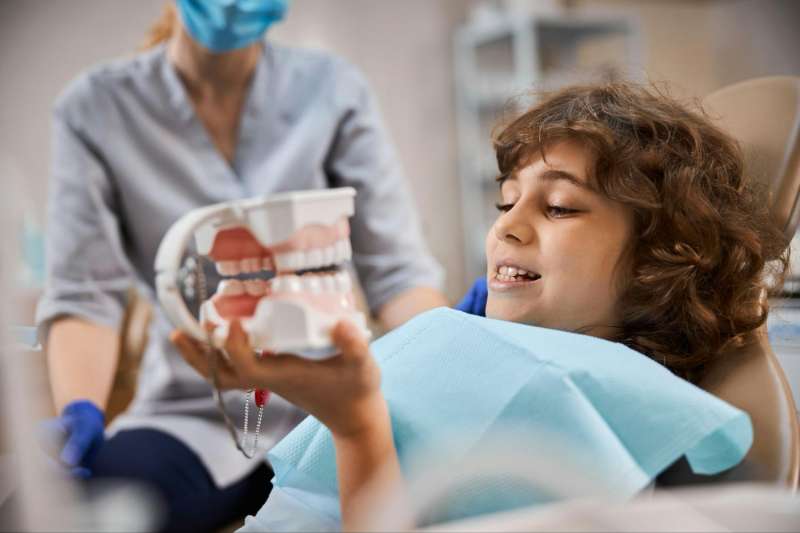
A dentist in Narellan can demonstrate correct technique and identify exactly where plaque is accumulating in your specific mouth — something no general guide can replicate, because every mouth is different and the areas of concern vary between individuals.
What Patients Ask a Dentist in Narellan Most Often
One of the most common questions patients raise is whether their diet is affecting their teeth. The answer is almost always yes — but the way it affects them is often misunderstood.
Sugar is the most well-known contributor to decay, but frequency of exposure matters as much as total amount. Sipping a sugary drink across several hours maintains a continuously acidic oral environment that gives enamel no recovery time. Consuming the same drink with a meal exposes teeth to one acid attack that saliva can largely neutralise over the following hour.
Acidic foods and drinks — citrus fruits, soft drinks, wine — erode enamel directly, regardless of sugar content. Rinsing with water after acidic food or drink neutralises some of that exposure without the abrasive effect of brushing immediately after, which can spread acid across tooth surfaces while enamel is temporarily softened.
Smoking comes up often too. It affects oral health through multiple pathways: contributing to gum disease, reducing the mouth's ability to heal, masking early signs of gum problems through reduced bleeding, and significantly increasing the risk of oral cancer. The effects accumulate over time in ways that become progressively more difficult to reverse.
Why Professional Care Is the Foundation Everything Else Builds On
Daily habits address what they can reach, which is most of the tooth surface most of the time. What they can't do is remove tartar that forms despite good brushing, access every surface consistently, or identify early signs of decay, gum disease, and other oral health changes before they become visible symptoms.
Professional cleans remove tartar from surfaces that brushing misses and from below the gumline where gum disease begins. Regular check-ups provide the early detection that means small problems are addressed when they're straightforward and inexpensive to treat, rather than when they've progressed to something more involved. Gap-free check-up and clean options through some practices mean that for patients with appropriate private health cover, the financial barrier to that regular care is removed entirely.
The relationship between daily habits and professional care is not either-or. Daily habits maintain the gains made at professional appointments and slow the accumulation of what professional care addresses. Professional care addresses what daily habits can't, and identifies changes that require attention before they become problems.
Why Consistency Beats Intensity
The most effective oral health routine is not the most elaborate one — it's the one that gets done consistently without gaps. A thorough brush and floss every day produces better long-term outcomes than an intensive effort that happens irregularly. A check-up every six months catches problems at the stage where they're most straightforward to address. Neither requires significant time, expense, or complexity once the habits are established.
The people who maintain good oral health over the long term are almost never the ones who did something dramatic at a particular point. They're the ones who built a small number of effective habits, kept professional appointments consistently, and let the compounding effect of that consistency produce an outcome that irregular effort never quite manages.
If you're looking for a dentist in Narellan who takes a preventive, long-term approach to your care, booking a check-up is the straightforward first step.