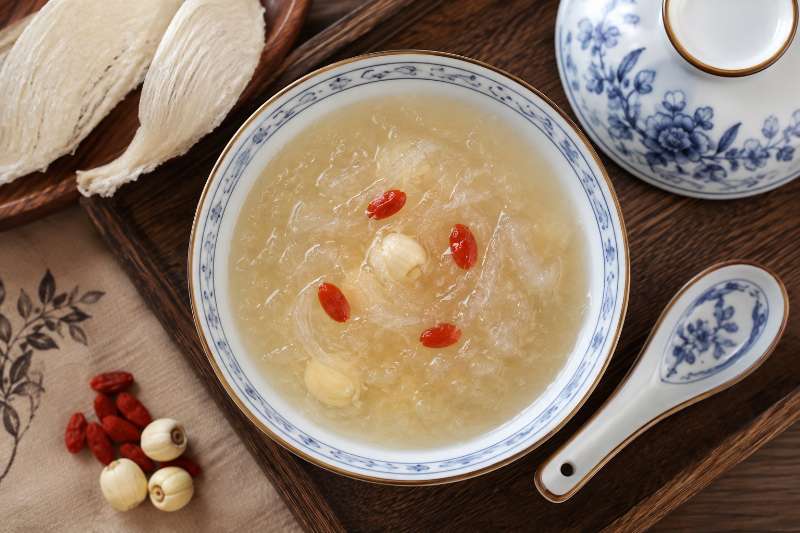
Ask anyone with roots in Chinese or broader Southeast Asian food culture about edible bird's nest, and you'll likely hear the same story: an ancient delicacy, once served only to royalty, believed to nourish the skin, strengthen the immune system, and support long-term vitality. It's earned the nickname "caviar of the East" for a reason.
The obvious question for anyone outside that tradition is whether the reputation holds up once you put it under a microscope.
That question has attracted real scientific attention lately. Between laboratory work, animal studies, and a handful of controlled human trials, researchers have started building an evidence base around what edible bird's nest (EBN) actually does. Some of what they've found lines up neatly with centuries of traditional use. Other claims are still waiting on more robust proof.
Below is a breakdown of the health benefits of edible bird nest as the current research describes them — including where the science is solid, and where it's still catching up.
The Nutritional Makeup Behind the Reputation
Start with the basics: edible bird's nest is formed from the hardened saliva of swiftlets, then hand-harvested and cleaned before it ever reaches a kitchen or a lab. Unusual as that sounds, it's precisely this composition that has drawn researchers in.
A wide-ranging 2025 review in Discover Food (Springer Nature) catalogued the nest's key components:
- High-quality proteins
- A broad spread of essential amino acids
- Sialic acid
- Glycoproteins
- Collagen-associated compounds
The review connected these compounds to a cluster of effects — tissue repair, immune modulation, skin support, digestive and respiratory benefits, and markers of healthy ageing. This is largely where current research into the health benefits of edible bird nest concentrates its energy.
Sialic acid deserves particular mention. Present in notably high concentrations in EBN, it's been tied in the broader nutrition literature to brain development, immune signalling, and cell-to-cell communication. Separate analysis has also catalogued 22 distinct amino acids across various EBN samples, plus a mineral profile that includes calcium, iron, potassium, and magnesium.
None of this is marketing language dressed up as science. It's a nutritional profile that's been measured, published, and cross-checked across multiple independent studies.
What the Immune Research Shows — and Doesn't
Traditional medicine has long positioned edible bird's nest as a recovery food — something to eat while the body rebuilds itself after illness. Contemporary lab work offers a partial explanation for that belief.
In 2024, Veterinary World published a study showing that EBN extract raised levels of several key antibodies — IgE, IgA, and IgG3 — while also triggering greater output of cytokines, the molecules immune cells use to coordinate a response.
That builds on earlier animal research, which found that EBN stimulated B-cell activity, boosted antibody output more broadly, and increased secretory IgA in the gut — a frontline defence against pathogens entering through the digestive tract.
Here's the necessary caveat: nearly all of this evidence comes from petri dishes and animal models, not large-scale human trials. That's not nothing — it tells researchers there's a real, testable mechanism at work — but it stops short of proving these effects play out the same way in a person eating bird's nest soup. Bridging that gap is the next step the research still needs to take.
Skin Health: The Category With Real Human Data
If there's one area where the science has genuinely caught up with the folklore, it's skin.
A 2025 randomised controlled trial — the design researchers trust most for drawing real conclusions — tracked 92 healthy women between 25 and 45 years old over a 12-week window, split across high-dose, low-dose, and control groups.
The high-dose group saw measurable gains: better skin moisture, improved elasticity, and reductions in deep wrinkles, fine lines, and pigmented spot area. Alongside the visible changes, researchers recorded drops in inflammatory markers (IL-6, TNF-α) and in MMP-1 and MMP-9 — enzymes that break down collagen as skin ages.
An earlier double-blind, placebo-controlled trial in Frontiers in Pharmacology reached similar territory, following women aged 40 to 60 for 12 weeks and documenting improvements in wrinkles, elasticity, hydration, and overall skin appearance relative to placebo.
The mechanism behind these results is becoming clearer too. A 2024 review in Archives of Dermatological Research linked EBN to increased collagen, elastin, and filaggrin production, alongside reduced activity of the enzymes that degrade skin structure. Related peptide research suggests EBN compounds may switch on genes tied to collagen synthesis and repair of the skin's extracellular matrix.
Put simply: of everything covered here, the health benefits of edible bird nest for skin have the most direct backing from actual human trials — not just cell cultures or animal models.
Cognitive Function: Promising, Not Proven
The brain-health angle is grounded almost entirely in sialic acid's known biological role. It's a compound with a well-documented part to play in brain development and in the makeup of nerve cell membranes — which is why researchers suspect EBN, given its sialic acid content, might offer some cognitive upside.
That's a reasonable hypothesis, but it's still a hypothesis. Direct human research testing whether eating bird's nest measurably improves memory or mental performance remains thin. Until that changes, this benefit sits in "plausible, not confirmed" territory.
Antioxidant Activity
Antioxidant properties show up consistently across the review literature. Multiple studies point to naturally occurring compounds in EBN that counter oxidative stress and inflammation — the same pathway believed to underlie much of the skin-related research above.
Researchers have also connected these compounds to broader anti-inflammatory and anti-ageing processes, though — as with the immune findings — a good portion of this evidence still originates in the lab rather than in human trials.
Reading the Evidence Honestly
It's worth being upfront about the limits here.
Beyond the skin studies, most of what's been published relies on cell cultures and animal models. Useful for understanding mechanism, not sufficient on its own to guarantee the same outcome in a person's body. Even the human trials that do exist are modest in scale — participant counts in the dozens, not the hundreds or thousands you'd want for a fully settled conclusion. And a lot of that research tests concentrated extracts, which isn't quite the same as the whole nest prepared traditionally.
The honest framing: edible bird's nest is a functional food with a growing evidence base, not a clinically approved treatment for any condition. Anyone weighing it for a specific health issue — particularly during pregnancy, while breastfeeding, or alongside an existing medical condition — should loop in a healthcare provider first.
The Traditional Way to Prepare It
Preparation hasn't changed much across generations. The nest is soaked, cleaned by hand, and slow double-boiled, most commonly served plain or in a rock-sugar soup, though it also turns up in congee and various desserts.
More recently, cosmetic formulators have started extracting the same bioactive compounds for direct topical use. If you're preparing raw or dried bird's nest at home, following proper soaking and cleaning techniques makes a real difference in preserving both texture and nutrient content.
Where This Leaves Us
The science is gradually catching up to a tradition that's been around for centuries — and increasingly, the health benefits of edible bird nest are backed by data rather than just history.
On skin health specifically, human trials now offer solid support: better hydration, improved elasticity, and visible reductions in signs of ageing. The immune, antioxidant, and cognitive angles remain genuinely promising, but they're still waiting on the kind of large-scale human research that would move them from "plausible" to "proven."
One thing the research doesn't cover, but matters just as much: not all bird's nest is processed the same way, and how it's harvested and cleaned directly affects its purity and nutrient content.
Alba Bird Nest sources directly from Indonesia — the world's largest EBN producer — drawing from East Java, Kalimantan, and Sulawesi. Every batch is cleaned entirely by hand, without bleach or chemical additives, and is backed by FDA and Indonesian Agricultural Quarantine Agency certification — so what ends up in the product matches what these studies are actually testing.
Browse Alba's certified bird's nest range → or get in touch for a wholesale quote for bulk or export orders.
Medical Disclaimer
This article is for general informational purposes only and is not medical advice. Edible bird's nest is a food, not a drug, and is not approved to diagnose, treat, cure, or prevent any disease. Speak with a qualified healthcare provider before using it to address a specific health concern, especially during pregnancy, while breastfeeding, or when managing a medical condition.