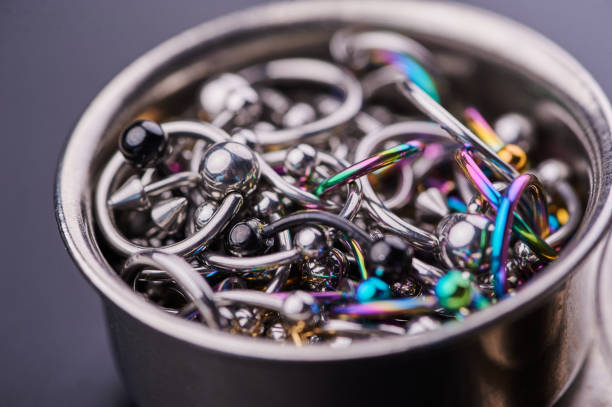
Body jewelry is jewellery made to sit inside a piercing rather than hang from one. Every piece is built around the hole itself, so the thickness of the bar, its length and the finish of the metal matter far more than they would with a pair of earrings off a shop rack. Off Ya Tree has been selling alternative lifestyle products since 1978 and piercing since 1996, and the company states it is responsible for more than one million piercings Australia-wide. Here is what a beginner should understand before buying or changing anything. Fashion jewellery sits against the skin. Piercing jewellery passes through it, which means the surface has to be smooth and the material has to be one your body tolerates while tissue heals around it. You will also come across the term internally threaded. On those pieces the screw thread is cut into the removable end rather than into the bar, so nothing rough drags through the piercing during a change over. Most of the range comes down to a handful of shapes. A straight barbell is a bar with a ball on each end, worn in tongue, nipple and industrial piercings. A curved barbell does the same job with a gentle bend and suits navel jewellery and eyebrows. Labrets have a flat disc at the back and a decorative end at the front, which is why they work well for lips, nostril jewellery and flat ear placements. Hoops cover most of what is left. Captive bead rings and hinged segment rings turn up in septum jewellery, nostrils and ears, while plugs and tunnels are worn in stretched lobes. For those interested in a tongue piercing, straight barbells are one of the common jewellery styles used for this placement. Two materials do most of the work in a fresh piercing. Off Ya Tree pierces with implant grade titanium and surgical grade stainless steel, both chosen for biocompatibility, which simply means the body copes well with them. Acrylic, silicone, glass, stone and timber all appear in the range too, mostly in stretched lobes and long-healed piercings rather than new ones. No single material suits everybody, so tell your piercer if metal jewellery has irritated you before. The body jewelry and piercing go hand in hand because the jewelry must fit your body and not the other way around. There are three primary dimensions that have to be taken into account: the gauge which is the thickness of the bar, the higher number, the thinner; the bar length, which is the distance between the two ends; and the ring diameter which is the width inside of the ring. For the initial jewelry to wear a little bit longer allowance is left for swelling. Once the piercing settles, a shorter piece is fitted so the jewellery moves less, a step known as downsizing. Read our body piercing aftercare guide for the timing on that. How body jewelry differs from fashion jewellery
The main types of body jewelry
Materials worth knowing about
Matching body jewelry to your piercing
Before you change a new piercing
Fresh piercings need patience. Off Ya Tree advises that healing takes roughly three to twelve months depending on the site, with about eight to twelve weeks before the channel forms properly, and recommends checking with a piercer before swapping anything out.
Studios pierce with jewellery sterilised in an autoclave on site, so a piece bought elsewhere cannot be used for the initial procedure. See our body piercing FAQs for how change overs and sterilisation are handled.
Frequently asked questions
1. What is body jewelry?
Body jewelry is jewellery designed to be worn in a piercing. It is shaped, sized and finished for the specific placement it sits in, unlike fashion jewellery, which only rests on the surface of the skin.
2. What materials are best for body jewelry?
Biocompatible materials suit fresh piercings best, which is why implant grade titanium and surgical grade stainless steel are standard for new work. Acrylic, silicone, glass and timber are better kept for healed piercings. Your piercer can suggest what fits your situation.
3. What types of body jewelry are available?
Straight and curved barbells, labret piercings, captive bead rings, hinged segment rings, nostril studs, septum jewellery and plugs and tunnels for stretched lobes. Every piece of jewellery fits different piercings, and switching to a different piece will not always be effective.
4. Can I change my body jewelry immediately after getting pierced?
No. The piercing is still unhealed and changing it at that moment may irritate your piercing channel and even make you develop an infection. As suggested by Off Ya Tree, you should wait till your piercer informs you that your piercing is now healed.
5. How do I choose the right body jewelry for my piercing?
Start with material, then gauge, bar length or ring diameter, and only then style. Anatomy and healing stage matter just as much, since a piece that suits a healed lobe may be wrong for a fresh helix. Ask your piercer when you are unsure.
Ready to Find Your Next Piercing or Body Jewelry?
Explore our range of body jewellery or explore professional piercing options and get advice from experienced piercers.
Choosing your first piece
Get the size and material right first, and the styling gets easy after that. Browse Off Ya Tree’s body jewellery collection when you know what your piercing needs, or explore professional piercing options and let a piercer measure you in store.