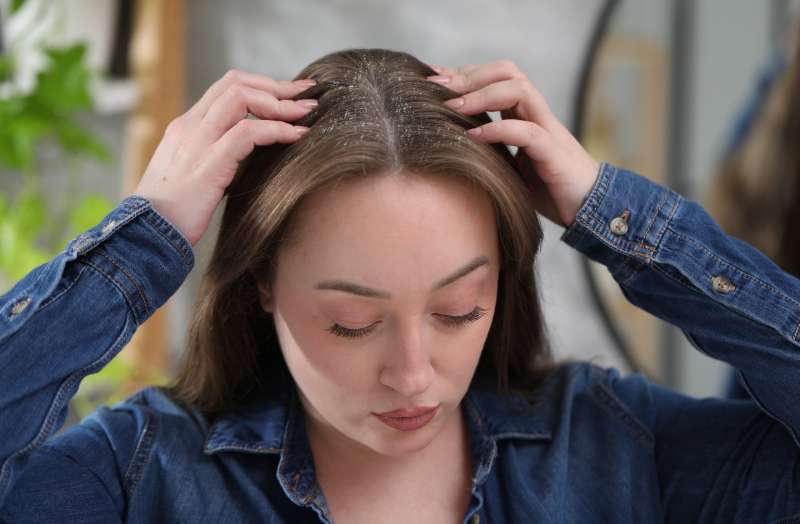
Most people treat dandruff with a shampoo and assume that's enough. For some people, it works. But if you've been using anti-dandruff shampoo for months and still have flaking, scalp itchiness, or a persistent oily buildup that nothing seems to clear, you may be dealing with wet dandruff, a different condition with a different mechanism, and one that requires a different approach.
At Pur Artistry in Denver, wet dandruff is one of the most common scalp conditions we see. Denver's altitude and climate create specific conditions that make it worse. Here's what wet dandruff actually is, how to tell the difference, and what actually addresses it.
What Wet Dandruff Is And How It Differs From Dry Dandruff
Dandruff is a catch-all term that covers two distinct conditions.
Dry dandruff is what most people picture: small, white, powdery flakes that fall from the scalp, often associated with scalp dryness and a tight or itchy feeling. It responds reasonably well to hydrating shampoos and regular washing. The flakes are dry and light.
Wet dandruff is different in both appearance and cause. The flakes are larger, yellowish or off-white, and oily they tend to stick to the hair and scalp rather than falling freely. The scalp often looks greasy even shortly after washing. There may be redness, irritation, or a persistent low-grade itchiness that doesn't fully resolve between washes.
The underlying mechanism is different too. Wet dandruff is associated with seborrheic dermatitis, an inflammatory condition driven by excess sebum production and an overgrowth of Malassezia, a yeast that naturally lives on the scalp but proliferates when the environment favors it (warmth, excess oil, disrupted scalp barrier). The result is accelerated cell turnover in affected areas, which produces the characteristic clumped, oily flakes.
This is why anti-dandruff shampoos designed for dry dandruff don't reliably work on wet dandruff. They address surface symptoms without touching the sebum excess or the inflammatory response driving the condition.
Why Denver Makes It Worse
Denver's climate creates a paradox for scalp health: the air is genuinely dry, but that dryness can trigger excess sebum production as the scalp attempts to compensate.
When the scalp barrier is disrupted by low humidity, hard water mineral deposits, altitude-related UV exposure, or seasonal temperature changes the sebaceous glands can upregulate oil production in response. That excess sebum creates exactly the conditions Malassezia thrives in.
Outdoor humidity in Denver drops from 30–40% in summer to 15–25% by autumn. Indoor heating pulls another 10–15% from the air. Hard water is common across the Denver metro area and leaves mineral deposits at the follicle opening that interfere with natural scalp function. These conditions don't cause seborrheic dermatitis on their own, but they can trigger flare-ups in people who are predisposed and make existing cases more persistent.
The result: people who never had dandruff issues in more humid climates often develop wet dandruff symptoms after living in Denver for a year or two. People who already have seborrheic dermatitis find it harder to manage here than they did elsewhere.
What Wet Dandruff Signals and What It Doesn't
Wet dandruff is a scalp condition, not a hygiene problem. This is a distinction worth making clearly.
People with wet dandruff often wash their hair frequently in an attempt to clear the buildup, sometimes daily or more. Frequent washing can actually worsen the condition by stripping the scalp and triggering more sebum production in response. The scalp is trying to protect itself; aggressive washing sends the signal that more oil is needed.
Wet dandruff also isn't the same as scalp psoriasis, though the two are sometimes confused. Psoriasis produces thicker, more silvery scales and tends to extend beyond the hairline onto the forehead, ears, and neck. Seborrheic dermatitis wet dandruff typically stays within the hairline and produces oilier, yellower flakes. If you're uncertain which you're dealing with, a dermatologist can confirm.
What wet dandruff does signal:
Excess sebum production the scalp is producing more oil than the environment or washing routine can clear
A disrupted scalp microbiome the balance between Malassezia and other microorganisms on the scalp has shifted
A compromised scalp barrier the skin's protective layer isn't functioning as it should
Possible follicle congestion buildup of sebum and product residue at the follicle opening
All four of these are addressable. None of them resolve reliably with over-the-counter shampoo alone.
What Actually Addresses Wet Dandruff?
Scalp Analysis Before Treatment
The first step in addressing wet dandruff professionally is understanding what's actually happening at the scalp. At Pur Artistry, every Head Spa session begins with a scalp analysis before any product is applied. Is the flaking primarily sebum-driven, or is there also product buildup or hard water mineral deposits? Is the scalp inflamed or just congested? Is the barrier compromised? The answers change what's used and in what sequence.
Enzyme Exfoliation at the Follicle Level
Professional enzyme exfoliation breaks down the protein bond that holds dead skin cells and sebum buildup at the follicle opening, the kind of buildup that shampoo can't clear because shampoo sits on the surface rather than penetrating to where the congestion is. This is different from a scalp scrub, which can cause microtears and worsen inflammation in an already reactive scalp.
Double Cleanse Matched to Scalp Condition
A double cleanse, an oil-based first cleanser to dissolve sebum and product residue, followed by a clarifying second cleanser removes what enzyme exfoliation breaks down. The second cleanser is matched to scalp condition: something that addresses the sebum excess without stripping the barrier further.
Targeted Serum Application
After the scalp is cleared and clean, serums can actually reach it. For wet dandruff, this typically means ingredients that address sebum regulation, barrier repair, and inflammation: peptides, ceramides, niacinamide, and hyaluronic acid. These are applied to the clear follicle pathway after cleanse, which is why the sequence matters, and why applying the same ingredients at home without first clearing the scalp produces limited results.
Therapeutic Scalp Massage
Therapeutic massage increases microcirculation to the scalp, which supports the skin's own healing and renewal processes. It also activates the parasympathetic nervous system, relevant because stress is a known trigger for seborrheic dermatitis flare-ups. Addressing the stress load through structured cranial and cervical massage is part of what makes a professional Head Spa session more comprehensive than product application alone.
Herbal Botanical Conditioning Rinse
The session closes with a conditioning rinse formulated with lavender, chamomile, rose, hibiscus, and fresh aloe vera, ingredients with documented calming and anti-inflammatory properties that support the scalp barrier without adding to the sebum load.
How Often Wet Dandruff Requires Professional Treatment
For most clients with wet dandruff at Pur Artistry in Denver, monthly Head Spa sessions are the starting point. The scalp's renewal cycle is approximately 28 days — monthly treatment means each session builds on what the previous one cleared and established, rather than functioning as a one-off reset.
Some clients with more active seborrheic dermatitis see better results with fortnightly sessions for the first two months, then monthly maintenance. The compounding effect is real: scalp reactivity typically decreases over three to four months of consistent professional treatment, and the interval between flare-ups extends.
What doesn't work: treating wet dandruff occasionally when symptoms become uncomfortable. The condition is cyclical and environment-dependent. Waiting until a flare is severe before treating means each session spends most of its time clearing acute buildup rather than building toward a healthier baseline.
At-Home Support Between Sessions
Professional treatment addresses what home care can't. But home care between sessions matters.
For wet dandruff in Denver:
Wash hair two to three times per week, not daily. Frequent washing strips the scalp and signals for more oil production.
Use a shampoo with zinc pyrithione, selenium sulfide, or ketoconazole, these address the Malassezia component. Rotate with a gentle, sulfate-free shampoo.
Avoid heavy conditioning products at the scalp. Conditioner should be applied mid-length to ends only, not to the scalp, to avoid adding to sebum buildup.
Apply a lightweight scalp serum between washes if the scalp feels tight, something with niacinamide and centella asiatica, not an oil-based product.
Reduce washing water temperature. Hot water opens the follicle and strips the barrier; cool to lukewarm water is better for a reactive scalp.
What the professional session adds is the follicle-level clearance and the professional-concentration serums that home care can't replicate. Both are necessary.
Wet Dandruff Needs More Than Shampoo
Wet dandruff isn't a hygiene issue and it isn't a dry scalp. It's a sebum-driven, inflammatory condition that requires follicle-level clearance, barrier support, and professional-concentration activities, things that over-the-counter shampoo isn't formulated to deliver.
At Pur Artistry in LoHi, our Head Spa is designed specifically for conditions like this. The scalp analysis, enzyme exfoliation, professional double cleanse, targeted serum application, and therapeutic massage work together to address wet dandruff at its mechanism — not just its surface symptoms.
If your scalp has been consistently oily, flaking, or itchy despite a regular washing routine, it's time for a different approach.
Book a Head Spa at Pur Artistry LoHi for Wet Dandruff Treatment → Tell us what your scalp has been doing when you book, we'll make sure the session addresses the sebum excess and inflammation driving it.
FAQs
Q: What is wet dandruff and how is it different from regular dandruff? Wet dandruff is oily, yellowish flakes caused by excess sebum and Malassezia yeast overgrowth, not scalp dryness. Regular (dry) dandruff produces small, powdery white flakes associated with a dry scalp. They have different causes and respond to different treatments.
Q: Why doesn't anti-dandruff shampoo fix wet dandruff? Most anti-dandruff shampoos address surface symptoms rather than the follicle-level sebum buildup and barrier disruption driving wet dandruff. They can reduce flaking temporarily but don't resolve the underlying condition.
Q: Does Denver's climate make wet dandruff worse? Yes. Denver's low humidity triggers excess sebum production as the scalp compensates for dryness, and hard water deposits mineral buildup at the follicle opening. Both conditions favor Malassezia overgrowth and seborrheic dermatitis flare-ups.
Q: How many head spa sessions does wet dandruff require? Most clients need monthly sessions to see consistent improvement. For more active cases, fortnightly sessions for the first two months followed by monthly maintenance produces better compounding results. Three to four months of consistent treatment is typically when scalp reactivity begins to noticeably decrease.
Q: Is wet dandruff the same as seborrheic dermatitis? Yes. Wet dandruff is the common term for mild to moderate seborrheic dermatitis of the scalp. If symptoms extend beyond the hairline onto the forehead, ears, or neck, or if they're severe, a dermatologist should confirm the diagnosis.