Digital advertising gives franchise brands reach and targeting options, but it can be harder to stand out when customers see a steady stream of ads. For a multi-unit network, rising digital costs add another challenge: marketing teams need to support local growth while keeping campaigns consistent across locations.
ValuDirect is expanding its turnkey Every Door Direct Mail® (EDDM®) solutions for franchise systems and multi-unit operators. The service coordinates campaign planning, route selection, postcard production and mailing, helping brands run local campaigns across multiple markets with less work for individual franchisees.
For franchise marketing teams evaluating new ways to support local store marketing, EDDM offers a practical option: send a physical offer to households along selected postal routes without purchasing a named mailing list. Results depend on the offer, audience, execution and follow-up, so each campaign should be planned and measured against clear business goals.
Why franchise local marketing needs a modern approach
Franchise marketing has to work at two levels. Head office protects the brand and sets campaign standards. Local operators understand their customers, neighbourhoods and trading conditions.
That balance can be difficult to maintain. A centrally managed campaign may be consistent but feel generic in a local market. Campaigns created independently by franchisees can vary in quality, messaging and brand compliance.
Digital campaigns have similar trade-offs. Paid search and social advertising can be adjusted by market, but performance depends on competition, creative quality, targeting and the customer journey after a click. Contentsquare’s 2025 Digital Experience Benchmarks analysed 90 billion sessions across 6,000 websites. It reported that the cost of an online visit rose 9% year over year, while conversion rates fell 6.1%. These figures describe the sites in the study, not every franchise or advertising account, but they show why marketers are reviewing how they balance paid digital with other channels.
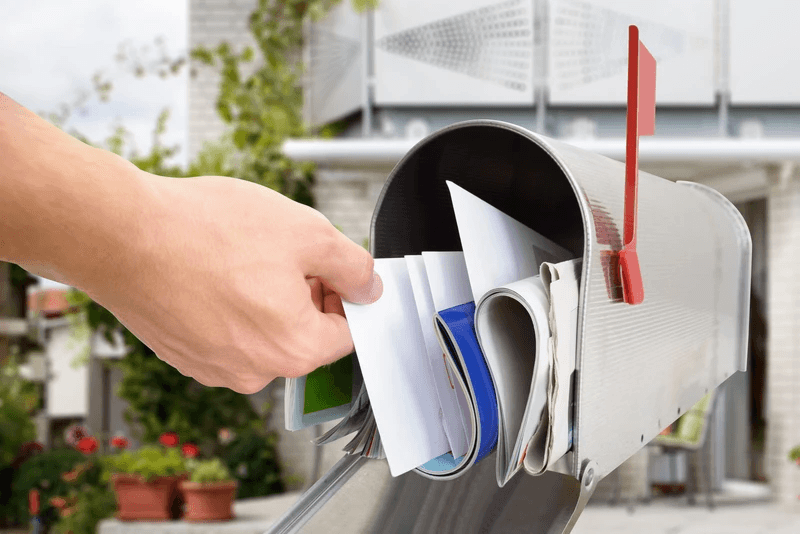
Direct mail can add a tangible local touchpoint to that mix. It does not replace digital advertising or guarantee lower customer acquisition costs. It gives a franchise another way to present an offer, direct nearby households to a store or landing page, and reinforce a campaign customers may also see online.
How EDDM postcard campaigns work for multi-unit franchises
Every Door Direct Mail is a USPS service that delivers eligible mailpieces to addresses on selected carrier routes. Businesses can choose routes through the USPS EDDM tool, and the mailpiece does not need a recipient’s name or a purchased address list. USPS also allows route selection using available demographic filters such as age, household size and income.
For franchise networks, route planning starts with the location. A restaurant might select nearby residential routes for a new menu offer. A fitness studio could focus on neighbourhoods within a reasonable travel distance. A home-services franchise may choose routes that fit its service area and capacity.
A practical campaign plan can include:
The locations participating and the offer each will promote.
Carrier routes around each location, selected for the intended audience.
A centrally approved postcard design with space for local details.
A clear response path, such as a unique QR code, offer code or campaign URL.
A mailing schedule that aligns with the promotion and each location’s ability to serve customers.
USPS offers EDDM Retail for smaller mailings and EDDM BMEU for larger-volume mailers. The appropriate option depends on campaign size, mailing requirements and operational needs. USPS states that EDDM Retail mailings must include at least 200 pieces and are limited to 5,000 pieces per day per ZIP Code. Large-volume mailers can use the BMEU process. Check the current USPS requirements before each campaign, as rules and prices can change.
Standardise the campaign, then localise the details
A multi-unit campaign does not have to choose between a consistent brand and a relevant local message. Head office can provide the campaign framework, while each location supplies details that make the postcard useful in its area.
The central team might approve the headline, imagery, offer terms, brand colours and call to action. Local fields can include the store address, opening date, phone number, neighbourhood event or location-specific redemption code. A simple review process helps ensure those details are accurate before printing.
For example, a franchise group opening several cafés could use the same core postcard design across markets. Each store could feature its own opening-week offer, address and QR code. This creates a recognisable network-wide campaign while giving customers a reason to visit the location near them.
ValuDirect describes its franchise programme as supporting national systems, multi-unit operators and single locations. Its franchise marketing page outlines the types of businesses it serves and its approach to supporting campaigns across locations.
Measure response and acquisition cost with a clear test
A postcard campaign should be treated as a measurable test, not assumed to be effective because it was delivered. Before mailing, define what success means: visits, bookings, calls, offer redemptions or another outcome that can be tracked.
Useful measurement methods include:
Unique offer codes: Give each location or campaign a distinct code to record redemptions.
QR codes: Direct recipients to a campaign-specific landing page and track visits and actions.
Dedicated phone numbers: Use call tracking when phone enquiries are a key outcome.
Point-of-sale questions: Ask customers how they heard about the offer and record responses consistently.
Location-level reporting: Compare participating stores with their recent performance or a similar group that did not receive the mailer.
To estimate campaign acquisition cost, divide the campaign’s total cost by the number of attributable new customers. Include design, print, postage, fulfilment and any offer costs you can reasonably account for. Use a defined attribution window and note its limits. A customer may see a postcard, search for the brand later and convert through another channel, so no single tracking method will capture every influence.
The first campaign can establish a baseline. Later tests can compare route choices, offers, formats and timing. Keep one or two variables consistent where possible so the team can make a useful comparison.
Address common concerns before launch
“Will the same offer work in every market?”
Not always. A shared campaign can establish consistent brand messaging, but local pricing, competition, seasonality and customer needs may call for different offers. Keep the brand framework central and allow a controlled amount of local variation.
“Is EDDM too broad for our customer base?”
EDDM reaches addresses on selected routes rather than named individuals. That can suit campaigns where nearby households are likely prospects, but it may be less appropriate when a business needs to reach a narrow, highly specific audience. Review route data and test a manageable area first.
“How do we know whether the campaign paid off?”
Use tracking that matches the goal. A unique code may work for a discount; a QR code or landing page can support bookings; call tracking can help measure enquiries. Compare the results with total campaign costs and document assumptions.
ValuDirect’s EDDM and direct mail service page describes its support for route selection, USPS preparation, printing and delivery. For mailing specifications and the available EDDM options, refer to the USPS guide.
Frequently asked questions
What is franchise direct mail marketing?
Franchise direct mail marketing uses printed materials, such as postcards, to reach customers in local markets. A franchisor can set the brand standards and campaign structure, while each participating location adds relevant local details.
What is EDDM for a franchise?
EDDM is a USPS mailing service that sends eligible mailpieces to addresses on selected postal routes. Franchise brands can use it to promote a location, offer or event to households in the surrounding area without buying a named mailing list.
Can franchise postcards be customised for each location?
Yes. A campaign can use a shared design and core message while including each store’s address, offer, QR code or local event information. Franchisors should set clear rules for which elements can be changed and review local details before production.
How should a franchise measure an EDDM campaign?
Use a trackable response method, such as a unique promotion code, QR code, landing page or phone number. Compare attributable responses with the full campaign cost and record the measurement period and any limitations.
Does direct mail replace digital advertising?
No. Direct mail can complement digital channels by adding a physical, local touchpoint. The right channel mix depends on the franchise’s audience, budget, offer and ability to measure results.
A coordinated way to bring local campaigns to more locations
For franchise systems facing crowded digital channels, standardised EDDM campaigns offer another way to connect with nearby customers. Their value comes from choosing relevant routes, presenting a clear offer, keeping brand standards in place and measuring response carefully.
Franchise teams can explore ValuDirect’s EDDM services and franchise marketing support to understand how a managed postcard programme could fit their locations. For current mailing specifications and options, consult the USPS EDDM guide before planning a campaign.