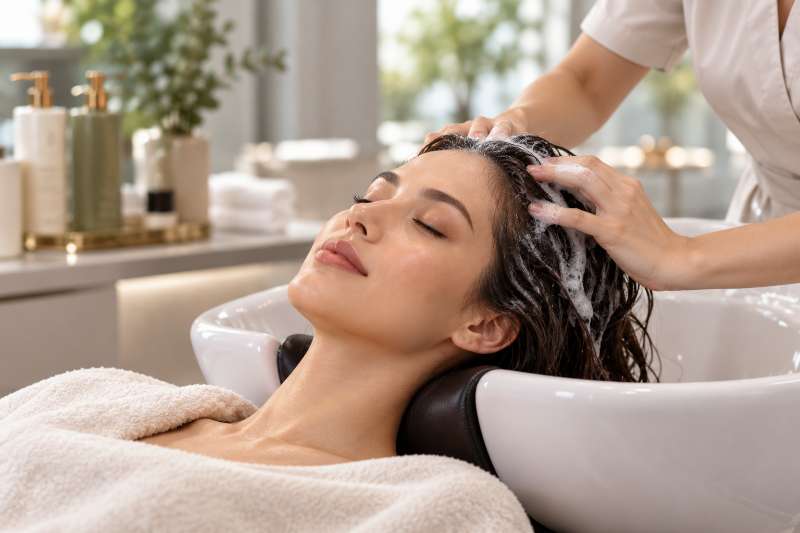
Step out of the shower this month and you may find more hair in the drain than you expected. It is also the season when the scalp facial starts showing up in every beauty feed, a facial-style ritual for the skin that lives under your hair. Your scalp just spent a summer at 5,280 feet of altitude and UV, and now indoor heating is drying it out again. Here is what a scalp facial really is, how it differs from a Japanese head spa, and which one suits your scalp.
Key Insights
- A scalp facial treats the scalp as skin, with cleansing, gentle exfoliation, massage and hydration.
- Many people shed more hair each fall. It is usually temporary, but patches, pain or scaling deserve a dermatologist.
- Aggressive scrubbing and layered products can irritate the scalp barrier. A professional scalp analysis shows what your scalp actually needs.
- Our Japanese head spa and scalp therapy is how we deliver scalp facial care, with water therapy and longer massage added.
What Is a Scalp Facial?
A scalp facial is a professional treatment that cleanses, exfoliates, massages and hydrates the scalp the way a facial does for your face. It is designed to leave the scalp feeling clean, balanced and comfortable.
Your scalp is skin, with the same outer barrier, oil glands and pores as your cheeks. The difference is that every hair follicle sits in a layer of sebum, sweat, styling product and dead skin cells that have nowhere to go. A scalp facial lifts that layer so the surface can breathe again.
Honesty matters here. Clinical research on scalp facials is limited, so we describe what clients reliably feel and see. That means a lighter, cleaner scalp, relaxed shoulders and neck, and hair that moves differently afterward. We do not promise regrowth.
Why Denver Scalps Struggle in Fall
Denver’s altitude, dry air and indoor heating can leave the scalp tight, flaky and oily at the same time, because a stressed barrier often overproduces oil while losing moisture.
Skin loses water faster in low humidity, and the scalp is no exception. When the scalp feels dry, many people shampoo harder, which strips more oil and invites more flaking. Strong summer UV adds its own wear on scalp skin and hair.
Fall shedding is a separate story. Many people shed more in late summer and early fall, and it usually settles on its own. It is not one predictable event for everyone, though. Sudden patches, scalp pain, visible redness or scaling should be seen by a dermatologist rather than treated with another trend.
Where DIY Scalp Care Goes Wrong
The most common DIY scalp mistakes are scrubbing too hard, layering too many products and treating the scalp without ever looking at it.
Too much mechanical scrubbing
Coarse scrubs and stiff brushes can scratch the surface and trigger irritation. Scalp exfoliation works best when it is gentle and matched to the scalp, with a mild exfoliating cleanse instead of grit.
Buildup that looks like dryness
Dry shampoo, serums, oils and styling creams can sit at the follicle opening. The scalp may look flaky, but the flakes are often residue rather than dry skin. Adding more moisturizer on top only makes the layer thicker.
Guessing without seeing
Oily, dry and sensitive scalps can look surprisingly alike to the naked eye. That is why a scalp analysis comes first. Under magnification, we can see whether you are dealing with buildup, dryness or sensitivity, and clients often tell us that seeing their own scalp up close was the moment it made sense.
What Happens in the Studio
A Japanese-inspired head spa works through warm water, thorough cleansing and slow massage, which together help loosen buildup, emulsify excess sebum and support a calm, hydrated scalp barrier.
Here is the biology behind the ritual.
- Circulation. Scalp massage increases blood flow to the area for a time. That is the warm, tingling relaxation clients describe, and it also eases the neck and shoulder tension that builds from desk work.
- Sebum emulsification. Warm water and cleansing products break oil and residue into a form that rinses away, rather than being pushed around the scalp.
- Barrier support. Hydrating treatments after cleansing help the scalp skin stay comfortable and balanced instead of tight.
Many clients add a mini facial or hot stone work, which turns the visit into a full reset instead of a single service.
Scalp Facial vs. Head Spa
A scalp facial focuses on cleansing and exfoliating the scalp surface. A head spa includes those goals and adds water therapy, extended massage and a longer, more sensory experience.
If your main concern is buildup or a tight, dry scalp, a focused session makes sense. If you also want to unwind, the full head spa is the more complete choice. For clients who want skin and scalp care in one visit, our calming, pregnancy-safe Pur Zen Facial pairs well with it.
LoHi clients tend to come for the ritual and the skincare crossover. At Denver Tech Center, many book it as a lunch-hour or after-work reset. Choose LoHi or DTC, and your specialist will tailor the visit to what your scalp analysis shows.
Frequently Asked Questions
What is a scalp facial?
It is a professional scalp ritual that cleanses, gently exfoliates, massages and hydrates the scalp skin. The goal is a clean, balanced and comfortable scalp, not a medical correction.
Is it safe for color-treated hair?
Generally yes. The treatment focuses on the scalp skin, and your specialist can choose gentle cleansing for color-treated or lightened hair. Tell us about recent color or chemical services when you book.
Is it safe during pregnancy?
Our Pur Zen Facial is designed to be pregnancy-safe. For head spa treatments, mention your pregnancy when booking so we can adjust the experience, and check with your prenatal provider first.
Will a scalp facial stop fall shedding?
No. Seasonal shedding is a natural hair cycle shift, and no spa treatment prevents it. A treatment can leave the scalp clean and comfortable. If shedding is heavy, patchy or painful, see a dermatologist.
Your scalp has been doing quiet work all year. Book a scalp facial in Denver at LoHi or DTC and let it be looked after.