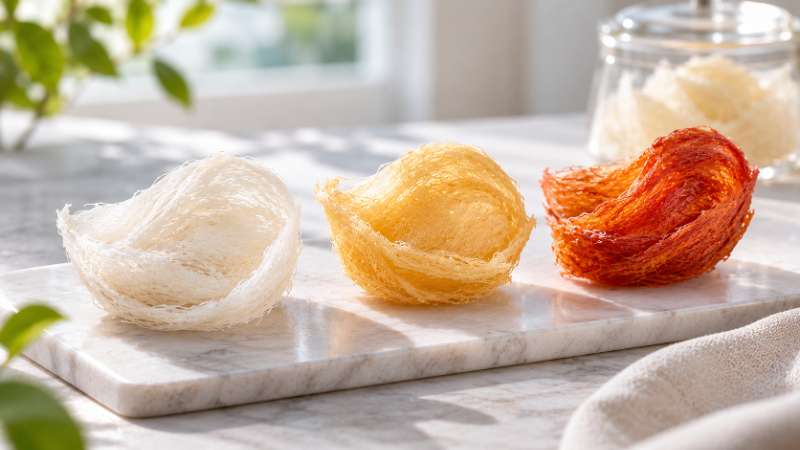
Few foods carry a legend as dramatic as red bird nests. For generations, the deep red “blood nest” has been described as a nest built with swiftlet blood, and it often sells at a premium because of that story. It is a memorable tale, but science tells a different and more interesting one. Here is what really gives an edible bird’s nest its color, how white, golden, and red nests compare, and how to choose a nest you can trust.
Key insights
- The red bird's nest is not made of blood. Researchers found no hemoglobin, the protein that gives blood its color.
- The red, orange, and golden shades come from a natural chemical reaction between the nest’s glycoprotein and nitrogen compounds in the air of the swiftlet house.
- White nest is the natural color of swiftlet nest and comes from clean, well-ventilated swiftlet houses.
- Color alone does not prove value or authenticity. Lab testing, grade, and careful hand-cleaning matter far more.
Is the Red Bird Nest Made of Blood?
No. The red bird nest contains no blood. Its color forms after the nest is built, when nitrogen compounds in the swiftlet house react with the nest’s natural proteins.
In 2018, researchers at Nanyang Technological University in Singapore published a study in the Journal of Agricultural and Food Chemistry that settled the question. They found no hemoglobin in red nests. Instead, they traced the color to tyrosine, an amino acid found in the nest’s mucin glycoprotein.
When nitrogen-rich vapor in the swiftlet house reaches the nest, tyrosine reacts with it to form a compound called 3-nitrotyrosine. At high levels this compound looks red, and at lower levels it creates yellow, golden, or orange shades. So a red bird nest is a white nest that has changed color in its environment, rather than a different substance altogether.
Where Does the Color Come From?
The color comes from the swiftlet house itself. Nests built in houses with more droppings and less airflow are exposed to more nitrogen vapor, which turns them golden or red over time.
Swiftlets eat insects, so their droppings are rich in protein and nitrogen. As bacteria break those droppings down, they release nitrogen compounds into the air. The NTU researchers explained that these vapors rise and react with the nests above them. The more vapor a nest is exposed to, the deeper its color becomes.
That is why color varies so much from one house to the next. Clean, well-managed swiftlet houses with good ventilation tend to produce the natural white nest that most buyers prefer.
White, Golden, and Red Bird Nest Compared
White bird nest
White is the original color of the swiftlet nest. It ranges from bright ivory to soft cream, and it is the most widely traded type for soups, drinks, and gift boxes. Alba’s nests are naturally white, harvested from managed swiftlet houses across Java, Kalimantan, and Sulawesi.
Golden bird nest
A golden bird nest has a light yellow or amber tone, created by a lower level of the same color reaction. Some buyers enjoy its warm appearance, and it is sometimes sold as a mid-range specialty.
Red bird nest
A red bird nest has the deepest color and is often marketed as rare, which helps explain its high price. Studies have not confirmed that red nests offer greater nutritional value than white. Researchers also found that colored nests tend to carry more nitrite and nitrate, which is why reputable exporters test every batch against food safety limits before shipping.
How to Judge Quality Beyond Color
Color tells you about the nest’s environment, not its value. To judge quality, look at grade, cleanliness, and independent lab results.
Myth one, the whiter the better
A natural white nest has a soft ivory tone. A nest that looks paper-bright may have been whitened, and testing laboratories have documented nests treated with hydrogen peroxide. Every Alba nest is cleaned by hand with clean water and fine tweezers, with no bleaching at any stage. You can see each step on our production process page.
Myth two, deep red always means premium
Because red nests command higher prices, some sellers have been known to add artificial color to imitate them. Natural red color forms slowly and unevenly, so an unusually even, bright red is worth questioning. A certificate of analysis from an independent laboratory is the best way to confirm what you are buying.
What to check instead
Genuine swiftlet nest is made mostly of glycoprotein, and its signature compound is sialic acid. Laboratories use sialic acid as a marker of real nest content, so it is a useful number to ask for. Learn more in our guide to sialic acid in bird’s nest.
Choosing the Right Nest for Your Market
For most retailers, restaurants, and beverage makers, a clean white house nest is the most versatile choice. It suits Lunar New Year gift boxes, double-boiled soups, and ready-to-drink products, and it meets the expectations of buyers in the United States, Australia, and Taiwan. Alba offers natural white nests in bowl, triangle, strip, and oval shapes, so you can match the grade to how your customers will enjoy it.
Browse our premium bowl, triangle, and strip nests to compare grades, or review our certifications and test results before you order.
Frequently Asked Questions
Is the red bird nest made of swiftlet blood?
No. Research from Nanyang Technological University found no hemoglobin in red nests. The red color forms when nitrogen compounds in the swiftlet house react with tyrosine in the nest’s glycoprotein.
Is red bird nest more nutritious than white?
There is no scientific evidence that red nests are more nutritious than white. Both are made from the same swiftlet glycoprotein, and the color comes from the environment rather than extra nutrients.
What is a golden bird nest?
A golden bird nest is a white nest that has taken on a light yellow or amber tone through a milder version of the same color reaction that creates a red nest.
How can I tell if a bird nest’s color is natural?
Natural white nests have a soft ivory tone, and natural colored nests show uneven shading. Very bright white or perfectly even red can be a sign of bleaching or dye. Ask for an independent certificate of analysis to confirm authenticity.
Request Samples of Natural White Nest
Whether you’re stocking gift boxes, supplying restaurants, or developing a bird’s nest drink, quality starts with a clean, traceable nest. Contact our team to request samples, specifications, and wholesale pricing.