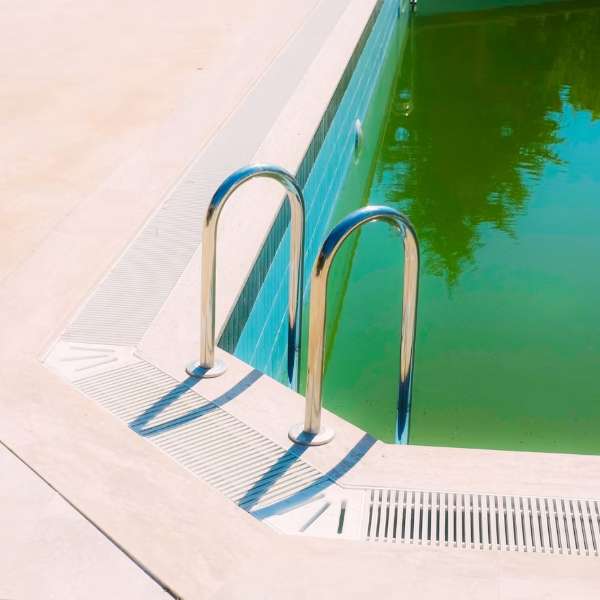
You are testing the water, the chlorine reads fine, and yet the pool keeps clouding over or turning a faint green within days of being cleaned. It is one of the more frustrating problems an Australian pool owner can face, because it suggests the usual rules are not working. In many cases the missing piece is phosphate, and the fix is a phosphate remover for swimming pools rather than yet another dose of chlorine.
What phosphates actually are
Phosphates are dissolved compounds that act as a nutrient. In a swimming pool they are essentially food for algae. Algae need three things to bloom: sunlight, warmth and nutrients. You cannot do much about the first two in an Australian summer, but you can control the nutrient supply. When phosphate levels climb, even a well-chlorinated pool can struggle, because the chlorine is being asked to kill algae that is being fed continuously from the water itself.
Phosphates enter a pool from a surprising number of sources. Topping up with mains or bore water introduces them, since many water supplies carry low background levels. Decaying leaves, pollen, dead algae, insects and other organic debris release phosphates as they break down. Garden fertiliser carried in on wind, rain runoff or swimmers' feet is a common contributor, as are some pool chemicals and stain treatments. Even sunscreen and skin oils add to the load over a busy season. The result is that phosphates accumulate gradually, often without the owner noticing until algae becomes a recurring problem.
Why chlorine alone does not solve it
Chlorine is a sanitiser. Its job is to kill bacteria and algae and to oxidise contaminants. What chlorine does not do is remove the nutrient that algae feed on. If phosphate levels are high, you can find yourself in a cycle where the chlorine kills a bloom, the dead algae break down and release more phosphate, and the next bloom arrives within days. You end up using more and more chlorine to hold the same line, which is expensive and hard on the water balance.
This is why a pool can show an acceptable chlorine reading and still go green. The chlorine is being overwhelmed by the rate at which algae can grow when there is plenty of food available. Lowering the phosphate level changes the equation, because it starves the algae rather than simply attacking it after it has already taken hold.
How a phosphate remover works
Phosphate removers are a different class of product to sanitisers. The most effective ones are based on lanthanum, usually as lanthanum chloride. When added to the water, the lanthanum binds with dissolved phosphate to form an insoluble compound, essentially turning a dissolved nutrient into a solid particle. That particle is then either trapped by the filter or settles to the floor where it can be vacuumed away.
The practical effect is that the phosphate is physically taken out of the water rather than neutralised chemically in place. Once the phosphate level is low, the chlorine you are already running has a far easier job, because the algae no longer has a steady food supply. Many owners find their chlorine consumption drops noticeably after phosphates are brought under control, which offsets some of the cost of the treatment.
Strength matters here. A more concentrated product, such as a lanthanum chloride formulation rated among the strongest available, will shift a high phosphate reading with a smaller volume of product and less repeat dosing. Aquatune's phosphate remover for swimming pools is one example of a high-concentration lanthanum chloride product used by Australian pool owners and trade technicians for exactly this purpose.
Testing before you treat
The sensible first step is to test. Phosphate test kits and strips are widely available, and many pool shops will test a water sample for you. Levels are measured in parts per billion, and while opinions vary on the ideal target, most guidance suggests keeping phosphates as low as practical, generally under a few hundred parts per billion, and acting before a reading climbs into the thousands. Testing matters because it tells you whether phosphate is genuinely your problem or whether something else, such as poor circulation or an under-sized filter run time, is to blame.
Using the product correctly
Phosphate remover is typically added with the pump running so it can circulate and bind throughout the water. Because the bound phosphate becomes a fine particulate, the water often turns cloudy for a period after dosing, which is normal and expected. The filter then captures the particles over the following hours or days, and some settled material may need vacuuming to waste rather than back through the filter.
It is worth balancing the rest of the water first. Phosphate removal works best alongside correct pH, alkalinity and sanitiser levels, not as a substitute for them. Heavy organic debris should also be skimmed and vacuumed out before treatment, since rotting leaves will simply reintroduce phosphate. For pools with a persistent history of algae, a regular phosphate check through the warmer months is more effective than waiting for the next green bloom.
The bigger picture
A green pool that resists chlorine is a signal, not a mystery. More often than not it points to a nutrient problem that chlorine was never designed to fix. Bringing phosphate levels down removes the fuel, lets your existing sanitiser do its job, and tends to reduce both the effort and the chemical cost of keeping the water clear. If you have been fighting the same recurring bloom all season, testing for phosphate and treating it directly is usually a far more economical answer than simply adding more chlorine and hoping the balance finally holds.