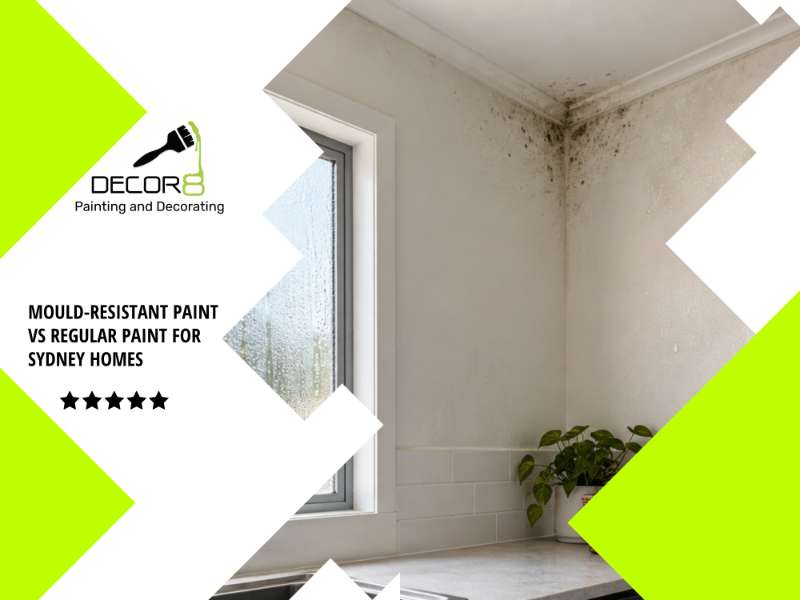
Mould-Resistant Paint vs Regular Paint: Which Is Worth the Investment for Sydney Homes?
Mould-resistant paint is worth the extra cost for Sydney homes, especially in bathrooms, laundries and other areas exposed to high moisture and humidity. It helps reduce mould growth on painted surfaces and provides better long-term protection than regular paint.
However, regular paint is generally sufficient for dry, well-ventilated rooms. Mould-resistant paint also won’t fix underlying moisture problems such as leaks, poor ventilation or condensation. Addressing these issues first is important for achieving a lasting finish.
What Is the Difference Between Mould-Resistant Paint and Regular Paint?
Mould-resistant paint contains additives that help prevent mould and mildew growth on painted surfaces, making it suitable for bathrooms, laundries and other moisture-prone areas. Regular interior paint focuses on colour, coverage and durability, although some products also provide mould protection.
The main difference is the level of mould resistance and the conditions each paint is designed to handle. For example, Dulux offers mould-resistant technology in its Wash&Wear range, including Wash&Wear +PLUS Kitchen & Bathroom, which is formulated for areas exposed to high humidity and condensation.
For further product information, see the Dulux Wash&Wear range.
Is Mould-Resistant Paint Worth the Extra Cost?
Mould-resistant paint is worth the extra cost for bathrooms and other areas exposed to frequent steam and condensation. However, regular paint may be a more cost-effective choice for dry, well-ventilated rooms, especially when repainting an entire house.
Why the Cheapest Paint Isn’t Always the Cheapest Option
Mould-resistant paint can help reduce future repainting costs in bathrooms with a history of mould. Using regular paint that isn’t suitable for humid conditions may increase the risk of mould returning, leading to additional cleaning, preparation and repainting expenses.
However, the long-term performance of mould-resistant paint depends on the product, ventilation, humidity and surface preparation. Addressing moisture problems first is important for achieving lasting results.
How Much More Should You Expect to Pay?
Mould-resistant paints are often sold at a premium compared with basic interior paints, although prices vary between brands and product ranges.Rather than comparing the shelf price of two tins, compare the actual cost of completing the same job.
For example, consider the difference between paying an extra $30 or $60 for a specialist coating on a small bathroom ceiling and paying a similar premium across every room in the house.The additional spending may be reasonable for the bathroom, where the coating serves a specific purpose. Across dry bedrooms and living areas, the benefit could be negligible.
When comparing costs, check:
- Coverage: How many square metres will each litre cover at the recommended film thickness?
- Coats: Does the manufacturer require two finishing coats or an additional primer?
- Preparation: Are mould treatment, repairs or stain blocking required before painting?
- Labour: Will the preparation and application requirements change the total quote?
If you’re hiring a professional painter, ask for the specified paint system rather than comparing quotations on price alone.
Decor8’s house painting cost guide for Sydney explains how preparation, paint quality and labour affect overall project costs.
Which Rooms Actually Need Mould-Resistant Paint?
Mould-resistant paint isn’t necessary for every room in your home. Focus on areas exposed to regular moisture and humidity, such as bathrooms and laundries, and choose the right paint for each room’s conditions.
Bathrooms and Ensuites
Bathrooms are ideal for mould-resistant paint because steam and condensation can leave ceilings and walls damp, especially when ventilation is poor. Mould-resistant paint helps reduce mould growth on these surfaces and provides additional protection in humid conditions.
Bathroom ceilings need particular attention as they are exposed to repeated condensation and can be difficult to clean. Choose a paint specifically designed for bathroom walls or ceilings, depending on the surface being painted.
Kitchens and Laundries
Cooking, washing and indoor clothes drying can increase humidity.In kitchens, grease and frequent cleaning introduce another consideration: the paint needs to tolerate wiping without losing its finish.Laundries may benefit from moisture-resistant coatings when ventilation is limited, particularly around areas affected by condensation.
A suitable kitchen or bathroom paint can be useful in these rooms, but product compatibility matters more than the label alone.
Bedrooms and Living Areas
Regular interior paint is usually sufficient for dry, well-ventilated bedrooms and living rooms. However, mould-resistant paint may be beneficial in rooms where condensation regularly forms on cold external walls or behind furniture.
Before repainting, identify and address the cause of the moisture to help prevent mould from returning. For more advice, read Decor8’s guide on how to stop condensation on walls.
Does Sydney’s Climate Make Mould-Resistant Paint More Important?
The need for mould-resistant paint in Sydney homes depends more on moisture levels and ventilation than location. Homes in Penrith may experience hot summers, while properties in the Blue Mountains can face cooler conditions that encourage condensation.
However, a poorly ventilated laundry in Western Sydney may be more prone to mould than a well-ventilated bathroom in the Blue Mountains. Choose paint based on each room’s moisture conditions rather than its location.
What About Homes in the Blue Mountains?
Homes in the Blue Mountains may experience moisture problems caused by cooler weather, shaded rooms and condensation. Before applying mould-resistant paint, it’s important to check for surface damage, trapped moisture and existing paint conditions.
Decor8 explains these issues further in its guide to mould-resistant painting for damp mountain homes.
For lasting results, choose paint based on each room’s moisture levels and surface condition rather than using the same coating throughout the house.
Why Proper Preparation Still Matters
Mould-resistant paint cannot fix existing moisture problems. Before repainting, identify and address leaks, poor ventilation, condensation or water damage to prevent mould from returning.
According to NSW Health, mould is likely to return if the moisture source isn’t resolved. Any existing mould should be properly removed, damaged materials assessed and surfaces allowed to dry completely before painting.
Severe or recurring mould problems may require professional remediation. For smaller affected areas, follow public health advice and use appropriate protective equipment.
For more advice, read Decor8’s guide on whether vinegar kills mould.
Once the surface is clean, dry and properly prepared, the right mould-resistant coating can provide additional protection against future mould growth.
Need Advice on Painting Your Home?
Choosing the right paint can make a difference to how your walls and ceilings perform over time, particularly in rooms exposed to moisture.
John Berben from Decor8 Painting & Decorating has over 30 years of industry experience and provides professional interior painting services across the Blue Mountains, Western Sydney and the Hills District.
If you’re planning to repaint a bathroom, laundry or other interior space, John can discuss the preparation and coating options suitable for your project.
Contact Decor8 to request a free onsite quote or call 0404 842 7