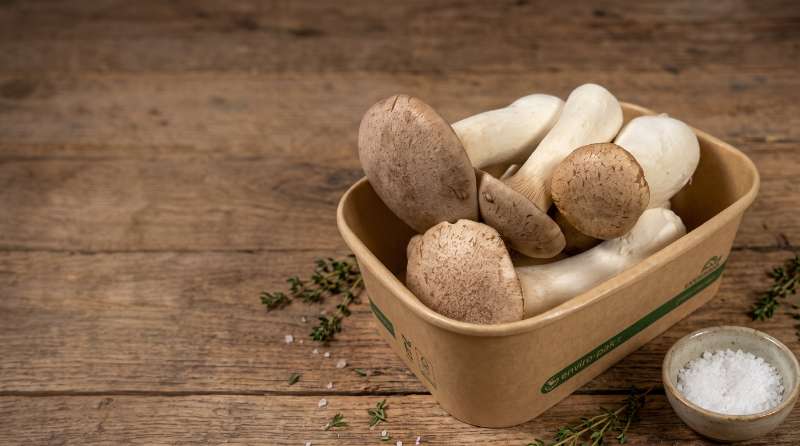
If you've spotted king oyster mushrooms at a greengrocer or on a restaurant menu and wondered what makes them different from a regular button mushroom, you're not alone. King oyster mushrooms (Pleurotus eryngii) are known for their thick, meaty stem, mild savoury flavour and firm texture that holds up to serious heat. In Australia, you can buy them fresh, order them online for delivery, or grow your own at home from a kit - and this guide covers all three, plus how to get the best out of them in the kitchen.
At Kai Kai Farm on Tamborine Mountain, we grow and ship fresh gourmet mushrooms across the Gold Coast and Scenic Rim, so questions about king oyster mushrooms come up a lot. Here's what we tell customers, all in one place.
What Are King Oyster Mushrooms?
King oyster mushrooms are the largest of the oyster mushroom family. Where a regular oyster mushroom (Pleurotus ostreatus) grows in soft, fan-shaped clusters, the king oyster grows as a single thick white stem topped with a small tan cap. Britannica notes that the species is native to temperate parts of the Mediterranean, Asia and North Africa, and is grown widely for its meaty texture, rich umami taste and longer shelf life compared with many other mushroom varieties.
That dense stem is the reason cooks like them so much. It holds its shape when sliced, seared or grilled, rather than shrinking and releasing water the way softer mushrooms do. If you've ever tried a "mushroom scallop" on a menu, there's a good chance it was cut from a king oyster stem.
Don't confuse king oyster with our Black Pearl King Oyster (also called Shimofuri) - a hybrid variety we grow that crosses king oyster with pearl oyster mushroom. It shares that firm bite but has a darker, speckled cap and a slightly different flavour. If you'd like to compare the two side by side, our Fresh Gourmet Mushrooms range usually carries both varieties in season.
How to Grow King Oyster Mushrooms at Home
Growing true king oysters from spawn is a slower, more technical process than growing a common oyster mushroom, which is why most home growers start with a ready-made kit instead. A kit skips the lab work - the substrate arrives already colonised with mycelium, so all you're doing is giving it the right conditions to fruit.
Kai Kai Farm's closest match to a home-grown king oyster is our Black Pearl King Oyster Mushroom Kit, grown on our Tamborine Mountain farm using the same no-spray methods we use for our fresh mushrooms. It's a good option if you want that meaty king oyster-style texture with a faster, more beginner-friendly fruiting time than the pure species usually needs.
Grow Kit Setup & Care
Every kit follows roughly the same process:
Find a spot with indirect light, out of direct sun and away from air conditioning vents - a kitchen bench or windowsill usually works well.
Cut and mist - cut an X into the bag as directed, then mist the opening two to three times a day to keep humidity up.
Watch and wait - small pins usually appear within one to two weeks, though king oyster varieties can take a little longer than a standard pearl oyster kit.
Harvest and repeat - once the caps have flattened but before the edges curl, twist the whole cluster off at the base. Most kits will fruit again for a second, smaller flush.
For the full step-by-step, our mushroom grow kit instructions walk through each stage in more detail.
Common Growing Issues
No pins after two weeks - this is normal for king oyster varieties. Give it another week before assuming something's gone wrong.
Mushrooms look dry or brown at the edges - mist more often, or cover the kit loosely with a plastic bag overnight to hold humidity in.
Green or black fuzzy patches on the substrate - this is contamination, not the mushroom itself. Cut that section away and check our grow kit FAQ for more troubleshooting advice.
Kit dried out before pinning - it can often still recover with a thorough soak and consistent misting. Email us a photo if you're unsure.
Cooking with King Oyster Mushrooms
King oysters are one of the more forgiving mushrooms to cook because that dense stem doesn't fall apart under high heat. A hot pan, a dry sear and minimal stirring is usually all it takes to get a good golden crust.
Best Cuts & Techniques (Steaks, Scallops)
How you cut a king oyster changes what you end up with:
Rounds ("scallops") - slice the stem into 1.5-2cm rounds, score a shallow crosshatch on each side, and sear in a hot pan with a little oil for two to three minutes per side until deep golden. Good in a lemon butter sauce.
Steaks (lengthways) - slice the stem down its length into 1cm slabs for a larger surface area. Suits the barbecue or a chargrill pan.
Shredded - pull cooked king oyster apart with two forks after searing for a texture closer to pulled meat, useful in tacos, stir-fries or fried rice.
Whole, roasted - toss whole stems in oil and roast at a high temperature until the outside is caramelised and the inside is tender.
Whichever cut you choose, give the pieces room in the pan. Crowding them means they steam instead of sear, and you'll lose that golden crust.
Where to Buy King Oyster Mushrooms in Australia
If you're searching for king oyster mushrooms near me on the Gold Coast or in the Scenic Rim, the freshest option is straight from the farm. We harvest and pack our Fresh King Oyster Mushrooms on Tamborine Mountain, then post them via AusPost Express Monday to Wednesday so they never sit in a warehouse over a weekend. We currently deliver to metro areas across QLD, NSW and VIC, and local customers on Tamborine Mountain are welcome to collect directly from the farm - see our delivery and pickup information for current delivery zones.
Restaurants and cafes on the Gold Coast and around the Scenic Rim buying in larger quantities can get in touch through our wholesale page - we already supply a number of local kitchens with fresh gourmet mushrooms on a regular schedule.
Fresh vs Grow-Your-Own Price Comparison
Both options have their place, and which one suits you comes down to how you plan to use them.
Buying fresh suits anyone who wants king oysters for a specific meal, doesn't want to wait, or needs a larger amount for a dinner party or catering job. You pay per box and use it straight away.
Growing your own suits anyone who cooks with mushrooms often. A single kit produces more than one harvest over a few weeks, so the cost per mushroom typically works out lower the longer you keep misting it - though you do need to wait for it to fruit rather than having mushrooms on hand immediately.
For current pricing on either option, our Fresh King Oyster Mushrooms and Mushroom Grow Kits pages are kept up to date.
Ready to try one? Shop our fresh King Oyster mushrooms for delivery this week, or grab a grow kit and have a fresh harvest on the bench within a fortnight.
FAQs
How do I store fresh king oyster mushrooms? Keep them in the container or paper bag they arrived in, not plastic, in the fridge and away from strong-smelling foods. They'll typically keep for around 5-7 days.
Can I get more than one harvest from a king oyster grow kit? Yes. Most kits produce a second, smaller flush after the first harvest, and sometimes a third if you keep misting and conditions stay right.
Are king oyster mushrooms the same as your Black Pearl King Oyster? Not quite. Black Pearl King Oyster (Shimofuri) is a hybrid we grow that combines king oyster and pearl oyster genetics. It has a similar firm texture but a different cap colour and a slightly different flavour.
Where can I buy king oyster mushrooms on the Gold Coast? Kai Kai Farm ships fresh king oyster mushrooms from Tamborine Mountain to the Gold Coast, Scenic Rim and metro QLD, NSW and VIC. Local customers can also collect directly from the farm.
Do you sell king oyster mushrooms to restaurants and cafes? Yes - visit our wholesale page or email [email protected] to set up a regular order.