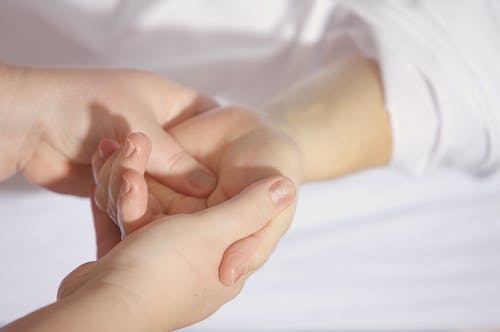
How is massage used following an injury?
There are many types of massage that can be used post-injury. The types of massage used post-injury are:
- Remedial Massage
- Swedish Massage
- Deep Tissue Massage
- Sports Massage
When might massage be beneficial after an injury?
Massage can aid in the recovery of soft tissues after an injury. Massage can be beneficial after an injury in the following situations:
- Acute Pain
- Tight Muscles
- Scarring
Following an accident, a variety of massage techniques are utilized to assist ease acute discomfort. Acute discomfort in the muscles and soft tissues might persist after an injury. Muscle tightness and tissue limitations can produce pain after an injury. Muscles contract around an injured area as a protective mechanism when they are injured. Fascia is a type of connective tissue that lies beneath the skin. Scar tissue and a lack of range of motion can cause restrictions in the fascia tissue. Massage relieves muscle tension and improves blood circulation in the tissues.
Massage is used to relieve stiff muscles that have developed as a result of an accident. Muscles frequently constrict following an injury, resulting in limited movement. Injury can cause a muscle's optimal length to be altered, resulting in increased tightness. Muscles are made up of fibres that overlap. When a muscle is tight, the fibres overlap excessively, resulting in a loss of flexibility. Massage can help relax and stretch tissues by raising their warmth. Muscles function better and damage recovery is improved when fibres are stretched.
Massage is a good way to get rid of scars after an injury. Scarring is the body's natural way of repairing damaged tissues. Collagen fibres are produced by the body and sent to the damaged site to help it heal. The texture of collagen fibres differs from that of typical tissue fibres. Collagen has a rough texture and runs parallel to the muscle fibres. Scarring can be restricting, and it can worsen discomfort. Massage loosens, breaks down, and realigns collagen fibres using specialized techniques. Reduced scar tissue improves soft tissue function, reducing discomfort and tightness.
In what ways does massage post-injury affect the body?
Massage has a wide range of physiological impacts on the human body. Massage has the following physiological consequences after an injury:
Increased capillarisation
Breakdown/realignment of collagen fibres
Increased tissue elasticity
When a massage is utilized to treat an injury, it aids in the development of capillaries. The increasing size of blood vessels is known as capillarisation. Blood veins that are larger allow more blood to flow through the body. Massage causes capillarisation by causing friction against the skin and raising the temperature. Increased capillarisation in the circulatory system helps to increase the amount of blood transported to the injured area. More oxygen and nutrients are transported through increased blood flow, which aids in the repair of injured cells. Massage aids in the rehabilitation process after an injury.
Receiving a massage for an injury aids in the removal of scar tissue. Scar tissue is a natural element of the healing process. Collagen lies in a parallel direction in normal skeletal muscle tissue, allowing for optimal contraction and flexibility. When the body suffers an injury, it creates an excessive amount of collagen. Collagen is produced in the early stages of an injury to give protection and strength. However, excessive production causes poor tissue structural organization, resulting in a lack of flexibility. Pain and dysfunction are frequently caused by the disrupted distribution of scar tissue.
Massage aids in the suppleness of the tissues. Intense training can cause muscles to become rigid and inelastic, resulting in decreased efficiency. By boosting blood flow to the tissues, massage improves tissue flexibility. Increased blood flow in the tissues raises the temperature, allowing muscle fibres to loosen and stretch. To lengthen muscular tissues, specific massage techniques are used. More flexibility and range of motion around a joint are provided by increased elasticity.
What are the advantages of getting a massage after an injury?
There are numerous advantages to getting a massage after an accident. The following are some of the advantages of massage after an injury:
- Increased healing
- Improved recovery
- Increased range of movement
Receiving a massage aids in the healing process. Massage aids the healing process of injured tissues by boosting blood flow. Massage improves tissue permeability, allowing more blood, oxygen, and nutrients to reach damaged areas, accelerating the healing process. Massage enhances the flow of nutrients and makes it easier for them to move through tissues. Massage is used to speed up recovery after severe or strenuous exercise. Massage aids in the elimination of metabolic wastes, particularly lactic acid. It decreases tissue injury and speeds up recovery by swiftly eliminating wastes from the muscles.
Improved recuperation is one of the advantages of massage. Massage aids in the rehabilitation process after an injury, surgery, or strenuous activity. Massage aids in the circulation of blood throughout the body. Improved blood circulation provides for the filling of damaged and strained muscles with oxygen-rich blood, allowing for faster repair. Many massage techniques promote blood flow through blocked areas, promoting better blood circulation. Massage motions also remove waste products from the muscles and improve lymph fluid circulation, which transports wastes away from the muscles.
Massage promotes muscle relaxation as well as an enhanced range of motion. The range of motion around a joint increase when muscles relax and loosen. Across joints, muscles operate in antagonistic pairs. Each muscle in an antagonistic pair pulls in the opposite direction of its antagonist. Muscles contract and shorten when they are tense, drawing the antagonist pair across the joint. Tension limits the joint's potential range of motion. Massage encourages antagonist muscles to relax and lengthen. The range of motion increases as the opposing muscle loosens.
Choosing the right therapist to do your massage is also essential, and it's better to consult with a professional therapist. In Sophia’s Health, you can find several kinds of massage, remedial, relaxation, deep tissue massage or even waxing. If you don't know which message you need, Sophia’s Health therapist will help you decide it.
Source: physio.co.uk