Colorbond roofing loses its original lustre due to years of intense UV exposure, causing the paint film to oxidise and turn chalky. While the structural integrity of the metal often remains sound, the aesthetic decline and surface degradation require a specific restoration process to prevent rust and extend the roof's life.
How do you restore a faded Colorbond roof?
Restoring a faded Colorbond roof requires a three-stage process: thorough pressure cleaning to remove surface chalking, applying a dedicated metal primer (like Metal Primer Plus) to ensure adhesion, and finishing with two coats of UV-resistant roof paint (like Roof Protect).
Using high-quality Australian-made products ensures the new coating accommodates the thermal expansion and contraction common in Queensland and New South Wales
Step 1: Assessing Surface Oxidation and Chalking
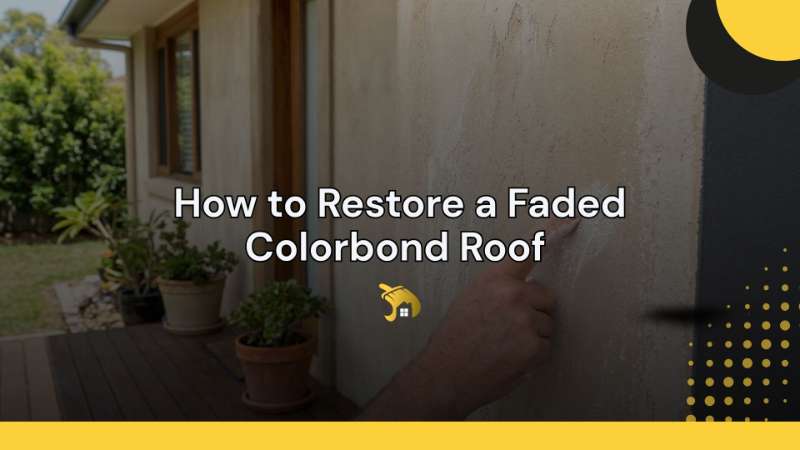
[caption id="attachment_2148" align="alignnone" width="800"] The Scrub Test[/caption]
Surface oxidation is the white, powdery residue found on weathered Colorbond, and it must be completely removed before any paint is applied. Paint cannot bond to chalky residue; if you skip the cleaning phase, the new coating will delaminate and peel within months.
The Scrub Test: Run your hand across the dry roof; if a white powder transfers to your skin, the surface is oxidised.
Pressure Cleaning: Use a high-pressure washer to strip away the chalky layer. For stubborn organic growth or heavy oxidation, a chemical roof wash may be necessary to ensure the substrate is chemically clean.
Drying Time: Allow the metal sheets to dry completely. Trapped moisture under a new coating causes immediate adhesion failure and bubbling.
Step 2: Choosing the Correct Metal Primer
Selecting a primer for Colorbond depends on whether the metal is simply faded or if the protective zinc coating has been compromised. Colorbond is a smooth, non-porous surface that offers very little "mechanical grip" for standard paints.
- For Faded but Sound Metal: Use Metal Primer Plus. This serves as a bonding agent that creates a chemical bridge between the smooth metal and the topcoat.
- For Areas with Surface Rust: If you find rust around screws or edges, you must use a Rust Inhibitor Primer. This primer neutralises existing corrosion and prevents it from spreading under the new paint.
Application: Apply a uniform coat across the entire surface using a sprayer or roller for consistent film thickness.
Step 3: Selecting UV-Resistant Topcoats for the Australian Climate
The topcoat provides the final defence against South East Queensland’s extreme UV levels, which break down the polymers in low-grade paints. A professional-grade acrylic membrane is required because it remains flexible, allowing the metal sheets to expand in the midday sun without cracking.
- Roof Protect (15-Year System): A high-build coating designed for durability and weather resistance.
- 20-Year Roof Protect: Our premium formulation featuring advanced polymer technology for maximum longevity and colour retention.
- Reflective Technology: If energy efficiency is a priority, selecting a "Cool Roof" version of your chosen colour can reduce surface temperatures by up to 30°C.
Step 4: Application Techniques for a Professional Finish
Correct application ensures the coating reaches the "wet film thickness" required for the manufacturer's warranty.
- Work in Sections: Start from the top (ridge) and work down to the gutters to avoid stepping on wet paint.
- Timing: Paint during mild weather. Avoid days with extreme heat (over 30°C) or high humidity, as this interferes with the curing process.
- Two-Coat Minimum: Always apply two coats of the topcoat. The first coat provides the bond and base colour, while the second coat provides the necessary thickness for UV protection and waterproofing.
Cost vs. Value: Why Restoration Beats Replacement
A full Colorbond roof replacement is a major capital expense, whereas a professional restoration costs a fraction of that price. On average, DIY product costs for a 200m² home range from $600 to $1,800, while a professional application typically costs between $2,500 and $6,500. Beyond the immediate aesthetic improvement, a restored roof increases property equity and extends the functional life of the asset by at least a decade.
Long-Term Protection with Thinking Paint
Thinking Paint products are manufactured in Hatton Vale, Queensland, using 20 years of local environmental data to combat the specific heat and humidity of the region. We provide specialised systems for Colorbond restoration, including custom tinting to match your original roof colour or update your home’s look.
Ready to restore your roof? Browse our Roof Paint Collection or Contact Us for free product recommendations and 3-day delivery straight to your door.