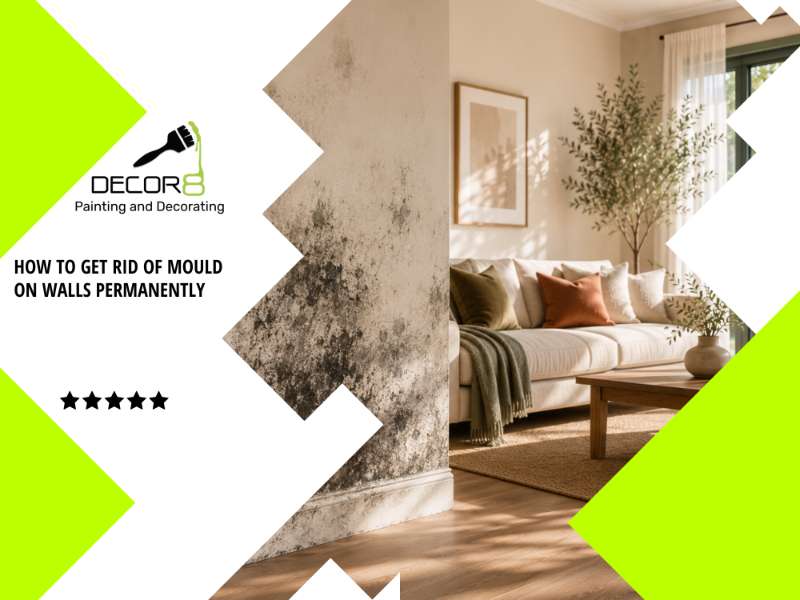
To get rid of mould on walls permanently, you need to do three things: kill and remove the existing mould, fix the moisture source feeding it, and protect the surface with a mould-resistant paint. Cleaning on its own makes a wall look better for a few weeks, but mould is a living organism — if the damp conditions stay, it grows straight back. This guide covers how to remove it properly, room by room, and how to keep it gone for good.
Key Insights:
- Removal is the easy part: Killing surface mould with the right cleaner takes minutes — but it always returns unless you fix the moisture feeding it.
- Natural methods work: White vinegar kills most household mould at the root on porous walls, where bleach often only lifts the stain and leaves the mould to regrow.
- "Permanent" means three steps: Remove the mould, eliminate the moisture source (leaks, condensation, poor ventilation), then repaint with a mould-resistant paint.
- Know when to stop: Mould larger than about one square metre, or that keeps returning, points to a hidden damp problem and is a job for a professional.
Why does mould keep coming back on your walls?
Because cleaning removes the mould you can see, not the moisture that grows it. Mould needs three things to survive: moisture, a food source such as dust or plaster, and still air. Take away any one and it can't live — and in most homes, moisture is the one you can actually control.
The usual culprits are condensation, leaking pipes or roofs, rising damp, and poor ventilation. Condensation is the big one in cooler, damper areas like the Blue Mountains, where warm indoor air meets cold external walls in winter and leaves them constantly moist. If mould keeps returning in the same spot, that spot is staying wet for a reason — and finding that reason is the whole job. The signs of mould hiding behind paint are worth knowing, because surface mould is often only part of the picture.
How do you get rid of mould on walls permanently, step by step?
Removing mould for good is a five-step process, not a single wipe-down:
- Protect yourself. Wear rubber gloves and a mask, and open windows for airflow before you start.
- Treat the mould. Spray with white vinegar or a dedicated mould cleaner (methods below) and let it sit so it works into the surface.
- Scrub and dry. Wipe the mould away, then dry the wall completely — a fan or heater speeds this up.
- Fix the moisture source. Improve ventilation, repair the leak, or address the condensation. This is the step that makes it permanent.
- Repaint with mould-resistant paint. A quality anti-mould paint adds a protective barrier once the wall is clean and dry.
Safety note: Never mix bleach with ammonia or other cleaning products — the combination releases toxic fumes. Use one product at a time in a ventilated room.
How do you get rid of mould on walls naturally?
White vinegar is the most effective natural mould killer for walls. Spray undiluted white vinegar directly onto the mould, leave it for at least an hour, then scrub with a stiff brush, wipe clean and dry the surface fully.
Vinegar is often the better choice over bleach on interior walls, and here's why:
White vinegar | Bleach | |
Kills mould at the root | Yes, penetrates porous surfaces | Often only removes the surface stain |
Best used on | Plaster, painted walls, gyprock | Sealed, non-porous surfaces like tiles and grout |
Fumes | Mild | Harsh |
Bicarbonate of soda (mixed into a paste with water) and a few drops of tea tree oil in water are two other natural options that work well on lighter mould. Whichever you choose, the golden rule is the same: dry the wall completely afterwards, because leftover moisture simply restarts the cycle.
How do you get rid of mould on bathroom walls?
Bathrooms are the hardest room to keep mould-free because they combine constant moisture with poor airflow. Treat existing mould with vinegar or a bathroom-specific mould cleaner, scrub, and dry thoroughly — then tackle the humidity that caused it.
The prevention steps matter most here: run the exhaust fan during and for 20 minutes after every shower, wipe down walls and screens, and leave the door open to let the room dry. When it's time to repaint, use a mould-resistant paint made for high-humidity walls rather than standard interior paint, which gives up in a wet bathroom within a season or two.
How do you get rid of mould on walls and ceilings?
Ceiling mould is treated the same way as wall mould, but it more often signals a leak above rather than simple condensation. A single dark patch on a ceiling frequently means water is getting in from a roof or a bathroom pipe upstairs, so the source needs investigating before you treat the surface.
Spray the affected area, let it work, scrub gently and dry it — working overhead with gloves and eye protection. If the mould is spread evenly across a whole ceiling, that usually points to a room-wide humidity and ventilation problem instead. Either way, painting over a mouldy ceiling without fixing what's above it only hides the problem for a few weeks.
How do you get rid of mould on bedroom walls?
Bedroom mould most often appears on external walls and in corners behind wardrobes and beds — the cold, still spots where condensation settles overnight. Pull furniture a few centimetres off external walls to let air move, treat the mould with vinegar, and dry the area well.
This is a common winter issue in Blue Mountains and Hills District homes, where bedrooms stay cool and closed up. Better airflow and a little heating make a big difference, and a mould-resistant paint on the affected wall adds lasting protection once it's clean.
Should you paint over mould?
No — painting over mould traps it, and it grows through the fresh coat within weeks. Even a mould-resistant paint won't bond properly to a surface that still has mould or damp in it, so the finish fails quickly and you're back where you started.
The correct order is always remove, dry, then paint. This is where a professional interior painting job differs from a quick DIY cover-up: proper preparation deals with the mould and the moisture first, so the new paint actually lasts. Skipping that step is the single most common reason mould reappears after a repaint.
When should you call a professional?
Bring in a professional if the mould covers more than roughly one square metre, keeps coming back after you've treated it, or if anyone in the home has asthma, allergies or another respiratory condition. Persistent mould almost always means a hidden leak or rising damp that needs fixing at the source — something a surface clean can't solve.
A professional can also identify whether the issue is condensation, a plumbing fault or a structural damp problem, and prepare and repaint the affected areas correctly so the mould doesn't return.
Frequently asked questions
Does vinegar really kill mould on walls? Yes. Undiluted white vinegar kills most common household mould species and, on porous surfaces like plaster and painted walls, it reaches the root rather than just removing the stain. Spray it on, leave it for an hour, scrub, wipe and dry the wall completely so the mould has nothing to grow back from.
Can I just paint over mould with mould-resistant paint? No. Painting over live mould traps it, and it grows through the new coat within weeks. Mould-resistant paint only works on a surface that's already clean and dry. Always remove the mould and fix the moisture first, then use the paint as a protective barrier — not a cover-up.
Why does mould keep coming back in the same spot? Because that spot is staying wet. Recurring mould in one area almost always means an ongoing moisture source — a small leak, rising damp, or condensation on a cold external wall. Until that source is fixed, the mould will return no matter how often you clean it.
Is mould on walls dangerous to my health? It can be. Mould can trigger allergies, coughing and breathing problems, and it affects people with asthma or weakened immunity more strongly. Small patches are generally safe to clean yourself with gloves and a mask, but larger or recurring mould is best handled professionally.
How do I stop mould coming back permanently? Fix the moisture. Improve ventilation, repair any leaks, keep humid rooms dry, move furniture off cold external walls, and repaint problem areas with a mould-resistant paint. Removing the mould without addressing the damp only ever buys you a few weeks.
Getting rid of mould on walls permanently comes down to three things done in the right order: remove the mould, fix what's keeping the wall wet, and repaint with a mould-resistant finish. Cleaning alone never lasts. If the mould in your home keeps returning, or you'd rather have it dealt with properly the first time, Decor8 offers free onsite quotes across the Blue Mountains, Western Sydney and the Hills District — you can request a quote or call John on 0404 842 708.