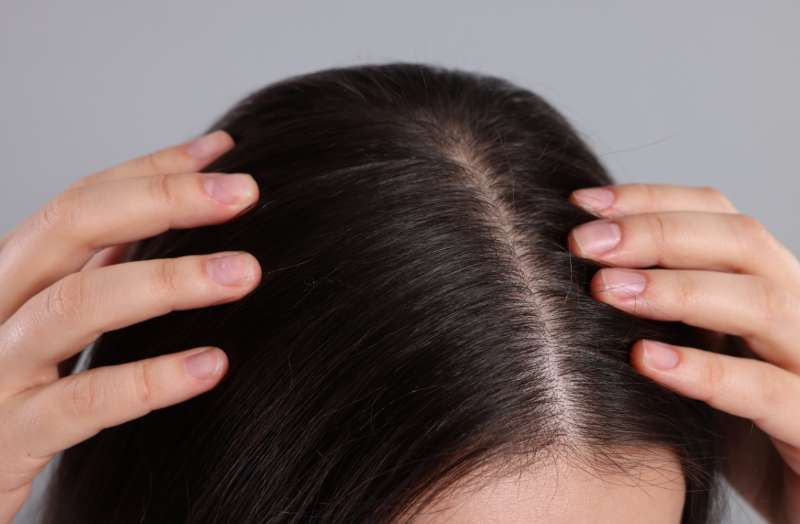
By mid-September in Denver, the pattern shows up in the treatment room without fail. Professionals who managed their scalp fine through summer come in with the same complaint: it started flaking again, the shampoo they've been using isn't working, and they've tried switching products twice already.
This isn't a product problem. It's a climate problem and shampoo was never designed to solve it.
Three things shift simultaneously in early September in Denver. Outdoor humidity drops from the summer range of 30–40% down to a fall baseline of 15–25%. Indoor heating turns on, which pulls another 10–15 humidity points out of the air your scalp sits in for eight or more hours a day. And the sun angle lowers, increasing direct UV through windshields and office windows where most DTC professionals spend their mornings.
The result is a scalp that's losing moisture faster than any shampoo-and-conditioner routine was built to replace. At Pur Artistry in LoHi, our Essential Head Spa is specifically structured to address what Denver's autumn does to the scalp, starting with a diagnosis that most people skip entirely.
First: Is It Dry Scalp or Dandruff? The Distinction Changes Everything
Most people in the DTC area treating flakes are using the wrong product for the wrong condition. Understanding which one you're dealing with before treating it is the difference between relief and a cycle that keeps repeating.
Dandruff results from excess sebum production combined with Malassezia yeast overgrowth on oily scalps. Dry scalp results from a genuine lack of moisture. The two conditions require completely opposite treatment approaches, using anti-dandruff shampoo on a dry scalp can actually worsen the condition.
Here's how to tell them apart:
Dandruff produces larger, yellowish or off-white flakes that feel waxy or greasy to the touch, they form in an oily environment and may clump together or stick to hair near the roots. Dry scalp produces smaller, white, powdery flakes that fall freely, look like fine dust, and don't leave residue when touched.
The scalp condition is also different. Dandruff shows redness, inflammation, and visible irritation. A dry scalp feels tight especially after washing without significant redness. Dry scalp is a moisture-deficiency condition affecting roughly 20–30% of adults at any given time. Chronic dry scalp left untreated can contribute to hair thinning, as persistent inflammation and scratching weaken follicles and push them into the telogen shedding phase prematurely.
In Denver's autumn specifically, most professionals are dealing with dry scalp, not dandruff. Cold air and low humidity compromise the skin barrier and lead to tightness, dryness, and flaking. Indoor heating further dehydrates the scalp's outer layer, disrupting barrier function and slowing the natural oil production that keeps flaking and irritation in check.Treating that with an anti-dandruff shampoo strips what little oil remains and accelerates the cycle.
Read Also: Head Spa Benefits: What Actually Happens to Your Scalp, Skin, and Nervous System
Why Your Shampoo Can't Fix This?
This is the piece that most people miss and the reason they end up switching shampoos every few weeks without improvement.
Shampoo cleans the surface, but it may not address the underlying cause of flakes. A flaky scalp after washing is usually caused by stripped natural oils from hot water and harsh shampoos, leftover product residue, or buildup that shampooing loosens but doesn't remove.
There are three specific reasons shampoo fails autumn dry scalp in Denver:
It only reaches the surface. Shampoo is designed to cleanse the hair shaft and scalp surface. It does not penetrate the follicle environment where product residue, dead skin cells, and hard water mineral buildup accumulate. Leave-in conditioners, dry shampoo, gels, and hairsprays build up on the scalp over time and flake off in a way that mimics dry scalp, especially if you're not shampooing thoroughly enough to remove them. This is one of the most overlooked causes because it doesn't show up until buildup has accumulated over several washes.
It can't distinguish the cause. The same shampooing motion applies to whether you have dry scalp, oily dandruff, product buildup, or contact dermatitis. Without a scalp analysis first, the product you're using is guessing. In Denver's autumn, when multiple stressors hit simultaneously, applying the same product to a changing condition rarely works.
The hot shower is making it worse. DTC professionals in autumn reach for hotter showers as the temperature drops. Hot water during shampooing is one of the primary triggers for dry scalp, it strips the natural oils the barrier needs to retain moisture. The shower that feels necessary is compounding the exact condition it's supposed to treat.
Professional enzyme exfoliation, which is part of the Essential Head Spa at Pur Artistry, reaches the follicle level. It breaks down dead skin cells, mineral deposits, and product residue that have accumulated and can't be cleared by shampooing alone. That's what creates a genuinely clean baseline rather than surface cleanliness over a congested scalp.
Read Also: What a Head Spa Actually Does for Your Scalp Health & Hair Growth
What Denver's Fall Specifically Does to Your Scalp?
The Denver autumn creates conditions that are uniquely hostile to scalp health at a pace that surprises most residents who managed fine through summer.
Indoor heating systems, standard in most Denver homes and DTC offices, circulate air with extremely low humidity. Indoor relative humidity during a Colorado fall often drops below 20%, well under the 40–50% range that skin and scalp function best in. Temperature swings compound the problem: going from a heated interior to cold dry outdoor air and back multiple times a day stresses the scalp's ability to regulate itself.
For DTC professionals, this temperature swing happens multiple times a day, parking garage to office lobby, conference room to outdoor lunch, afternoon commute. Each transition stresses the scalp's ability to maintain moisture and barrier integrity.
Across Denver, more people are experiencing symptoms such as dryness, buildup, irritation, itchiness, and scalp tension due to Colorado's unique environmental conditions. Between the high altitude, dry air, changing seasons, hard water, and constant exposure to sun and wind, maintaining a balanced scalp can be surprisingly challenging.
Hard water is an underappreciated factor. Denver's water supply carries mineral content that deposits on the scalp surface over repeated washes.Denver's mineral-heavy water and common use of indoor heating systems contribute to scalp tightness and flaking, these deposits compound other sources of buildup and can't be cleared with standard shampoo. Professional-grade exfoliation is what removes this mineral layer. Shampoo never touches it.
What Does the Essential Head Spa Do Differently?
The Essential Head Spa at Pur Artistry was designed for exactly this pattern, the professional whose scalp is reacting to Denver's autumn climate and whose home routine is no longer keeping up.
Here's what actually happens in the session:
Scalp Analysis: Before anything is applied, we examine the scalp directly. Is this dry scalp or dandruff? Is there product buildup or mineral deposit? How compromised is the barrier? What is the sebum level? This determines every subsequent decision. Most scalp treatment failures happen because this step is skipped and the protocol is identical regardless of what's actually presenting.
Enzyme Exfoliation: We use professional-grade enzyme exfoliants that work at the cellular level, dissolving dead skin cells and breaking down buildup, mineral deposits, and product residue that have accumulated in the follicle environment. This is the step that shampoo cannot replicate. It reaches where regular washing stops.
Double Cleanse: A two-phase cleanse removes what exfoliation has loosened. We select cleansers based on what we found in the analysis, not a standard product applied to every scalp. For autumn dry scalp, this means sulfate-free, non-stripping formulas that clean without further depleting the moisture the barrier is already struggling to retain.
Therapeutic Scalp Massage: Structured, targeted massage across the scalp, temples, and neck increases blood circulation to the follicles. For a scalp that's been stressed by temperature swings and barrier disruption, improved circulation supports the sebaceous glands' ability to regulate oil production more consistently. This is the step that addresses the physiological cause, not just the surface symptom.
Targeted Serum Application: After genuine deep cleansing, the follicle pathway is open and serums can actually penetrate. For autumn dry scalp, we apply hydration-focused serums, hyaluronic acid and ceramide-based formulations, that restore barrier moisture from inside the follicle rather than sitting on a congested surface. For clients with excess buildup alongside dryness, we use a balancing formula.
Herbal Botanical Conditioning Rinse: The session closes with a warm botanical rinse using lavender, chamomile, rose, hibiscus, and fresh aloe vera. Each ingredient targets the inflammation and moisture loss that Denver's autumn compounds: chamomile and lavender calm the irritated barrier, aloe vera restores surface moisture, hibiscus supports circulation. The warmth of the rinse extends the treatment effect on scalp tissue.
Red Also: How a Spa Can Relieve Stress After Work: The Antidote to a Desk-Bound Week
What to Do Between Sessions?
The Essential Head Spa resets the scalp baseline. What you do between sessions determines how long that reset holds.
Four adjustments that matter specifically for Denver autumn:
Switch to lukewarm water. Hot showers feel justified in October. They are the fastest route to stripping the barrier you just had repaired.
Wash less frequently. Most people with dry scalp conditions do better washing 2–3 times per week rather than daily. Over-washing strips away the scalp's natural protective oils. The instinct to wash more when flaking appears tends to worsen the cycle.
Dry shampoo is not a neutral product. Every application deposits residue. If you're using it between washes, factor in that it accumulates, and that accumulation is part of what the next professional session has to clear.
A humidifier in the bedroom matters. Indoor humidity below 20% dehydrates the scalp's outer layer and slows natural oil production. A humidifier restores indoor moisture and reduces the depletion rate between sessions.
Autumn Is Predictable. Your Scalp's Response to It Doesn't Have to Be.
Denver's September is the same every year for scalp health, humidity drops, heating turns on, and the scalp starts reacting. The professionals who handle it well are the ones who treat it as a seasonal maintenance issue, not a product problem.
The Essential Head Spa at Pur Artistry addresses what autumn does to the Denver scalp at the level where the problem actually exists: the follicle environment, the barrier, and the buildup that shampoo can't reach. Monthly sessions through the fall and winter align with your scalp's natural 28-day renewal cycle and keep the baseline ahead of what the climate is actively doing to it.
Book Your Essential Head Spa at Pur Artistry → Tell us how long your scalp has been flaking and what you've already tried when you book, it helps us calibrate the session before you arrive.
FAQs
Q: How do I know if I have dry scalp or dandruff in autumn?
Look at the flakes. Dry scalp produces small, white, powdery flakes that fall freely and don't feel oily when touched. Dandruff produces larger, yellowish, waxy flakes that may stick to hair near the roots and feel greasy. In Denver's autumn specifically, most people are dealing with dry scalp, caused by the drop in humidity and indoor heating — not dandruff. Using anti-dandruff shampoo for dry scalp strips the moisture that's already depleted and typically makes symptoms worse.
Q: Why does my scalp get worse every autumn in Denver?
Three things happen simultaneously in Denver's September that hit the scalp hard: outdoor humidity drops from 30–40% to 15–25%, indoor heating pulls another 10–15% humidity from the air, and temperature swings between heated interiors and cold outside air stress the scalp's ability to regulate moisture and oil production. This pattern is predictable and consistent, which is exactly why monthly professional treatment through autumn and winter is effective as a preventive protocol rather than a reactive fix.
Q: Why doesn't my shampoo fix the flaking?
Shampoo cleans the scalp surface but doesn't reach the follicle environment where dead skin cell buildup, product residue, and mineral deposits accumulate. In Denver, hard water mineral deposits compound this further. Professional enzyme exfoliation, part of the Essential Head Spa, works at the cellular level to break down what shampoo can't reach. Once that layer is cleared, the scalp can actually absorb the hydrating serums applied in the treatment.
Q: How often should I get a head spa in autumn and winter?
Every four weeks through October, November, and December aligns with the scalp's natural 28-day renewal cycle. In Denver's autumn and winter, when indoor heating, cold air, and low humidity are actively stressing the scalp daily, this cadence keeps the baseline ahead of what the environment is doing between sessions. This is when dry scalp is most severe and most responsive to professional treatment, starting monthly sessions in September prevents the condition from compounding through winter.
Q: Is the Essential Head Spa appropriate for sensitive or reactive scalps?
Yes, with protocol adjustment. For sensitive scalps, we use gentler enzyme exfoliation and sulfate-free cleansers throughout, and we skip any active ingredients that might add irritation load to an already reactive barrier. The scalp analysis at the start of the session determines how much exfoliation the scalp can handle and which serums are appropriate. We've treated scalps across the full sensitivity spectrum, the session adjusts to what we see, not what's on the menu.