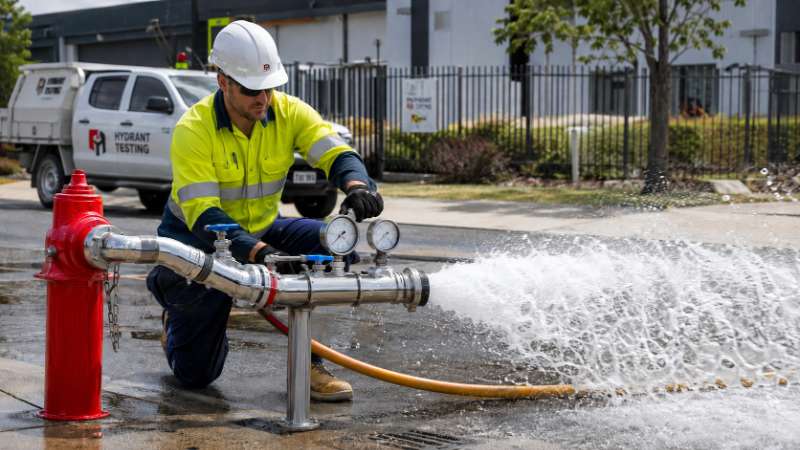
A hydrant flow test measures how much water a fire hydrant can deliver, and at what pressure, so that engineers, water authorities and fire safety practitioners can confirm a water network will support firefighting operations. In Australia, the test is built around three readings: static pressure, residual pressure and flow rate, assessed against the requirements of AS 2419.1. This guide walks through the equipment, the step-by-step procedure, the reporting obligations and what happens when a hydrant doesn't perform as required.
Flow testing sits at the intersection of two worlds: the fire protection system that relies on the result, and the water network infrastructure, mains, valves and hydrants, that has to deliver it. Getting the network side right starts with specifying and installing the correct hydrant valves in the first place, which is where Viadux's range of hydrant valves comes in. Because hydrant infrastructure requirements differ by state, Viadux manufactures hydrant isolating valves engineered to individual water authority specifications, including variants built to SA Water's SAW2001 standard and WA's Water Corporation SPS292 standard, alongside the national requirements of AS4020 and AS4087.
What a Hydrant Flow Test Measures
Static pressure, residual pressure and flow rate
A standard flow test uses two hydrants: a test hydrant, where pressure readings are taken, and a nearby flow hydrant, which is opened to draw water from the main. Three figures are recorded:
Static pressure: the pressure at the test hydrant before any water is flowing.
Residual pressure: the pressure remaining at the test hydrant while the flow hydrant is open and discharging.
Flow rate: the volume of water leaving the flow hydrant, usually expressed in litres per second (L/s).
The drop between static and residual pressure, read against the measured flow, tells an engineer how much additional flow the main can realistically supply and at what pressure, which is the basis for confirming whether a site meets its required fire flow.
Why flow testing is required (AS 2419.1, WSAA)
AS 2419.1 Fire hydrant installations is the Australian Standard governing the design, installation, commissioning and testing of fire hydrant systems, and it sets the performance benchmark that a flow test is measured against. For hydrants connected to a water authority's reticulation main, testing is also coordinated with the relevant water authority, whose supply codes (based on the WSAA Water Supply Code of Australia) govern how fire services connect to and draw from the network. In practice this means a flow test isn't just a fire-safety checkbox: it's a joint verification between the fire protection design and the water network's actual delivery capacity at that point in the system.
Hydrant Flow Test Equipment
Hydrant flow meter: types and calibration
A hydrant flow meter (sometimes called a flow gauge or diffuser gauge) attaches to the outlet of the flow hydrant and converts the discharge into a direct flow-rate reading, typically using a pitot sensing element combined with a calibrated scale matched to the outlet's nozzle size. Because the reading depends on that nozzle calibration, the equipment needs to be checked and re-calibrated on a regular schedule, and the technician needs to record which outlet size and coefficient was used so the result can be verified later.
Pressure gauges and pitot tube
Pressure gauges are fitted to the test hydrant to record static and residual pressure, while a pitot tube (or pitot gauge) is held in the flow stream at the flow hydrant to measure the stagnation pressure of the discharging water, from which flow rate is derived. Gauge accuracy matters here: a poorly calibrated or damaged gauge will skew every downstream calculation, so gauges should be checked against a reference standard before each testing round.
Hydrant flow test equipment checklist
Before heading to site, confirm the following is on hand and within calibration:
Calibrated pressure gauges for the test hydrant
Pitot tube or hydrant flow gauge, matched to the expected outlet size
Hydrant standpipe and connection fittings
Hydrant key/spanner for opening isolating and hydrant valves
Site plan or hydrant block plan showing hydrant and valve locations
Traffic management and signage if testing is on or near a roadway
Recording sheet or digital form for static pressure, residual pressure and flow rate
Hydrant diesel pump for remote or low-pressure sites
Where a flow test shows the town main can't deliver the required flow and pressure on its own, particularly on rural or remote sites with limited mains capacity, a dedicated fire pumpset is used to boost supply. Diesel-driven pumpsets are common on sites without a reliable electricity supply, since they run independently of mains power. In Australia, these pumpsets are designed, installed and commissioned to AS 2941, which sets the requirements for fire pump systems used with hydrant, sprinkler and hose reel installations.
Step-by-Step Hydrant Flow Test Procedure
Selecting the test hydrant and flow hydrant
Choose a test hydrant close to the point being assessed (often the hydrant nearest the site or property connection) and a flow hydrant nearby, typically the next hydrant along the main. The flow hydrant should be far enough away that opening it produces a measurable pressure drop at the test hydrant, but close enough that the two are drawing from the same section of main.
Recording static pressure at test hydrant
With the flow hydrant closed, connect a calibrated pressure gauge to the test hydrant and record the static pressure. This is the baseline reading the rest of the test is compared against.
Opening flow hydrant and recording residual pressure
Open the flow hydrant fully and allow the flow to stabilise, then record the residual pressure at the test hydrant while water is discharging. The gap between static and residual pressure reflects how much the main's pressure falls under that flow demand.
Calculating flow rate using pitot gauge or flow meter
At the flow hydrant, take the pitot or flow meter reading of the discharging water and calculate (or read directly, if using a calibrated flow gauge) the flow rate in L/s. For network-level flow and velocity estimates during design (rather than field testing at an installed hydrant), Viadux's flow calculator can help engineers cross-check expected discharge for a given pipe diameter, headloss gradient and roughness.
Hydrant booster pump: use when flow is insufficient
If the residual pressure and flow rate recorded don't meet the required performance for the site, a booster pump (electric or diesel, per AS 2941) is the usual remedy, boosting the town main supply up to the pressure and flow the hydrant system needs. The flow test result is what sizes that pump: the shortfall between what the main delivers and what the system requires becomes the pump's duty point.
Hydrant Flow Test Requirements
Hydrant flow test requirements under AS 2419.1
AS 2419.1 sets out the hydraulic performance a fire hydrant installation must achieve, tested at the hydraulically most disadvantaged point in the system (the hydrant furthest from the supply, or at the greatest elevation). The standard also specifies how the test itself is to be carried out and documented, including the equipment and connection arrangements used.
Minimum flow and pressure thresholds
Sources referencing AS 2419.1 commonly cite a minimum residual pressure in the order of 150–200 kPa and a minimum flow of around 10 L/s at the most hydraulically disadvantaged hydrant, though the exact figure that applies to a given site depends on the building's classification, height, floor area and fire hazard category. Because these thresholds affect compliance and liability, always confirm the current requirement against the latest edition of AS 2419.1 or with the project's fire safety engineer rather than relying on a general figure.
Frequency of testing requirements
Hydrant systems are subject to routine servicing intervals under AS 1851 Routine service of fire protection systems and equipment, which typically calls for more frequent visual and presence-of-water checks, with a comprehensive flow test carried out at least annually to confirm the system still delivers its required flow and pressure. New installations, and hydrants that have been repaired or modified, are flow tested before being returned to service. Water authorities may also have their own testing and notification requirements for hydrants connected to their mains, so it's worth checking with the local authority before testing on a reticulation main.