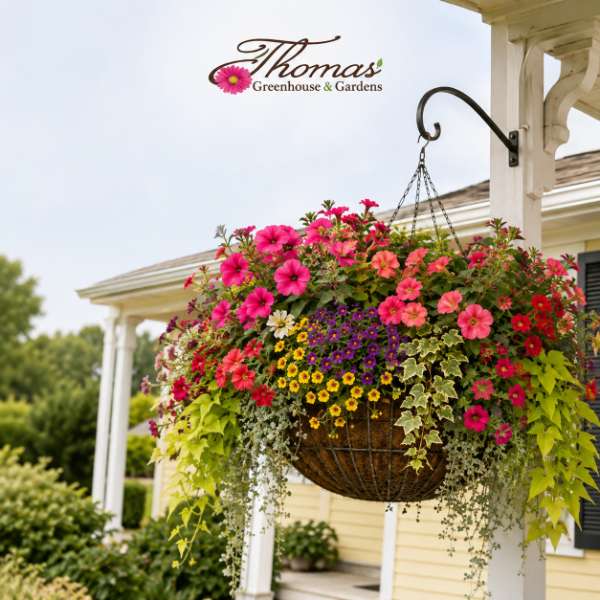
How to Choose the Best Hanging Flower Basket for Your Wisconsin Porch
A hanging flower basket is one of the fastest ways to add color to a porch, patio, or balcony around Mukwonago, Waukesha, and East Troy.
At Thomas Greenhouse & Gardens, neighbors stop in all season looking for baskets that stay full from late spring through the first frost. The difference between a basket that fades by July and one that still looks generous in August usually comes down to plant choice, light, and a watering habit that matches Wisconsin summers.
This guide covers what to plant, how to choose varieties that fit your porch, and the practical criteria we use on the greenhouse floor. If you would rather skip the planting step, our flower department already has ready-made baskets and the same annuals used in custom mixes.
How to Choose Plants for a Hanging Flower Basket
Start with the spot, not the color. A plant that thrives on a south-facing hook will struggle under a covered north porch, and the reverse is also true. Walk outside at mid-morning and again around 2 p.m. Count the hours of direct sun. That number decides almost everything else.
Match plants to light first
- Full sun (6 or more hours): petunias, calibrachoa (million bells), trailing verbena, lantana, scaevola, portulaca, ivy geranium.
- Part sun or morning sun (3 to 5 hours): bacopa, lobelia, New Guinea impatiens, coleus, sweet alyssum.
- Shade or covered porch: tuberous and trailing begonias, fuchsia, standard impatiens, Boston fern, trailing coleus.
Do not mix a full-sun petunia with a shade fuchsia in the same pot. In a tight root space, one plant always wins and the other stalls.
Use the thriller, filler, and spiller layout
A full basket has three jobs. An upright plant in the center gives height. Mid-height bloomers fill the bowl. Trailers drop over the rim. A 12-inch basket usually holds three to five plants. A 14-inch basket can take five to seven without crowding.
Good combinations for sunny porches include a geranium or upright petunia in the middle, calibrachoa as filler, and dichondra ‘Silver Falls’ or sweet potato vine as the spill. For shade, pair a tuberous begonia with impatiens and a fern or ivy.
Check the basket itself
Size matters more than people expect. A 10 to 14 inch basket holds enough soil to buffer heat and wind. Smaller 6 to 8 inch pots dry out several times faster. Look for drainage holes, a sturdy hanger, and a liner that holds moisture without staying soggy. Coconut coir and moss-lined wire baskets look traditional, but they lose water quickly on a windy Mukwonago afternoon. A plastic or fiber pot inside a decorative hanger is often easier to keep evenly moist.
Best Plants for a Sun or Shade Hanging Flower Basket
There is no single winner. The best hanging flower basket is the one that matches your light, your watering rhythm, and the look you want on the hook. Below are the plants we recommend most often for southeast Wisconsin.
Full-sun workhorses
Petunias remain the classic. Wave and SuperCal-style trailers bloom from planting until frost if they get sun and regular feed. Modern types need less deadheading than older grandifloras.
Calibrachoa, often sold as million bells, looks like a mini petunia and cleans itself. It is one of the easiest choices if you want color without constant pinching.
Trailing verbena and lantana handle July heat better than most petunias. Lantana also draws butterflies and hummingbirds. Portulaca (moss rose) is the drought-tolerant option for a hook that bakes against siding or a west wall.
Shade and covered-porch favorites
Begonias are the most reliable shade bloomers in our climate. Tuberous and trailing types flower from late spring into fall if the soil stays evenly moist and never bone dry. Impatiens still win on deep shade porches. New Guinea impatiens take more morning sun and have larger flowers.
Fuchsia is the elegant choice for a protected hook. The dangling blooms attract hummingbirds, but fuchsia sulks in hot, dry wind. Hang it where it gets bright light without midday blast. Boston ferns and trailing coleus add foliage when you want texture instead of only flowers.
What we stock and why it matters locally
Mukwonago sits in USDA Zone 5b. Average last frost falls in mid-May. Average first frost arrives in early October. That gives hanging annuals a long, useful season if you plant after nights stay reliably above 50°F. Thomas Greenhouse & Gardens selects annuals and hanging baskets that hold up through humid July days and cool August nights, not just greenhouse-perfect April weather.
Criteria That Separate a Good Basket From a Tired One
Use this checklist before you buy or plant.
- Light match. Confirm sun hours on the exact hook, not the yard in general.
- Water access. If you will not water daily in heat, choose drought-tougher plants or a larger pot.
- Soil volume. Bigger baskets stay healthier. Aim for 12 inches or more for a front-door display.
- Plant health. Look for compact growth, no yellow lower leaves, and roots that are white, not circling in a tight brown mat.
- Bloom habit. Self-cleaning plants (many calibrachoa and modern petunias) save weekend work.
- Wind and exposure. Open farm lots and second-story balconies dry baskets faster than a sheltered front porch.
If you are planting your own, use a high-quality potting mix, not garden soil. Garden soil packs down and drains poorly in a hanging pot. Mix in a slow-release fertilizer at planting, then follow with a water-soluble bloom fertilizer every one to two weeks once plants are established.
How to Care for a Hanging Flower Basket Through Wisconsin Summer
Water by weight, not by the calendar. Lift the basket. If it feels light, water until you see runoff from the drainage holes. In July heat, a full-sun basket often needs a morning soak and sometimes a second drink in late afternoon. Shade baskets may go every other day. Never let the pot sit in a saucer of water after you bring it down to soak.
A hanging flower basket dries from the sides and bottom as well as the top, which is why porch baskets fail faster than the same plants in a ground bed. Wind along Maple Avenue and open Waukesha County lots makes that even more true.
Feed regularly. Container soil loses nutrients every time you water. A balanced liquid fertilizer, or one slightly higher in phosphorus for bloom, keeps petunias and calibrachoa from going leafy and sparse by August.
Pinch and trim. If stems get long and flowers sit only at the tips, cut the plant back by about one-third. Fresh branching and new buds usually return within two weeks. Deadhead older geraniums, fuchsia, and some petunias so energy goes into new flowers instead of seed.
Watch for heat slump. Lobelia and some alyssum pause in high heat, then rebound as nights cool in late August and September. Do not rip them out in midsummer if the rest of the basket is healthy.
Late-season refresh
By late August, a tired basket can still finish the season well. Trim back leggy growth, pick off faded blooms, and give a thorough soak and feed. If one plant has failed, snip it out and tuck in a fresh annual from the greenhouse rather than replanting the whole pot. Color can run into early October in a typical Mukwonago fall.
Ready-Made or Plant-Your-Own?
A finished hanging flower basket from the greenhouse is the simplest path if you want instant color for a party, a rental porch, or a gift. Plant-your-own makes sense when you have a specific color palette or a tricky shade hook. Either way, start with plants chosen for southeast Wisconsin, not whatever looked pretty in a national catalog photo.
Browse current flowers and hanging baskets or stop by to talk through the hook you have at home. If you also keep indoor plants through winter, our houseplant collection covers the same idea in a different setting: right plant, right light, consistent care.
Visit Thomas Greenhouse & Gardens in Mukwonago
Thomas Greenhouse & Gardens is a locally owned, family-run garden center at 420 Maple Avenue in Mukwonago. We serve home gardeners in Mukwonago, Waukesha, and East Troy with annuals, perennials, houseplants, trees, shrubs, pottery, and straightforward advice.
Bring a photo of your porch if you can. It is the fastest way for the team to point you toward sun plants, shade plants, or a finished basket that will actually live where you hang it.
- Address: 420 Maple Avenue, Mukwonago, WI 53149
- Phone: (262) 363-3807
- Email: [email protected]
- Hours: typically Monday–Friday 9 a.m.–6 p.m.; Saturday and Sunday 9 a.m.–5 p.m. Confirm current hours before you drive.
See the full flowers page for annuals, perennials, native options, and hanging baskets, then visit the greenhouse when you are ready to hang color on the porch.