How often should you get a manicure? The honest, unglamorous answer: every 2 to 3 weeks for gel, weekly for regular polish, and it depends on the service for everything else. But that single number doesn't account for how your actual week works: back-to-back meetings, a keyboard for eight hours a day, and a calendar that rarely leaves room for a spontaneous salon trip.
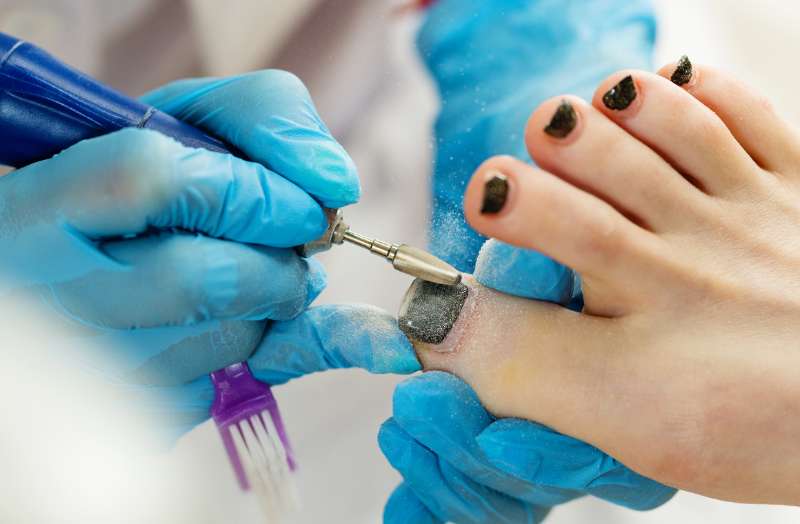
Gel manicures: every 2–3 weeks. Regular polish: weekly. Gel-X or builder gel: fills every 2–3 weeks, full replacement every 3–4 weeks. Dip powder: every 3–4 weeks. Pedicures: every 4–6 weeks. The right frequency depends on the service, not personal preference, each one follows a different wear timeline tied to how the product bonds to and grows out with the natural nail.
This is the realistic version: a schedule built around what different services actually need, matched to a professional calendar that has to accommodate it, not the other way around.
The Real Schedule, Service by Service
Every service on this list follows its own timeline, driven by how the product is applied, how it bonds to the nail, and how quickly natural growth pushes it out of shape. Here's the breakdown that actually matters when you're planning around a work calendar.
The consistent thread across every professional nail source on this topic: 2 to 3 weeks is the number that shows up again and again for gel, because it's tied to biology, not convenience. That's roughly how long it takes for visible new growth to appear at the cuticle line, the point where a manicure starts reading as due for a refresh rather than freshly done.
Read Also: The 60-Minute Lunch Break Manicure: How DTC Professionals Do It at Pur Luxe
Why 2–3 Weeks Isn't Arbitrary
Nail growth rate is the actual driver behind every frequency recommendation here, not salon convention. Fingernails grow at an average rate that puts visible regrowth at the cuticle somewhere around the two-to-three-week mark for most people, which is exactly why that window keeps appearing across every professional source on this topic, regardless of which salon or nail brand is publishing it.
Push past that window and two things start working against you: the polish or gel begins lifting at the edges where growth has created a gap, and the visual gap at the cuticle becomes the kind of detail that's genuinely noticeable in a client meeting or a video call where your hands are on screen.
Is It Bad to Get Gel Manicures That Often?
This is the question that comes up almost every time frequency is discussed, and the honest answer is: not inherently, but the removal process matters more than the frequency itself.
Professional manicures themselves don't typically weaken nails. The damage that does happen is almost always traced back to improper removal, picking or peeling gel off at home, which pulls layers off the natural nail plate along with the polish. A 2–3 week cycle with professional, soak-off removal each time is sustainable indefinitely. What isn't sustainable is skipping the professional removal step to save a trip.
If you want to give your natural nails periodic recovery time regardless, a short break of one to two weeks after every two or three gel cycles is a reasonable practice, though it's a personal preference rather than a requirement, and plenty of professionals maintain continuous gel cycles without issue.
Building a Schedule Around a DTC Work Calendar
The theoretical frequency and the practical one aren't always the same thing when your week is built around back-to-back meetings. A few adjustments make the 2–3 week gel cycle genuinely sustainable without becoming another thing to schedule around.
Book your next appointment before you leave the current one, this is the single most effective habit for staying on cycle without last-minute calendar Tetris
Choose a recurring day and time that matches a natural gap in your week, a standing Friday afternoon slot works better than trying to find a new opening every three weeks
Use a lunch-break appointment for maintenance cycles and save longer weekend slots for when you're also adding a pedicure
If a full 2–3 week cycle genuinely isn't realistic some months, dip powder's 3–4 week window offers more flexibility without sacrificing durability
Signs You've Waited Too Long, Whichever Service You Choose
If a fixed schedule slips, and most professional calendars eventually cause that, a few visible signs are the clearest signal it's time to rebook, regardless of which service or frequency you're following.
A visible gap of natural nail showing at the cuticle line, distinct from the polished portion of the nail
Lifting at the edges or tips, where the gel or polish has started separating from the nail plate
A dulling or flattening of the top coat shine, even if the color itself still looks intact
Any snagging on fabric or hair, which usually means an edge has roughened enough to need reshaping
None of these are urgent, but each one is a reliable cue that the current set has reached the end of its practical window, a more useful marker than counting days on a calendar, especially during weeks when a standing appointment slot doesn't quite line up.
Read Also: The 5 Nail Looks That Work in Every Professional Setting.
Consistency Is the Actual Secret, Not the Service Itself
There's no single universal answer to how often you should get a manicure, the honest answer depends on which service you choose and how much regrowth you're comfortable seeing before your next visit. What does matter, regardless of which frequency you land on, is staying consistent rather than letting cycles stretch unpredictably.
Pur Luxe Beauty Bar Denver Tech Center is built for exactly this kind of recurring rhythm, reservation-only, no wait time, and a team that already knows your preferences by your third visit.
Book your next appointment at Pur Luxe DTC:
purluxebeauty.com/denver-tech-center · 4822 S Newport St, Denver, CO 80237 · 720.398.8717
Flawless Nails. Luxe Experience.
FAQs
Q: How often should you get a gel manicure?
Every 2 to 3 weeks. This timeline matches the natural growth rate of your nails, preventing the lifting and visible cuticle gap that appear once regrowth pushes past the edge of the gel. A properly applied gel manicure stays smooth and chip-free for up to three weeks with proper aftercare.
Q: How long does a gel manicure actually last?
A gel manicure typically lasts 2 to 3 weeks before showing signs it needs a refresh — visible growth at the cuticle, minor lifting at the edges, or a slight dulling of the top coat shine. Regular polish, by comparison, usually lasts 5 to 7 days before chipping.
Q: Is it bad to get gel manicures too often?
Getting gel manicures on a consistent 2–3 week cycle is not inherently damaging. The nail damage that does occur is almost always caused by improper removal — picking or peeling gel off at home — rather than the frequency of professional application. Professional soak-off removal at each appointment keeps a continuous gel cycle sustainable.
Q: How often should you get a pedicure?
Every 4 to 6 weeks for most people. Feet grow more slowly than hands, so pedicures require less frequent visits than manicures. If you wear open-toe shoes daily or want gel polish on your toes maintained continuously, a slightly tighter 4-week window keeps both polish and skin condition in top shape.
Q: What's the difference in frequency between gel, dip powder, and builder gel?
Gel manicures need attention every 2–3 weeks. Dip powder is more forgiving, typically lasting 3–4 weeks before a refresh is needed. Builder gel and Gel-X extensions need fills every 2–3 weeks to maintain shape, with a full replacement recommended every 3–4 weeks. The right choice often comes down to how tightly your calendar can accommodate a recurring appointment.