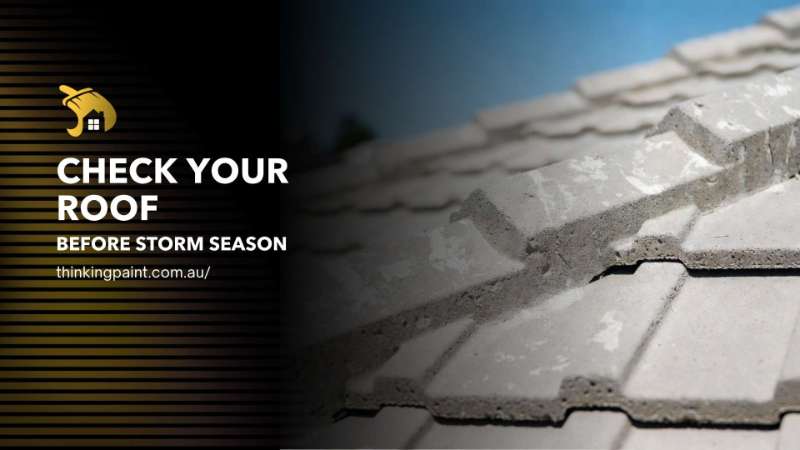
Check your roof for storm readiness at least twice a year: once before storm season in September or October, and once after in April.
In Queensland, where hail, heavy rain, and high winds hit areas like Ipswich, Toowoomba, Lockyer Valley, and Hatton Vale, a quick inspection can prevent costly repairs. Look for cracked tiles, rust on metal roofs, failed coatings, and blocked gutters. The right roof paint, correctly applied with a matching primer, can deliver 15 to 20 years of storm protection.
Inspect your roof for storm readiness at least twice a year, and after any major weather event. In South East Queensland, storm season runs from October through March, so a pre-season check in September or October and a post-season check in April gives you a reliable baseline. Minor coating failures and cracked tiles that go unnoticed can turn into leaks, mould, and structural damage after a single storm.
How often should Queensland homeowners inspect their roof for storms?
Twice a year is the minimum. Queensland weather, particularly around Ipswich, Toowoomba, and the Lockyer Valley, brings hail, rapid temperature swings, UV exposure, and heavy rain that wear down roof coatings faster than in cooler climates.
The two most useful inspection windows are:
- September to October: Before storm season begins. Check coatings, seals, and tile condition while there is still time to order and apply the right products.
- April: After storm season ends. Look for damage caused by hail, wind, or water pooling over the wet months.
After any significant storm, particularly hail events common around Ipswich and the Lockyer Valley, do an immediate visual check from ground level and arrange a closer look if anything appears displaced or discoloured.
What should I look for when checking my roof before storm season?
Focus on five key areas that affect how well your roof handles heavy rain, wind, and hail:
- Cracked, slipped, or broken tiles. Even a single cracked tile can allow water entry during a storm.
- Rust or corrosion on metal roofing. Particularly common on older Colorbond and corrugated iron roofs across regional Queensland.
- Peeling, chalking, or faded roof coatings. A coating that has lost adhesion will not protect against water ingress.
- Failed pointing and bedding. The mortar at ridge caps degrades over time and is a frequent source of storm leaks. Roof Bedding Mix is used to re-point ridge caps before recoating.
- Blocked or damaged gutters and downpipes. Overflow from blocked gutters forces water under the roof edge.
In Toowoomba and the Lockyer Valley, UV degradation accelerates coating failure. If your roof coating is more than 8 to 10 years old and has not been recoated, storm season is the wrong time to find out.
What roof paints and coatings are best for storm protection in Queensland?
For storm-prone areas in Queensland, you need a coating that handles sustained water exposure, thermal expansion from heat, and the impact of hail. The right product depends on your roof surface type.
Concrete and terracotta tile roofs
Roof Protect is a 15-year acrylic roof paint suited to concrete and terracotta tiles across Ipswich, Hatton Vale, and surrounding areas. For longer protection, 20-Year Roof Protect is a premium coating built for the Australian climate, including the high UV and storm exposure common in South East Queensland. For budget-conscious properties, Roof Refresh is a 10-year option suited to roofs in sound condition.
If heat reduction is a priority alongside storm protection, Thermal HRC is a heat-reflective roof coating that reduces surface temperature and suits properties in Toowoomba and Lockyer Valley where summer heat is intense.
Terracotta-specific products
Terracotta tiles need products designed for the surface. Terracotta Primer prepares the surface before coating, and Terracotta Glaze delivers a sealed, weather-resistant finish suited to the Queensland climate.
Metal roofs
Metal roofing in Queensland is highly vulnerable to rust and UV degradation between storm seasons. Metal Primer Plus and Rust Inhibitor Primer both address corrosion on Colorbond and corrugated iron before a protective topcoat is applied.
Fibrous cement roofing
Fibro Primer is formulated specifically for fibrous cement roof surfaces, sealing the substrate before a topcoat is applied. Fibro roofs that skip a proper primer fail faster under Queensland storm conditions.
A comparison of Thinking Paint's main roof coating options:
| Product | Roof Type | Protection Level |
| Roof Refresh | Concrete and terracotta tiles | 10-year |
| Roof Protect | Concrete and terracotta tiles | 15-year |
| 20-Year Roof Protect | Concrete and terracotta tiles | 20-year |
| Thermal HRC | Tile and metal roofs | Heat-reflective + weather protection |
| Metal Primer Plus | Metal roofing | Primer coat |
| Fibro Primer | Fibrous cement roofing | Primer coat |
Browse the full Thinking Paint product range or view roofing supplies available for Toowoomba.
Do I need a primer before applying roof paint before storm season?
Yes, in most cases. Applying a topcoat directly to a bare, porous, or previously coated surface without the correct primer is one of the most common reasons roof paint fails ahead of schedule.
The right primer depends on your roof surface:
- Terracotta tiles: Terracotta Primer seals the surface and prevents the topcoat from soaking in.
- Fibrous cement: Fibro Primer is the correct starting point before any topcoat.
- Metal roofing with rust: Rust Inhibitor Primer addresses active corrosion before the topcoat is applied.
- General metal or previously painted surfaces: Metal Primer Plus provides adhesion for metal substrates.
- Multi-surface priming: OZ Primer and Platinum Primer cover a wider range of substrates where a flexible primer system is needed.
In Ipswich and the Lockyer Valley, where roofs face both high UV in summer and sustained heavy rain in storm season, skipping the primer step is a false economy.
How do I know if my roof coating has failed and needs replacing before storm season?
A coating failure before storm season is a genuine risk. Look for these signs:
- Chalking: Rub your hand on the surface. White powder means the coating is oxidising and losing water resistance.
- Flaking or peeling: The coating has lost adhesion and will allow water under the membrane.
- Colour fading: Surface UV degradation, especially visible on dark-coloured roofs in Ipswich and Hatton Vale.
- Water staining on ceilings: Interior staining after rain almost always means the roof coating or tiles have already failed.
- Lichen or moss growth: Organic growth on terracotta or concrete tiles holds moisture and accelerates surface breakdown.
If two or more of these are present on a roof over 10 years old, recoating before October storm season is a sound investment. A roof that fails during a storm costs significantly more to fix than a planned recoat using the right products.
Can I check my roof myself or do I need a tradie?
A visual inspection from ground level or from a ladder at the eaves is something most Queensland homeowners can manage safely. You are looking for obvious displacement, cracking, and coating deterioration.
For anything that requires walking on the roof surface, checking pointing and bedding at ridge caps, or inspecting valley flashings, a qualified tradie is the right call. Cracked tiles are not always visible from the ground, and incorrect foot placement on an older tiled roof can cause new damage.
If your inspection shows the coating needs replacing, use the Thinking Paint colour visualiser to plan your colour selection before ordering products.
Where can I buy roof paint for storm preparation near Ipswich, Toowoomba, or Lockyer Valley?
Thinking Paint supplies roof paints, primers, sealers, and protective coatings with 3-business-day delivery to Ipswich, Toowoomba, Lockyer Valley, and Hatton Vale. Order direct from thinkingpaint.com.au and have the right product on hand well before storm season begins.
For urgent pre-season preparation, ordering in September gives you time to apply and allow full cure before the first October storms across South East Queensland.