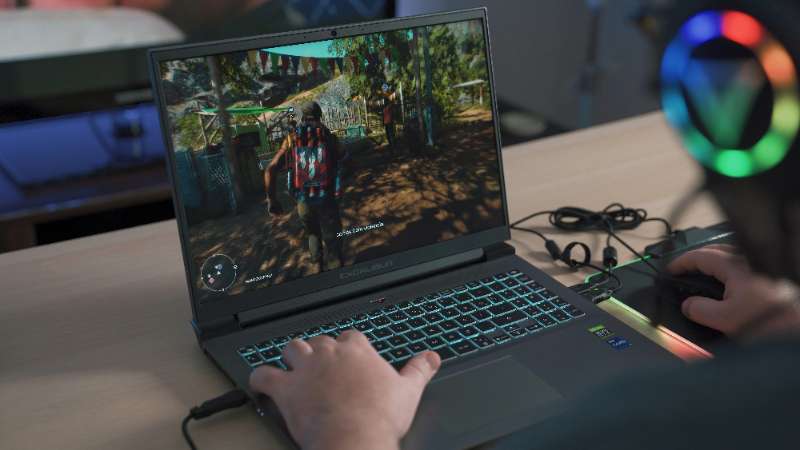
Buying a gaming laptop often starts with one question.
How much do you actually need to spend to get something that performs well. Prices vary widely, and without a clear understanding of what affects performance, it’s easy to either overspend or end up with something that struggles to keep up.
The key is not the highest price.
It’s finding the right balance between performance, build quality, and how you plan to use it. Whether you’re browsing options or narrowing down a gaming laptop, understanding where your money goes makes the decision far more practical.
What Your Budget Really Covers
When you pay for a gaming laptop, you’re not just paying for one component.
The price reflects a combination of the graphics card, processor, display quality, cooling system, and overall build. These elements all work together, which is why two laptops at similar prices can still perform differently.
Higher budgets usually mean better balance.
Stronger GPUs, faster CPUs, and more efficient cooling all contribute to smoother performance, especially in demanding games. Lower budgets often require compromises in one or more of these areas.
Understanding that trade-off is what helps you spend effectively.
Entry Level Gaming Laptops
Lower-priced gaming laptops are often designed for accessibility.
They can handle lighter or older games, as well as general use, without major issues. For casual gaming or titles that don’t require high settings, this level can be enough.
The limitations become clear with newer releases.
Settings may need to be reduced, and performance may not be as consistent. This doesn’t make them a bad option, but expectations need to match what the hardware can deliver.
They’re best suited for lighter workloads.
Mid Range Is Where Value Starts to Balance
For most people, mid-range options offer the best balance.
This is where performance starts to meet expectations for modern gaming without pushing into higher price brackets. You can run most current titles at solid settings with reliable frame rates.
This range also tends to include better displays and build quality.
Cooling systems are more capable, which helps maintain performance during longer sessions. This is important for consistency, not just peak performance.
For many buyers, this is the most practical spending range.
High End Systems and What You’re Paying For
Higher-end gaming laptops focus on performance without compromise.
They include more powerful GPUs, faster processors, and higher refresh rate displays. These systems are built to handle demanding games at higher settings with fewer limitations.
You’re also paying for refinement.
Better cooling, improved materials, and more advanced features all contribute to the overall experience. These details don’t always show up in specs alone, but they affect how the system performs over time.
The benefit is consistency at higher performance levels.
Graphics Card Has the Biggest Impact
If you’re deciding where to allocate your budget, the GPU is the most important factor.
It determines how well games run, how high you can set graphics settings, and how smooth the experience feels. A stronger GPU extends the lifespan of your laptop for gaming.
Other components still matter.
But if the graphics card is underpowered, it limits everything else. This is why prioritising GPU performance usually leads to better results.
CPU and RAM Still Matter
While the GPU handles graphics, the CPU manages overall system performance.
It affects loading times, multitasking, and how well games run alongside other processes. A balanced CPU ensures that the system doesn’t bottleneck.
RAM supports this balance.
More memory allows smoother multitasking and improves performance in certain games. For most users, 16GB is a practical starting point.
These components work together with the GPU.
Storage and Load Times
Storage doesn’t directly affect frame rates, but it changes how the system feels.
Faster storage means quicker boot times, faster game loading, and smoother overall use. Solid state drives are now standard in most gaming laptops for this reason.
Larger storage options add convenience.
Modern games take up significant space, so having enough capacity avoids constant management of files.
Display Quality Is Part of the Experience
Gaming is not just about performance.
The display affects how everything looks and feels. Higher refresh rates make gameplay smoother, while better resolution improves clarity.
These features become more noticeable over time.
A system with strong performance but a poor display can feel less enjoyable to use. Balancing both is important when deciding how much to spend.
Cooling and Long Term Performance
Cooling is one of the less obvious factors.
A laptop with poor cooling may perform well initially but struggle under sustained use. Heat affects performance, causing components to slow down to prevent damage.
Better cooling systems maintain consistency.
This is often where higher-priced models justify their cost. They are designed to handle extended gaming sessions without significant drops in performance.
Paying for Portability
Unlike desktops, gaming laptops combine performance with portability.
You’re paying for the ability to move your setup without losing too much power. This convenience adds to the overall cost.
Build quality also plays a role.
Durability, keyboard feel, and overall design contribute to how the laptop performs beyond just gaming.
A Practical Way to Set Your Budget
Instead of choosing a price first, start with your needs.
What games do you want to play. What settings do you expect. How long do you want the system to last before needing an upgrade.
These questions guide your budget.
Spending more makes sense when it directly improves your experience. Spending less works when your expectations are aligned with the hardware.
The goal is not to spend as much as possible.
It’s to spend where it matters.
• Budget determines performance, build quality, and overall experience
• Mid-range laptops offer the best balance for most users
• GPU is the most important component for gaming performance
• Cooling, display, and build quality affect long term usability