By mid-December, many Denver clients describe the same thing. The scalp feels tight right after a shower, and a fine dusting of flakes appears on dark sweaters. The right dry scalp treatment starts with understanding why Colorado winters do this, and why scrubbing it away usually makes it worse.
Key insights
- Denver’s altitude, low humidity and indoor heating pull moisture from the scalp’s outer layer, which is why winter flaking is so common here.
- Dry scalp and dandruff look similar but are different issues. Small white flakes with tightness point to dryness, while oily, yellowish flakes point elsewhere.
- DIY scrubs, hot water and heavy product layering often irritate the scalp barrier further.
- A Japanese head spa gently cleanses, stimulates circulation and hydrates the scalp, which can leave it visibly calmer and more comfortable. It is a care treatment, not a medical cure.
Why Denver winters leave your scalp dry
Short answer: Low humidity, indoor heat and hot showers strip the scalp’s natural oils and water, so the skin barrier loses moisture faster than it can replace it.
Denver sits at roughly 5,280 feet, and winter air here is some of the driest you will feel in the country. Add forced-air heating, wind and long hot showers, and the scalp loses water through its surface at a higher rate. Dermatologists call this transepidermal water loss. The result is the familiar tightness, itch and small, dry flakes.
Your scalp is skin, with a barrier just like your face. When that barrier is compromised, it feels sensitive and looks dull, and the hair above it can feel less glossy and more static-prone. Many people treat their facial skin carefully in winter and forget the scalp entirely.
Dry scalp or dandruff?
Dry scalp usually brings small, white, powdery flakes and a tight feeling, often with dry skin elsewhere on the body. Dandruff tends to show larger, yellowish or oily flakes on a scalp that can also look greasy. Persistent redness, thick scaling, sores or hair shedding are not a spa concern. They are a reason to see a dermatologist, who can check for conditions like seborrheic dermatitis or psoriasis.
The DIY habits that make winter flaking worse
Short answer: Harsh scrubs, picking and very hot water can irritate an already dry scalp, and heavy products can sit on the skin and hold flakes in place.
When flakes appear, the instinct is to scrub them off. Coarse scrubs and brushes can create tiny irritations on a scalp that is already fragile, and the skin often responds by flaking more. A few other habits quietly work against you.
- Washing with very hot water. It feels wonderful in January and removes more oil than the scalp can afford to lose.
- Over-washing or under-rinsing. Both leave residue behind. Either too much stripping or leftover product can keep the scalp unsettled.
- Layering oils and dry shampoo. Product buildup mixes with natural sebum and dead skin cells. Applied to a congested scalp, oil can trap flakes instead of softening them.
- Trying aggressive “detox” hacks. Pulling more product onto the scalp rarely restores balance.
Gentle, consistent care works better than intensity, and that is where in-studio treatment earns its place.
What happens during a Japanese head spa session
Short answer: A head spa combines scalp analysis, gentle cleansing, massage and hydration to lift buildup, relax tension and support a more comfortable scalp barrier.
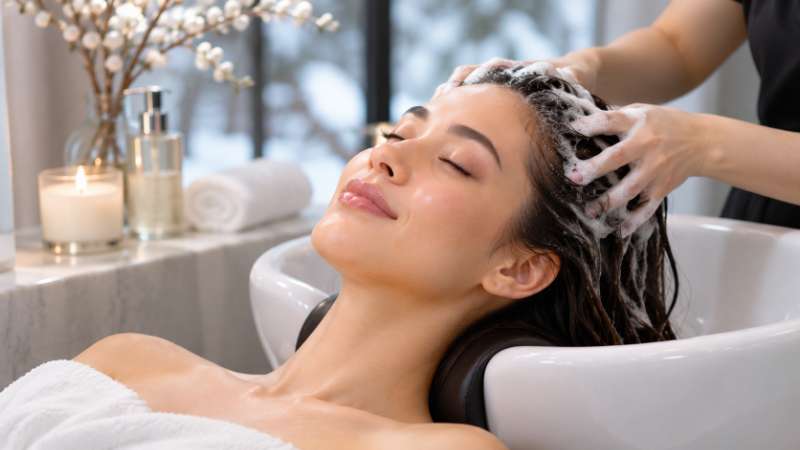
A Japanese head spa is closer to a facial for the scalp than a standard shampoo. Some clients search for it as a scalp facial, and the comparison is fair. At Pur Artistry, the experience is slow, warm and deeply sensory, designed to calm both the scalp and the nervous system.
- Looking closely first. Your specialist examines the scalp to understand its condition, so the treatment suits what you actually have.
- Cleansing that works with your skin. Warm water and carefully chosen cleansers emulsify excess sebum and lift product residue from around the follicles without harsh scrubbing.
- Massage and circulation. Rhythmic massage encourages blood flow to the scalp and releases the tension many people carry at the base of the skull. The tension relief alone is often what clients remember most.
- A hydrating finish. Moisture-supporting products help the scalp feel soft and comfortable rather than tight.
Realistic results are immediate and sensory. Clients leave with a cleaner, more comfortable scalp, noticeably less tightness, fresher roots and a deep sense of relaxation. A head spa does not cure a skin condition, and results vary from person to person. You can read more about the treatments on our Japanese head spa and scalp therapy page.
Caring for your scalp between visits
Short answer: Use lukewarm water, a gentle shampoo, a humidifier at home and a light hydrating scalp product, and keep scrubbing to a minimum.
- Wash with lukewarm water and finish with a thorough rinse.
- Choose a gentle shampoo and avoid washing more often than you need to.
- Run a humidifier in the bedroom during the coldest months.
- Apply scalp products sparingly, directly onto clean skin.
- Pat the scalp dry rather than rubbing, and protect it from wind with a soft, clean hat.
A regular studio visit can reset the scalp, while good habits help the results last. Many clients plan their sessions every few weeks through the winter, and your specialist can recommend a rhythm that suits your scalp.
Treat your skin and scalp together
The same dry air that tightens your scalp also dulls your complexion. Pairing scalp care with a facial makes sense in winter. The Pur Zen Facial is a calming, hydration-focused treatment, and the K Glow Facial brings Korean-inspired radiance to skin that has lost its glow. Ask your specialist how to combine them in one visit.
Book a head spa in Denver
Pur Artistry offers head spa and scalp care at two Denver studios. Visit our LoHi studio at 1735 Central St, or our Denver Tech Center studio at 4940 S Newport St. Your specialist will tailor the session to your scalp, your hair and your schedule. Book online to treat your scalp to a reset before the holiday season.
Frequently asked questions
Is a head spa safe for color-treated hair?
A head spa focuses on the scalp and is a gentle cleansing and massage experience, so it is generally well suited to color-treated hair. Tell your specialist about any recent color, bleach or chemical services so products and timing can be adjusted.
Can I get a head spa while pregnant?
Many people enjoy scalp massage during pregnancy, but every pregnancy is different. Check with your healthcare provider first, and let your specialist know when you book so they can adapt the treatment and your comfort.
How often should I get a head spa for a dry scalp?
There is no single rule. Many clients book every few weeks during dry winter months, then space sessions out once the air softens. Your specialist can suggest a rhythm after looking at your scalp.
Can a head spa work on textured or curly hair?
Yes. The treatment is scalp-focused, so it suits all hair textures. Mention any protective styles, braids or extensions when you book, and your specialist will plan the session around them.