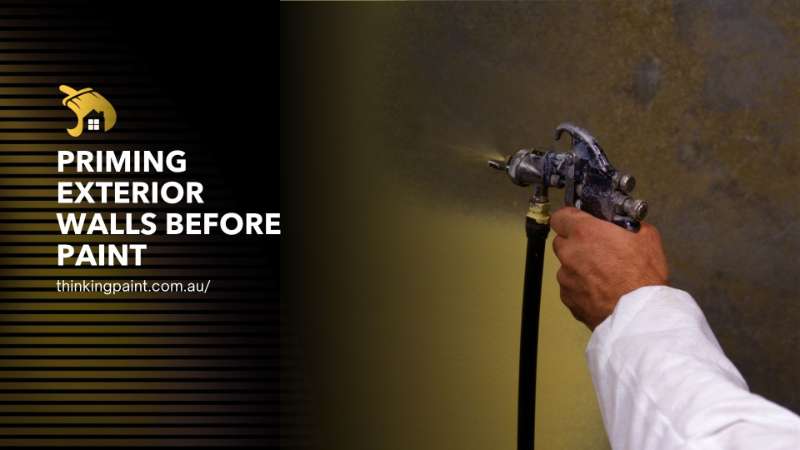
TL;DR: In most cases, yes. Bare render, raw brick, or walls with peeling paint need a primer coat before repainting. But if you use a self-priming exterior wall coating like Wall Protect, the primer step is built into the product. Wall Protect covers 6 square metres per litre, works on render, brick, timber, cement, and board surfaces, and carries a 7-year warranty. Use the free calculator to estimate how much you need.
Most exterior walls need primer before repainting. Primer seals the surface, improves adhesion, and gives the topcoat something to bond to. Without it, paint is more likely to peel or fail early.
There is one exception. Self-priming exterior wall coatings combine primer and topcoat into a single product, removing the separate primer step altogether. This guide explains when you need primer, when you can skip it, and which product does both jobs at once.
When do exterior walls need a separate primer?
A separate primer coat is needed when the surface has not been painted before or when the existing coating has deteriorated. Primer seals porous surfaces and creates a stable base for the topcoat to adhere to.
Use a separate primer when:
The surface is bare render, raw brick, or exposed masonry
The existing paint is chalking, flaking, or peeling
You are switching from a dark colour to a much lighter one
The previous coating was oil-based and you are applying an acrylic topcoat
There are stains, watermarks, or tannin bleed coming through the surface
Skipping primer in these situations leads to uneven coverage, poor adhesion, and early paint failure. The same principle applies to roof painting, where primer is almost always required before applying any topcoat. If you are unsure whether your walls need primer, read the guide on priming before painting over old paint.
When can you skip primer on exterior walls?
You can skip a separate primer coat when the existing paint is still in good condition and you are using a self-priming product designed for the surface type.
Specifically, skipping primer is reasonable when:
The existing coating is sound with no peeling, chalking, or flaking
You are repainting in a similar or darker colour
The surface is clean, dry, and free of loose material
You choose a self-priming product matched to the wall surface
Skipping primer does not mean skipping preparation. The wall still needs to be cleaned thoroughly and any loose material removed before any coating goes on.
If those conditions are met, Wall Protect handles primer and topcoat in one product, removing a full step from the job.
What is a self-priming exterior wall coating?
A self-priming coating combines the sealing and adhesion properties of a primer with the colour and protection of a topcoat. One product does both jobs.
Wall Protect is Thinking Paint's self-priming exterior wall coating. Here is what it does:
Works on bagged render, brick, timber, cement, and board surfaces
Low-sheen finish in a full range of custom colours
Covers approximately 6 square metres per litre when sprayed
Supplied in 15-litre drums
Applied by roller, brush, or airless spray in 2 coats
Carries a 7-year warranty on cleaned brick, tile, or render walls
Because Wall Protect is self-priming, you buy one product instead of two and apply two coats instead of three. That is one less product to order, one less coat to apply, and one less drying period to wait through.
Use the calculator to estimate how much Wall Protect you need based on your wall area.
How do I prepare exterior walls before repainting?
Preparation is required regardless of whether you use a separate primer or a self-priming product. No coating performs well on a dirty or deteriorated surface.
Four steps before you paint:
Clean the wall. Remove dirt, dust, cobwebs, mould, and any loose material. High-pressure wash where needed. If mould is present, treat with a mould remover before washing.
Scrape off flaking paint. Any loose or peeling sections need to be removed before coating.
Fill cracks and holes. Use an appropriate exterior filler, press it in firmly, and allow it to dry and cure fully before painting.
Let the wall dry completely. Painting over a damp surface traps moisture under the coating and leads to blistering or peeling.
Wall Protect will only last as long as the preparation underneath it. A clean, sound surface is what makes a 7-year warranty achievable.
Wall Protect vs separate primer and paint: which is less work?
Using a separate primer and topcoat means buying two products and applying three coats. Wall Protect means buying one product and applying two coats.
Here is the difference in practical terms:
Approach
Products
Coats
Drying waits
Separate primer + topcoat
2
3 (1 primer + 2 topcoat)
2
Wall Protect (self-priming)
1
2
1
Wall Protect saves one full coat of application time, the cost of a separate primer product, and one drying period between coats. For a homeowner doing the job themselves, fewer coats means less time on ladders. For a professional, it means a faster job with fewer materials to manage.
Use the calculator to compare quantities for your wall area before ordering. For more on whether exterior wall coatings are worth the investment, read are exterior wall coatings a good idea.
Frequently Asked Questions
Q: Can I paint exterior walls without primer? A: Yes, if you use a self-priming product like Wall Protect. It is designed for render, brick, timber, cement, and board surfaces and does not need a separate primer coat. If you are using standard exterior paint, primer is recommended in most situations.
Q: What surfaces does Wall Protect work on? A: Wall Protect works on bagged render, brick, timber, cement, and board surfaces. It is not designed for bare metal surfaces. For metal, use a dedicated metal primer before applying a topcoat.
Q: How many coats of Wall Protect do I need? A: Two coats applied by roller, brush, or airless spray. Allow each coat to dry fully before applying the next. Two coats are sufficient because Wall Protect is self-priming.
Q: Does Wall Protect come in different colours? A: Yes. Wall Protect is available in a full range of custom colours with a low-sheen finish. Use the Visualiser to preview colours on your property before ordering.
Q: What warranty does Wall Protect carry? A: Wall Protect carries a 7-year warranty on cleaned brick, tile, or render walls when applied according to Thinking Paint's product instructions. The warranty covers defects such as early cracking, peeling, or adhesion failure. It does not cover damage from storms, improper application, or neglect.
Q: How much Wall Protect do I need for my walls? A: It depends on your wall area. Wall Protect covers approximately 6 square metres per litre when sprayed. Use the free Thinking Paint calculator to get a quantity estimate for your job. For help measuring your wall area, contact the team before ordering.