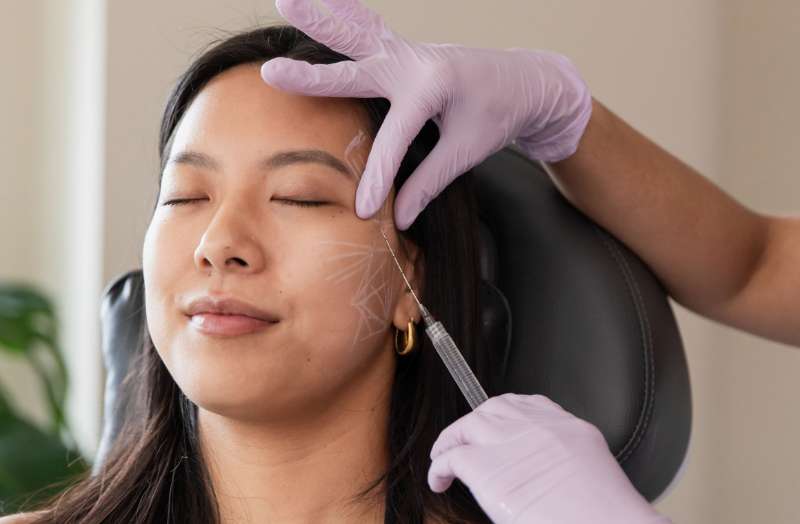
If you have been staring at the mirror wondering whether that line between your brows needs Botox or whether your flattened cheeks need filler, you are asking exactly the right question, and you are not alone. Dermal fillers vs Botox is one of the most common points of confusion in aesthetic medicine, and the honest answer is that they are not competing treatments at all. They solve two completely different problems: Botox relaxes the muscles that cause movement-related lines, while dermal fillers restore volume and structure that has been lost. Understanding which one your face actually needs, or whether you need both, is the difference between a treatment plan that looks natural and one that misses the mark entirely. This guide breaks down exactly how each works, what they treat, and how to know which is right for you.
TL;DR: Key Takeaways
Botox relaxes muscles to soften expression lines (crow's feet, frown lines, forehead lines); fillers add volume to treat hollowing and static wrinkles.
Botox results last 3 to 4 months; hyaluronic acid fillers last 6 to 24 months depending on the product and area.
Per the ISAPS 2024 Global Survey, botulinum toxin remained the most-performed non-surgical procedure worldwide in 2024, with 7.9 million treatments.
Hyaluronic acid filler procedures grew 5.2% worldwide in 2024, reaching 6.3 million treatments.
Botox begins working in 3 to 5 days with full effect at around 2 weeks; fillers show results immediately.
Many clients get the most natural, complete results by combining both treatments strategically.
Book a complimentary consultation at Beyond Medical Aesthetics, Markham.
Table of Contents
• What Is the Difference Between Botox and Dermal Fillers?
• Which Treats Wrinkles Better? Botox or Filler
• How Long Do Botox and Filler Results Actually Last?
• Which Facial Areas Are Best Treated With Botox vs. Filler?
• Is It Safe to Combine Botox and Filler in the Same Treatment?
• Which One Should You Start With? Botox or Filler
• Conclusion: Get a Personalized Plan at Beyond Medical Aesthetics
• Frequently Asked Questions
What Is the Difference Between Botox and Dermal Fillers?
The core difference comes down to mechanism. Botox is a purified neurotoxin (botulinum toxin type A) that temporarily blocks the nerve signals responsible for muscle contraction. When injected into a targeted muscle, it relaxes that muscle just enough to stop it from creasing the skin above it. This is why Botox is so effective on expression lines like crow's feet, forehead lines, and the vertical lines between the brows often called "11s."
Dermal fillers work in an entirely different way. Most are made from hyaluronic acid, a substance that occurs naturally in your skin and attracts and holds water. When injected beneath the skin, filler physically adds volume, plumping hollow areas, softening static wrinkles that are visible even at rest, and restoring structural support to areas like the cheeks, temples, and lips.
In short: Botox stops a muscle from moving in a way that creates a line. Filler adds back volume that time and gravity have taken away. Neither treatment can do the other's job, which is exactly why understanding your specific concern matters before booking either one.
Which Treats Wrinkles Better? Botox or Filler
This depends entirely on the type of wrinkle you are dealing with, and this is the single most important distinction in the entire decision.
Dynamic wrinkles, lines that only appear when you make an expression (smiling, frowning, squinting), respond best to Botox. These are muscle-movement lines, and relaxing the muscle is the direct fix. Crow's feet, forehead lines, and frown lines between the brows are the classic examples.
Static wrinkles, lines that remain visible even when your face is completely relaxed, usually respond better to filler. These form because of volume loss and reduced skin elasticity over time, not muscle movement, so relaxing a muscle won't soften them. Nasolabial folds (the lines from nose to mouth corners) and marionette lines are common examples.
In many cases, a wrinkle starts dynamic and becomes static over years of repeated movement without intervention, which is part of why clinicians increasingly recommend starting Botox earlier rather than waiting for lines to become permanently etched.
How Long Do Botox and Filler Results Actually Last?
This is one of the most searched questions for good reason. The two treatments have very different timelines, and it affects both your budget and your maintenance schedule.
Botox typically begins working within 3 to 5 days, with full muscle relaxation visible by around day 5 to 14. Results last an average of 3 to 4 months before the treated muscle gradually regains movement and touch-ups are needed.
Hyaluronic acid fillers last considerably longer, typically 6 to 24 months, depending on the specific product, the treatment area, and your individual metabolism. Filler in high-movement areas like the lips tends to break down faster than filler placed in the cheeks, which move less and can hold structure longer. Unlike Botox, filler results are visible immediately after injection, since it's adding physical volume rather than waiting for a biological effect to take hold.
One clinical detail worth knowing: some evidence suggests combining Botox with filler in the same area can actually extend how long the filler lasts, since reducing muscle movement around the injection site means less mechanical breakdown of the filler over time.
Which Facial Areas Are Best Treated With Botox vs. Filler?
Botox is most effective in the upper face, where expression-driven movement is greatest:
• Forehead lines (horizontal creases)
• Glabellar lines (the "11s" between the brows)
• Crow's feet (outer corner of the eyes)
• Bunny lines (across the nose bridge)
Dermal fillers are more versatile and are typically used in the mid and lower face, where volume loss is the primary concern:
• Cheeks (restoring lost volume and lift)
• Under-eye hollows and tear troughs
• Lips (volume and definition)
• Nasolabial folds and marionette lines
• Jawline and chin (contouring and definition)
Some areas benefit from both treatments working together. The lower face and jawline in particular often see the most natural, balanced results when Botox and filler are used strategically in combination rather than relying on just one.
Is It Safe to Combine Botox and Filler in the Same Treatment?
Yes, and it is extremely common in practice. Combining both treatments is one of the most effective ways to achieve comprehensive, natural-looking facial rejuvenation, because most faces are dealing with a mix of dynamic lines and volume loss simultaneously, not just one or the other.
A typical combination approach might use Botox to soften forehead and crow's feet lines while using filler to restore volume in the cheeks and smooth static folds around the nose and mouth. When performed by an experienced injector, both treatments can be safely administered in the same visit, and many clients find this integrated approach produces more balanced, harmonious results than treating either concern in isolation.
The right combination, and the right order of treatments, depends entirely on your individual facial anatomy and goals, which is why a proper consultation before treatment matters more than following a generic protocol.

Which One Should You Start With? Botox or Filler
If you are newer to injectables and unsure where to begin, the decision usually comes down to what bothers you most when you look in the mirror.
If your main concern is lines that appear when you make expressions (squinting, smiling, raising your eyebrows), Botox is typically the better starting point, and it is a lower-commitment option given its shorter duration.
If your main concern is volume loss, hollowing, flatness, or lines that are visible even when your face is at rest, filler is usually the more appropriate first step, since Botox will not meaningfully change these.
Botox remains the most-performed non-surgical cosmetic procedure globally, with 7.9 million treatments worldwide in 2024, per the ISAPS Global Survey, largely because it is lower-commitment, highly predictable, and addresses the most common early concern: expression lines. Hyaluronic acid filler use grew 5.2% in the same period, reflecting steady demand for natural-looking volume restoration as more people seek subtle, longer-lasting results.
Ultimately, the most reliable way to know which treatment, or combination, is right for your face is a professional facial assessment, not a generic rule of thumb.
Still not sure which one your face needs? Book a complimentary consultation at Beyond Medical Aesthetics. Our team will assess your specific concerns and build a plan, not guess from a photo.
Conclusion: Get a Personalized Plan at Beyond Medical Aesthetics
Botox and dermal fillers are not interchangeable, and they are not competitors. They are two different tools that solve two different problems. Botox relaxes the muscles behind expression lines. Filler restores the volume and structure that time gradually takes away. Knowing which one (or which combination) your face actually needs is what separates a natural, balanced result from one that misses the point entirely.
At Beyond Medical Aesthetics in Markham, our registered-nurse-led team serves clients across Toronto and the GTA and takes the guesswork out of this decision. Every treatment plan starts with an honest facial assessment, not a one-size-fits-all protocol, so you get exactly what your face needs and nothing you don't.
Book your complimentary consultation
Frequently Asked Questions
Is Botox or filler better for under-eye bags and dark circles?
Filler is generally the more appropriate treatment for under-eye hollowing, since this area is affected by volume loss rather than muscle movement. Botox has no meaningful effect on under-eye hollows or tear troughs. A proper assessment can confirm whether under-eye concerns are due to volume loss, pigmentation, or another cause, since each requires a different approach.
Can Botox and filler be done on the same day?
Yes. Combining both treatments in a single visit is common practice and is often the most efficient way to achieve comprehensive results, particularly when a client has both dynamic lines and volume loss to address. An experienced injector will determine the appropriate order and placement for both.
Which lasts longer, Botox or dermal filler?
Dermal filler lasts significantly longer than Botox. Botox typically lasts 3 to 4 months, while hyaluronic acid filler can last anywhere from 6 to 24 months depending on the product and treatment area. Lip filler tends to break down faster than filler placed in less mobile areas like the cheeks.
Does Botox or filler look more natural?
Both can look completely natural when administered by an experienced, conservative injector, and both can look overdone when overused. The more relevant factor than the treatment itself is dosage, placement, and technique. Starting conservatively and building gradually over time consistently produces more natural results than aggressive early treatment with either option.
Do I need Botox or filler for smile lines around my mouth?
This depends on whether the lines are dynamic or static. If the lines only appear when you smile, a very conservative amount of Botox may help, though this area requires careful technique to avoid affecting a natural smile. If the lines are visible at rest, they are typically caused by volume loss and respond better to filler. A consultation can determine which category your lines fall into.