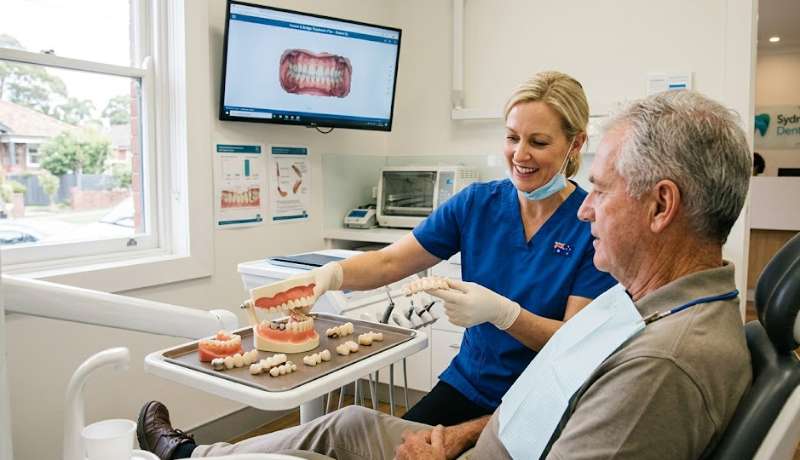
Missing or damaged teeth can affect how you eat, speak, and feel about your smile. It can also place extra pressure on surrounding teeth, leading to further dental issues over time. Crowns and bridges are two common treatments used to restore function and improve the appearance of your teeth.
What Are Dental Crowns?
A dental crown is a cap placed over a damaged or weakened tooth. It restores the tooth’s shape, strength, and appearance while protecting it from further damage. Crowns are often used when a tooth is cracked, worn down, or has a large filling.
You might need a crown to:
- Protect a weak or fractured tooth
- Restore a broken or worn tooth
- Cover a tooth after root canal treatment
- Improve the appearance of a discoloured or misshaped tooth
Crowns are custom-made to match your natural teeth, so they blend in with your smile.
How Dental Bridges Work
A dental bridge is used to replace one or more missing teeth. It works by anchoring an artificial tooth to the natural teeth or crowns on either side of the gap. This helps restore both function and appearance.
Bridges are typically made up of:
- Abutment teeth: The supporting teeth on either side of the gap
- Pontic: The artificial tooth that fills the space
By filling the gap, a bridge helps prevent nearby teeth from shifting out of position, which can lead to bite issues over time.
When Are Crowns and Bridges Recommended?
Crowns and bridges are used in different situations, depending on the condition of your teeth. Your dentist will assess your oral health before recommending the most suitable option.
Crowns are often recommended when a tooth is still present but needs support. Bridges are used when one or more teeth are missing and need replacement.
You may benefit from these treatments if you:
- Have damaged or weakened teeth
- Are missing one or more teeth
- Want to restore your bite and chewing ability
- Need to maintain proper alignment of surrounding teeth
Both options focus on restoring function while supporting long-term oral health.
The Treatment Process
The process for crowns and bridges usually takes two or more appointments. During the first visit, your dentist prepares the affected teeth and takes impressions to create a custom fit.
For crowns:
- The tooth is reshaped to allow the crown to fit securely
- A temporary crown may be placed while the final one is made
For bridges:
- The supporting teeth are prepared for crowns
- An impression is taken to create the bridge
At the next appointment, the final crown or bridge is fitted and adjusted for comfort and function.
Benefits of Crowns and Bridges
Crowns and bridges offer practical solutions for restoring your smile. They help maintain both the function and structure of your teeth.
Key benefits include:
- Improved chewing and speaking
- Restored appearance of your smile
- Support for surrounding teeth
- Long-lasting results with proper care
These treatments are designed to feel natural and function like your existing teeth.
Caring for Crowns and Bridges
Maintaining good oral hygiene is important to extend the life of your crowns and bridges. While the materials used are durable, the supporting teeth and gums still require regular care.
You should:
- Brush twice daily and floss regularly
- Avoid biting hard objects that may damage the restoration
- Attend regular dental check-ups
- Clean around the bridge area carefully to prevent plaque build-up
With proper care, crowns and bridges can last for many years.
Choosing the Right Option for You
The right treatment depends on your dental condition and long-term goals. Crowns are suitable for strengthening existing teeth, while bridges are used to replace missing ones.
Your dentist will consider factors such as:
- The number of teeth affected
- The health of surrounding teeth and gums
- Your bite and overall oral structure
A clear treatment plan will help you understand what to expect and how the procedure will support your oral health.
Final Thoughts
Crowns and bridges are reliable solutions for restoring damaged or missing teeth. They help improve function, maintain alignment, and support a balanced smile. With proper care and professional guidance, they can provide long-term benefits.
If you’re considering crowns or bridges, professional advice can help you make an informed decision.
Get in touch with us if you're in search of trusted dental solutions for missing teeth: https://www.orisdental.com.au/