What does being a young woman mean?
In relation to breast cancer, young women generally refer to women who are pre-menopausal. Young women can have some different challenges from women who are post-menopausal at the time of diagnosis.
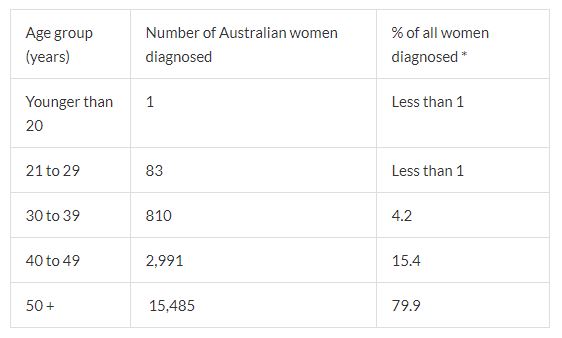
The Australian Institute of Health and Welfare's report, Cancer in Australia 2019, provides estimates of the number of women diagnosed with breast cancer by age.
Key issues
Young and pregnant
Although being diagnosed with breast cancer when pregnant is rare, it does happen. Treatment options may be different if you are pregnant when diagnosed. Radiotherapy is often not recommended due to the risk to the unborn baby, so some women choose to have a mastectomy instead of breast conservation surgery. If chemotherapy is required, some women choose to wait until after the birth of their child, however, studies have shown that babies of women who undergo chemotherapy while pregnant are at no greater risk of complications compared with other babies.
Fertility
The effects of chemotherapy and hormone-blocking therapy can make it harder to get pregnant after treatment ends. There are a number of factors that contribute to this issue, including a woman’s age, and the type of treatment she has and how it affects her ovaries. There are a number of methods for preserving fertility before starting treatment, which may or may not be suitable for your situation. If you are planning to become pregnant in the future, or even if you haven't given children much thought, it's best to consider some of these options before you start treatment. These include mature egg freezing, embryo freezing, ovarian tissue freezing, medications, and using a donor egg.
Ovarian suppression during treatment
Ovarian suppression during chemotherapy for women with hormone receptor-negative breast cancer may help protect the ovaries and improve the chances of women remaining fertile. This fertility treatment involves a particular type of drug (GnRHa – Gonadotropin-Releasing Hormone analog) goserelin (Zoladex). This drug blocks the hormones that signal the ovaries to develop and release eggs and causes the ovaries to temporarily shut down. The aim is to protect the eggs from chemotherapy medicine.Research has shown that for premenopausal women with hormone-receptor negative breast cancer, the use of goserelin in combination with chemotherapy may protect fertility. Using goserelin while on chemotherapy may also reduce the chance of the cancer returning and improve the chance of survival in this group of women.
Ovarian suppression does not delay cancer treatment. It may be costly and the benefits and risks are not yet fully understood. If you are interested in finding out more about options that may be suitable for you, speak to your specialist. There may be ways you can access goserelin through the PBS.
Early menopause
Some chemotherapy and hormone-blocking therapies can reduce the level of oestrogen produced in the ovaries, causing your periods to stop temporarily or can bring about permanent early menopause. This generally depends on your age and the medications you are given, but if you have not yet reached menopause, you should discuss this with your doctor before treatment. Early menopause can bring with it uncomfortable side effects, such as hot flushes or vaginal dryness. Talk to your doctor about ways to manage these side effects.
source: bcna.org.au