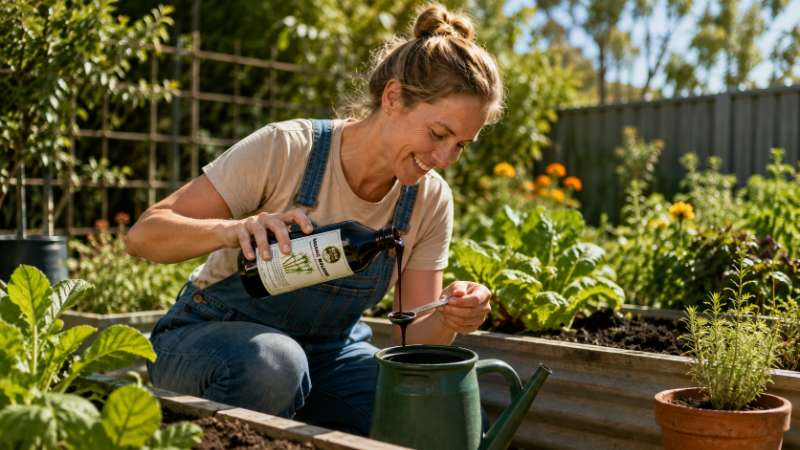
If you've spent any time around serious composters, worm farmers, or organic vegetable growers, you've probably heard someone rave about blackstrap molasses. It sounds like a kitchen pantry item, but in the garden it plays a very different role; as a concentrated food source for the microbes that keep your soil alive. This guide covers exactly what blackstrap molasses is, why Australian gardeners use it, and how to choose and apply it correctly.
What Are Blackstrap Molasses?
Blackstrap molasses is the thick, dark syrup left over after sugar has been extracted from sugarcane through multiple boiling stages. Because most of the sucrose has already been removed for table sugar, what remains is comparatively low in sugar but unusually rich in trace minerals; calcium, potassium, magnesium, iron, and manganese; along with organic carbon compounds that soil microorganisms thrive on.
For gardeners, that mineral density is the whole point. Where table sugar simply feeds microbes, blackstrap molasses feeds and mineralises, making it a favourite ingredient for compost activators, bokashi bran, and homemade fermented plant tonics.
How It Differs from Regular/Table Molasses
"Molasses" covers several products depending on how many times the sugarcane juice has been boiled:
Light (first boil) molasses; sweetest, highest sugar content, closest to a food-grade syrup.
Dark (second boil) molasses; less sweet, slightly more mineral-rich.
Blackstrap (third boil) molasses; the final extraction, lowest in sugar but highest in minerals and organic carbon.
This is why blackstrap is the version almost every gardening guide recommends: you're paying for mineral content, not sweetness.
Sulphured vs Unsulphured Molasses
Some molasses is treated with sulphur dioxide during processing, usually to preserve unripe sugarcane or extend shelf life. For garden use, this matters; sulphur residues can suppress the very microbial life you're trying to encourage. Unsulphured blackstrap molasses is the standard recommendation for anything going into soil, compost, or a fermentation like bokashi, since it won't interfere with beneficial bacteria and fungi. If you're buying for garden use in Australia, always check the label specifically says unsulphured.
Benefits of Blackstrap Molasses in the Garden
Feeding Soil Microbes & Beneficial Bacteria
Healthy soil isn't dirt; it's a living ecosystem of bacteria, fungi, and other microorganisms that cycle nutrients and make them available to plant roots. Those microbes need an energy source to multiply, and the simple sugars and carbon in molasses are exactly that. A monthly molasses drench gives the soil food web a boost, particularly in soils that have gone compacted, sandy, or biologically "tired" after heavy cropping.
Boosting Compost & Bokashi Activity
Molasses is a core ingredient in fermentation-based composting because it feeds the microbial cultures that do the actual work. If you're running a bokashi system, you'll already recognise molasses as one of the ingredients used to make bokashi bran; it's what activates and sustains the EM-1 (Effective Microorganisms) culture that ferments kitchen scraps instead of letting them rot. Our Bokashi FAQ guide covers how that fermentation process actually works if you want the full picture.
Molasses is equally useful in a standard compost heap or worm farm, where a small diluted dose helps kick-start a sluggish pile or feed worm populations during a lull.
Natural Pest & Disease Support
Some gardeners also use diluted molasses as part of an integrated pest management routine; the sugars can help make foliar sprays "stick" better to leaves, and a well-fed, biologically active soil produces stronger, more disease-resistant plants overall. It's not a substitute for proper pest control, but it's a genuinely useful supporting tool in an organic, low-spray growing system.
How to Use Blackstrap Molasses (Dilution & Application)
Blackstrap molasses is highly concentrated, so it's always used diluted; applying it neat can actually overwhelm and harm soil microbes rather than help them.
Foliar Spray Ratios
For a foliar feed, mix roughly 1–2 tablespoons of unsulphured blackstrap molasses per litre of water, adding a small amount of liquid soap or seaweed extract as a wetting/spreading agent if you're using it as a pest-management spray. Apply early morning or late afternoon to avoid leaf scorch in direct sun, and always do a small test patch first if you haven't used it on a particular plant before.
Soil Drench / Compost Tea Use
For soil and compost applications, a common ratio is 60–80 mL (about ¼ to ⅓ cup) of molasses per 9 L watering can, applied over garden beds roughly once a month during the active growing season. This same dilution works well as a booster added to homemade compost teas or fermented plant extracts, where the molasses provides the food source that drives fermentation. Products like our Fermented Comfrey Extract and Fermented Bull Kelp Extract are built on this same principle; organic molasses fuelling an EM-1 fermentation; if you'd rather use a ready-made version instead of brewing your own. If you're new to making these at home, our FPE beginner guide walks through the process step by step.
A couple of practical notes: apply in moderation (more isn't better; overuse can throw off the soil's balance), and always use unsulphured molasses for anything feeding live microbial cultures.
Buying Organic Blackstrap Molasses in Australia
Not all molasses sold in Australia is suited to garden use; a lot of what's on supermarket shelves is aimed at baking and may be sulphured, blended with additives, or diluted with syrups. For consistent results in compost, bokashi, and soil drenches, it's worth sourcing molasses that's specifically produced (and labelled) for garden and compost use.
We stock a pure, organic, unsulphured blackstrap molasses at Kai Kai Farm, made specifically for feeding soil microbes, activating EM-1, and boosting compost and bokashi systems; the same product we use ourselves across the farm.
What to Look for on the Label
When choosing a blackstrap molasses for garden use, check for:
"Unsulphured" clearly stated; non-negotiable for anything feeding live microbes.
"Organic" certification or sourcing, avoiding synthetic pesticide or herbicide residues from the original sugarcane crop.
No added sugars, preservatives, or flavourings; you want pure molasses, not a food-grade blend.
Third or later boil ("blackstrap") specifically, rather than light or dark molasses, for the highest mineral content.
FAQs
Is blackstrap molasses the same as regular molasses? No. Regular (light or dark) molasses comes from earlier boiling stages and is sweeter with fewer minerals. Blackstrap is the final, most mineral-dense extraction, which is why it's preferred for garden and compost use.
Can I use baking molasses from the supermarket in my garden? You can in a pinch, but check the label carefully; many baking molasses products are sulphured or blended, which isn't ideal for feeding live soil microbes or a bokashi system. An unsulphured, garden-specific product will give more reliable results.
How often should I apply molasses to my garden? Roughly once a month during the growing season is a good starting point for a soil drench. It's easy to overdo it, so stick to the recommended dilution rather than increasing the dose for faster results.
Does molasses help with composting speed? Yes; because it feeds the bacteria and fungi doing the decomposing, adding diluted molasses can help kick-start a slow compost pile or refresh a bokashi bin between batches.
Is blackstrap molasses safe for edible gardens? Yes, when diluted correctly. It's a natural product with no synthetic residues, making it a good fit for vegetable beds, fruit trees, and other food crops.
Looking for more ways to build living soil naturally? Explore our Bokashi Composting range, browse Fermented Plant Extracts & Tonics, or read our related article on molasses in the garden for more soil health tips.