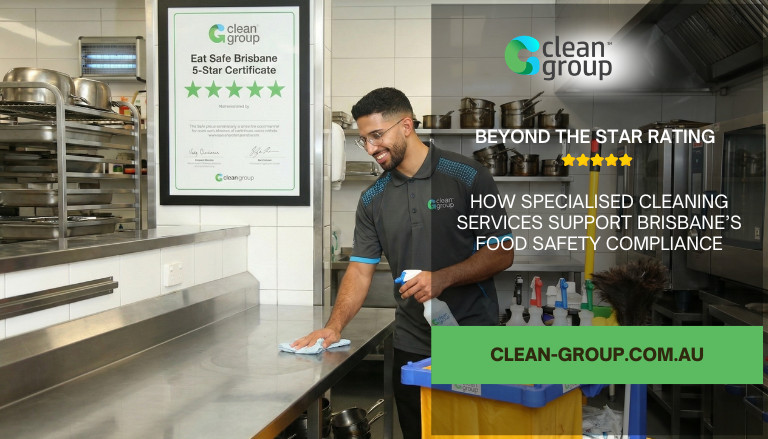
A professional cleaning service in Brisbane is a critical component for businesses aiming to comply with Queensland’s rigorous health and safety regulations, including the “Eat Safe Brisbane” rating system and the Food Act 2006. By employing specialised cleaning protocols—such as high-performance disinfection and documented sanitizing schedules—businesses can mitigate the risk of infectious germ spread, avoid on-the-spot fines, and protect their operating licences. For high-traffic sectors like hospitality and healthcare, these services provide the verifiable evidence of cleanliness required during proactive council inspections. The Eat Safe Brisbane scheme evaluates food safety management practices through visual inspections, staff discussions, and a thorough review of documentation. Businesses that achieve a five-star rating are considered excellent performers, demonstrating full compliance with the Food Act 2006.Navigating the “Eat Safe Brisbane” Requirements
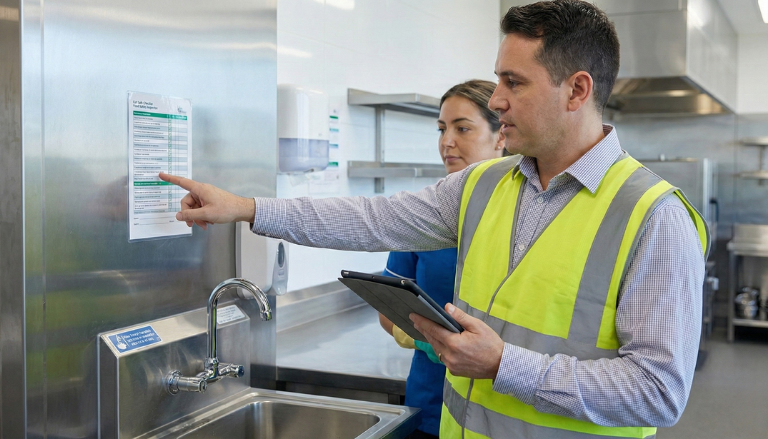
Visual Inspections: Council officers assess the cleanliness of structural elements, including floors, walls, and ventilation systems, to ensure no accumulation of grease or garbage.
Documentation Review: Professional cleaning services assist by providing evidence of cleaning schedules and sanitisation logs, which are critical for the accreditation process.
Pest Control and Maintenance: A comprehensive cleaning program helps discourage pests and identifies minor maintenance issues—such as cracked tiles—before they become major non-compliance risks.
Meeting Standard 3.2.2A: New Mandatory Tools
As of late 2025, Brisbane food businesses must adhere to enhanced requirements under Standard 3.2.2A. This national standard introduces mandatory tools for businesses handling unpackaged, potentially hazardous, ready-to-eat foods.
Food Handler Training: All staff must complete a food safety training course or demonstrate equivalent skills in cleaning and sanitising equipment.
Food Safety Supervisor (FSS): Category one and two businesses must appoint a certified FSS who has obtained certification from a Registered Training Organisation within the last five years.
Showing That Food is Safe: Category one businesses are now required to maintain records of critical safety controls, including the regular cleaning and sanitising of food contact surfaces.
The Technical Process: Cleaning vs. Sanitising
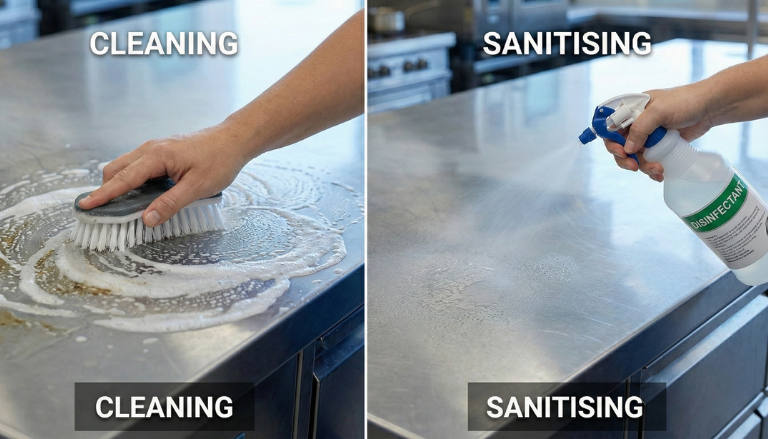
One of the most frequent reasons for lower star ratings is a failure to distinguish between cleaning and sanitising. A professional cleaning service ensures both steps are performed correctly to meet national food safety standards.
The Two-Step Hygiene Process
Cleaning: This involves the physical removal of dirt, grease, and food waste using hot water and detergent. It is a prerequisite for effective sanitisation.
Sanitising: This step uses heat (such as water at 77 °C) or chemical agents (like diluted bleach or isopropyl alcohol) to destroy microorganisms that remain after cleaning.
Commercial Equipment Care
Professional cleaners use specialised equipment, such as industrial dishwashers on high-heat cycles or chemical sanitisers at precise concentrations (e.g., 100 ppm chlorine for cold water), to ensure food contact surfaces are safe.
Brisbane Hygiene Compliance Standards
Conclusion
Prioritising high-standard hygiene is no longer just a regulatory requirement; it is a strategic business advantage in Brisbane’s competitive commercial landscape. By moving beyond surface-level aesthetics and investing in a professional cleaning service that understands the nuances of the Food Act 2006 and Standard 3.2.2A, business owners can ensure long-term operational stability and public trust. A five-star “Eat Safe Brisbane” rating serves as a powerful endorsement of a brand's commitment to excellence, directly influencing customer loyalty and staff morale.
Whether managing a high-volume commercial kitchen, a medical facility, or a corporate office, the shift toward audited, ISO-certified cleaning protocols provides the legal protection and hygiene certainty required for 2026 and beyond. Taking proactive steps today prevents the costly disruptions of failed audits and health-related absenteeism tomorrow.
Frequently Asked Questions (FAQs)
What are the consequences of failing a Brisbane food safety audit?
Failure to comply can result in reputational damage, improvement notices, on-the-spot fines, or the suspension and cancellation of a food licence.How long must food safety records be kept in Queensland?
Under Standard 3.2.2A, required records of food safety activities—including cleaning and sanitisation logs—must be kept for at least three months.Is a domestic dishwasher sufficient for commercial sanitising?
Only if it has a properly functioning sanitising cycle that reaches 65.6 °C or higher, or is operated with an inlet water temperature above 68 °C. Professional services often use chemical sanitisers to ensure compliance where equipment falls short.Can a business request a reassessment of its star rating?
Yes. Brisbane businesses can request a reassessment audit for a fee after making necessary improvements. For those with 3+ stars, a six-month waiting period typically applies before a reassessment.