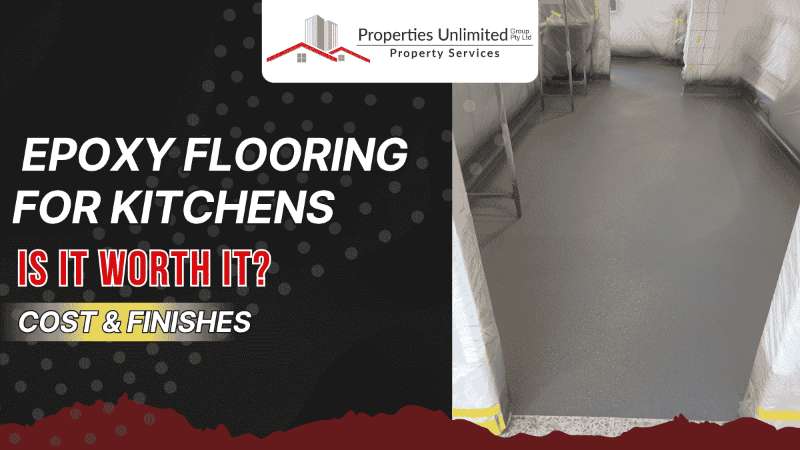
Kitchens are hard on floors. Dropped pots, grease splatter, constant foot traffic, water from the sink, the occasional red wine spill. Your flooring has to handle all of it without looking like a disaster zone within a couple of years.
Epoxy flooring has been the go-to choice for commercial kitchens for decades. Cafes, restaurants, and food production facilities rely on it because it's seamless, hygienic, chemical-resistant, and genuinely durable. Lately, residential homeowners in Queensland have started asking the same question: can the same system work in a home kitchen?
The answer is yes. But a few things are worth understanding before you commit.
Why Kitchens Are Different From Garages and Driveways
Most conversations about residential epoxy flooring start with garages. Garages are a great application. But kitchens make different demands, and the right epoxy system for one won't necessarily suit the other.
In a kitchen, slip resistance is non-negotiable. A high-gloss finish can look stunning in a showroom, yet turn dangerously slippery when wet. And in a kitchen, wet floors are a daily reality. So any kitchen system should include an anti-slip aggregate or texture. It needs to keep grip underfoot without spoiling the clean, seamless look.
Food safety is the other kitchen-specific consideration. The products you use in food preparation areas need to be non-porous and non-toxic once they cure. They also need to resist the cleaning agents you'll actually reach for. A properly specified, fully cured epoxy floor meets food-safe standards. Product selection matters here, and this is one area where professional specification makes a real difference.
Epoxy Finishes That Work Well in Kitchens
Not every epoxy system suits kitchen use. Here are the finishes that tend to perform best in residential kitchens:
Solid colour with anti-slip aggregate is the most practical and most popular option. Installers broadcast fine anti-slip particles into the top coat, giving you a smooth mid-sheen finish. You get the seamless, easy-clean surface that makes epoxy appealing, without the slip risk. Colour choice is wide too — warm neutrals suit traditional kitchens, while cooler greys and whites work in modern designs.
Metallic epoxy has become increasingly popular in kitchen renovations where the floor doubles as a design feature. The swirling, three-dimensional finish is genuinely striking. It works particularly well in open-plan spaces, where the kitchen floor flows into a living or dining area. It's a premium finish at a premium price. But in the right space, the result is hard to argue with.
Quartz broadcast systems work exactly as the name suggests: installers broadcast coloured quartz aggregate into the epoxy. They offer excellent slip resistance and a textured, stone-like appearance. They're also extremely durable and easy to clean. They suit kitchens where practicality and longevity come first.
What Does Kitchen Epoxy Flooring Cost?
In Queensland, installers generally price kitchen epoxy flooring per square metre. The range reflects the finish system you choose and how complex the installation is.
For a standard residential kitchen (typically 15–25m²), expect to pay $1,200–$3,500 fully installed. A solid colour anti-slip system sits at the lower end. Metallic and decorative systems push toward the higher end. The cost per square metre generally runs between $60 and $120/m². Kitchen work involves more detailed preparation and application than a large open garage floor, and the price reflects that.
A few things affect price in a kitchen specifically. Moving appliances and working around fixed cabinetry adds time to the job. Tile removal is another factor. If you choose to go epoxy over bare concrete rather than over tiles, that removal becomes an extra cost. Your contractor will scope it separately.
Can You Epoxy Over Existing Kitchen Tiles?
This is a common question, and it deserves an honest answer. Sometimes you can apply epoxy over existing tiles — provided they meet a few conditions. They must sit firmly in place, show no damage, and take proper preparation. The installer fills the grout lines and grinds the surface back. That creates a key for the epoxy to bond to.
Other cases call for removal instead. Where tiles have cracked, lifted, or never bonded properly, a fresh foundation is far more reliable. Lay epoxy over compromised tiles and those problems will eventually reflect back through the surface. A good contractor checks all of this during the inspection. They'll give you a straight recommendation rather than defaulting to whichever option is easier.
Durability: How Does Epoxy Actually Hold Up in a Kitchen?
Install a kitchen epoxy floor properly and it holds up exceptionally well. It resists the things that usually wreck a kitchen floor. Think moisture, food and oil stains, abrasion from foot traffic, and the thermal shock of dropped hot pans.
Here's how it compares to other common kitchen flooring options:
Versus ceramic tile — epoxy wins on hygiene. There are no grout lines to harbour bacteria, and it's warmer and less brittle underfoot. Tiles chip and crack. A sound epoxy surface doesn't.
Versus timber or hybrid flooring — epoxy is far more water-resistant. Timber and hybrid floors need careful management around the sink and dishwasher. Epoxy is indifferent to water.
Versus vinyl plank — epoxy wears harder over a longer period. It also won't lift, bubble, or delaminate at the seams the way vinyl can in humid conditions.
Cleaning and Maintenance in a Food Area
One of the strongest practical arguments for epoxy in a kitchen is how easy it is to keep clean. A seamless, non-porous surface has no grout lines, seams, or texture to trap food particles, grease, or bacteria. A mop and a standard kitchen floor cleaner handle day-to-day maintenance.
For regular cleaning, skip highly alkaline or acidic cleaners over the long term. Neutral pH products preserve the surface better. Beyond that, epoxy kitchen floors stay genuinely low-maintenance in a way that grout-lined tile floors simply can't match.
Is Kitchen Epoxy the Right Choice for You?
Epoxy suits kitchen environments well when:
- You want a seamless, hygienic surface that's genuinely easy to clean.
- You're renovating and want a floor that lasts a decade or more before it needs replacing.
- You have an open-plan space and want flooring that flows from the kitchen through to a living or entertainment area.
It's worth a conversation in a few situations too. Maybe you're working around a tight footprint, or you have particularly complex cabinetry. Or perhaps your existing floor needs proper assessment before anyone can specify a system.
At Properties Unlimited Group, we offer free on-site inspections for residential epoxy flooring across Queensland, including kitchen applications. We'll look at your existing floor and talk through the finish options that suit the space. Then we'll hand you a written quote before anything else happens.