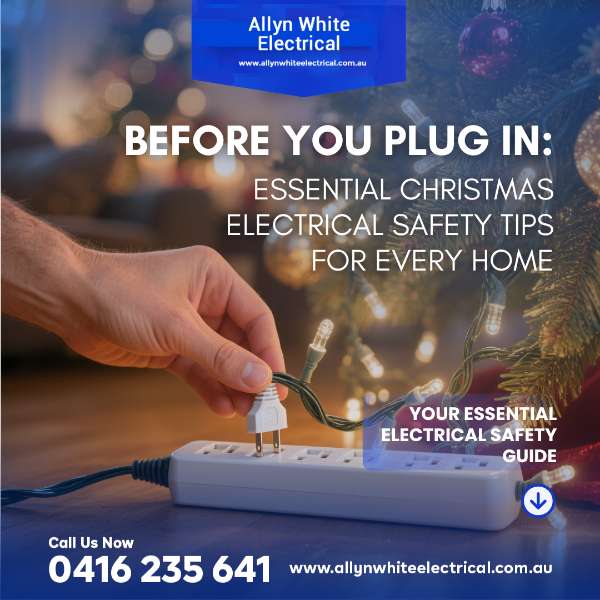
Light Up Your Holidays Safely
The holidays are here, and it’s the perfect time to brighten up your home with festive lights. But as your space starts to sparkle, remember that a few overlooked electrical details can turn a cheerful scene into a serious hazard. With a little care, you can enjoy your decorations without compromising on safety.
In this article, you’ll find straightforward, practical guidance from Allyn White Electrical - a family-run business providing local electrical advice. Whether you’re decorating indoors or outdoors, these Essential Electrical Tips for Christmas will help you keep your home safe, compliant, and shining bright this Christmas.
Inspect Your Lights Before You Hang Them
Before you start decorating, take a few moments to check the condition of your Christmas lights. Broken or frayed wires, damaged sockets, or exposed wiring can easily lead to electrical issues. It's always better to be safe than sorry!
Check for visible damage: Look for cracks, frays, or exposed wires.
Replace broken or faulty bulbs: A damaged bulb can affect the whole string of lights.
Ensure cords are in good condition: Any signs of wear and tear should be addressed before use and replaced.
If you're unsure about the condition of your lights, it's best to replace them with new ones. Faulty lights can lead to electric shocks or fires.
Check for visible damage: Look for cracks, frays, or exposed wires.
Replace broken or faulty bulbs: A damaged bulb can affect the whole string of lights.
Ensure cords are in good condition: Any signs of wear and tear should be addressed before use and replaced.
Choose the Right Lights for Indoor and Outdoor Use
Not all Christmas lights are made the same. Some are designed for indoor use, while others are built to withstand the elements outdoors. Using the wrong type for the wrong environment can create unnecessary risks.
Indoor lights: Use lights specifically designed for indoor use. These are typically not weatherproof.
Outdoor lights: Always use lights rated for outdoor use. These are designed to withstand rain and harsh weather conditions.
If you're unsure whether your lights are appropriate for outdoor use, check the packaging or look for a label that confirms they are weatherproof and safe for exterior decorations.
Indoor lights: Use lights specifically designed for indoor use. These are typically not weatherproof.
Outdoor lights: Always use lights rated for outdoor use. These are designed to withstand rain and harsh weather conditions.
Avoid Overloading Circuits
One of the biggest electrical mistakes people make during the holidays is overloading circuits. With so many lights and decorations, it's easy to plug in too many devices and create a fire hazard.
Use power boards with overload protection: These will automatically shut off if the circuit becomes overloaded.
Don’t chain power boards together: This can increase the risk of overloading and cause overheating.
Limit the number of lights on a single socket: Always follow the manufacturer's guidelines for the maximum number of lights to plug into one outlet.
If you're planning a larger Christmas display, Allyn can inspect your circuits to ensure they can safely handle the load.
Use power boards with overload protection: These will automatically shut off if the circuit becomes overloaded.
Don’t chain power boards together: This can increase the risk of overloading and cause overheating.
Limit the number of lights on a single socket: Always follow the manufacturer's guidelines for the maximum number of lights to plug into one outlet.
Use Extension Cord and Plug Properly
Extension cords are handy when decorating, but they must be used with care. Improper use of extension cords can lead to fires or electrical shock.
Don’t overload extension cords – it’s a recipe for overheating and potential fire hazards.
Keep that third prong on plugs intact – it’s your friend against electrical shock.
Outdoor decorations? Plug them into a safety pack for that added layer of protection.
Ensure all cords are safely tucked away to avoid tripping hazards. Also, never run cords under carpets, rugs, or heavy furniture where they can overheat.
Don’t overload extension cords – it’s a recipe for overheating and potential fire hazards.
Keep that third prong on plugs intact – it’s your friend against electrical shock.
Outdoor decorations? Plug them into a safety pack for that added layer of protection.
Product Safety Guidelines:
Stick to reputable sources for your electrical products.
Watch out for typos – they might signal a dodgy or counterfeit product.
Check for the approval mark of an accredited certification agency; it’s your guarantee of meeting safety standards.
For more electrical safety details, check the official Product Safety Guidelines from Electrical Safety Queensland.
Stick to reputable sources for your electrical products.
Watch out for typos – they might signal a dodgy or counterfeit product.
Check for the approval mark of an accredited certification agency; it’s your guarantee of meeting safety standards.
Installing Decorations:
Connect a maximum of three light strings – follow those manufacturer’s instructions.
No bulbs touching anything they shouldn’t! Keep away from flammable materials
Be mindful of overhead power lines – safety first, even on a ladder.
Don’t put Christmas lighting around or above swimming pools or have leads lying in water or wet areas
Hire a Professional Electrician
If you’re unsure about your home’s electrical capacity or need help setting up safe outdoor lighting:
Allyn, your local licensed electrician, can check circuits, advise on safety, and make sure everything is compliant and safe
He can safely install additional outlets or circuits if needed, allowing you to safely power all your holiday lights and decorations.
Professional guidance helps avoid unnecessary risks during the festive season.
Pro Tip: For a professional and reliable installation in Brisbane, contact Allyn White Electrical, a trusted electrician with decades of experience.
Connect a maximum of three light strings – follow those manufacturer’s instructions.
No bulbs touching anything they shouldn’t! Keep away from flammable materials
Be mindful of overhead power lines – safety first, even on a ladder.
Don’t put Christmas lighting around or above swimming pools or have leads lying in water or wet areas
Allyn, your local licensed electrician, can check circuits, advise on safety, and make sure everything is compliant and safe
He can safely install additional outlets or circuits if needed, allowing you to safely power all your holiday lights and decorations.
Store Lights Properly After the Holidays
Once the season is over, make sure to store your lights and electrical decorations properly. Poor storage can lead to damage, which can make them unsafe to use next year.
Wrap lights carefully: Avoid tangling by coiling lights into loops rather than winding them tightly.
Store in a dry, cool place: Humidity or extreme heat can damage lights and wiring.
Inspect before reusing: Even if your lights were fine last year, always check them every time before use.
Wrap lights carefully: Avoid tangling by coiling lights into loops rather than winding them tightly.
Store in a dry, cool place: Humidity or extreme heat can damage lights and wiring.
Inspect before reusing: Even if your lights were fine last year, always check them every time before use.
Additional General Safety Tips
These extra precautions help ensure a completely safe holiday setup.
Be cautious when buying Christmas lights, check labels and packaging
Ensure you have working smoke detectors.
Check that you have safety switches on all circuits and that your safety switches work – push the test button.
Avoid using double adapters
Ensure all outdoor connections are weatherproof!
Ensure lights are extra low voltage.
Don’t put Christmas lighting around or above swimming pools or have leads lying in water or wet areas.
Ensure that lights are clear of power lines and driveways.
Keep decorations out of reach of small children and away from curious pets.
Turn off outdoor lighting in rainy and stormy weather.
Turn off lights when you leave the house or going to sleep
Be cautious when buying Christmas lights, check labels and packaging
Ensure you have working smoke detectors.
Check that you have safety switches on all circuits and that your safety switches work – push the test button.
Avoid using double adapters
Ensure all outdoor connections are weatherproof!
Ensure lights are extra low voltage.
Don’t put Christmas lighting around or above swimming pools or have leads lying in water or wet areas.
Ensure that lights are clear of power lines and driveways.
Keep decorations out of reach of small children and away from curious pets.
Turn off outdoor lighting in rainy and stormy weather.
Turn off lights when you leave the house or going to sleep
Buying Christmas Lights Safely
Purchasing the right lights is the first step to safe decorating.
Beware of buying Christmas lights from overseas as they have different safety standards, and their products may be unsafe for use here in Australia. Electrical equipment sold in Australia must meet strict electrical safety standards.
Stick to reputable dealers with that Aussie certification.
Say no to online Christmas lights shopping from overseas – let’s keep it safe and local!
Beware of buying Christmas lights from overseas as they have different safety standards, and their products may be unsafe for use here in Australia. Electrical equipment sold in Australia must meet strict electrical safety standards.
Stick to reputable dealers with that Aussie certification.
Say no to online Christmas lights shopping from overseas – let’s keep it safe and local!
Connecting Safely:
Install a safety switch – test it out before use.
Use power boards with overload protection – and ditch those double adaptors for good.
Check all leads for damage and unwind those extension leads to prevent overheating, discontinue and throw out if damaged and replace with new.
Use extra low voltage outside, such as LED and solar lights where possible.
Install a safety switch – test it out before use.
Use power boards with overload protection – and ditch those double adaptors for good.
Check all leads for damage and unwind those extension leads to prevent overheating, discontinue and throw out if damaged and replace with new.
Use extra low voltage outside, such as LED and solar lights where possible.