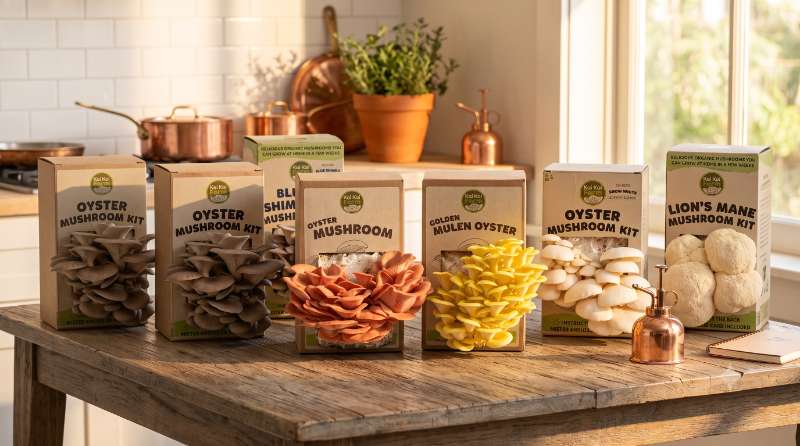
The Short Answer
It really does depend on what you're looking for, and that's not a cop-out. If you want the cheapest possible mushrooms per gram, a bag of button mushrooms from the supermarket will always win. But if you want something different, a variety you've never tasted before, picked at the perfect moment, grown on your own kitchen bench, then a mushroom grow kit offers something money alone doesn't quite capture.
Most people who try one end up ordering again. Not because they've done the maths, but because the experience of growing your own food is genuinely hard to give up once you've started.
What Does a Mushroom Grow Kit Actually Cost?
Kai Kai Farm's kits are priced at $38 each, with free shipping Australia-wide, no minimum order, no catch. If you want to try a few varieties at once, the 3 Kits for $99 bundle is a great way to do it. It's also just a nicer way to discover which mushroom you love most before committing to one.
Everything you need is inside the box. The mycelium has already colonised the substrate before it leaves the farm, so there's no complicated setup, no extra supplies to source, and no prior knowledge required. You open the bag, mist it daily, and within 7–14 days you'll start to see mushrooms appearing from the cut.
If you later get the growing bug and want to go further, Kai Kai Farm also carries grain and bulk fruiting substrates, grow bags, and lab supplies. But there's no pressure to go there, plenty of people happily run kits for years and love every harvest.
How Much Will You Actually Harvest? Real Yields by Variety
Yields vary a little depending on variety, humidity, and how well you care for the block between flushes. Here's a realistic picture of what to expect:
The first flush tends to be the most exciting, and the biggest. Later flushes are a little smaller as the block works through its nutrients, but soaking the block overnight between crops helps bring them back strong. Once the block has given everything it has, it makes a wonderful soil amendment for your garden. Nothing goes to waste.
Cost per Kilo: How Does It Compare?
This is where context matters. Gourmet mushrooms from a farmers market or specialty grocer, the kind with real variety and freshness, often sell for $40–$80 per kilo. On that comparison, a kit holds up very well, particularly once you count multiple flushes.
Where kits don't compete is against a $4 punnet of supermarket buttons. But that's a bit like comparing a home-baked sourdough to a sliced loaf, technically the same category, fundamentally different things.
The honest answer is: the cost comparison becomes less important once you've tasted the difference. Mushrooms harvested minutes before cooking have a depth of flavour that shop-bought simply can't match, regardless of price.
The Value That Doesn't Show Up in the Numbers
Varieties You Just Can't Find in Shops
Most supermarkets stock three or four mushroom varieties, and rarely anything adventurous. Kai Kai Farm's kit range opens up a completely different world, Lion's Mane with its soft, seafood-like texture, Pioppino with its earthy nuttiness, Yellow Oyster with its delicate, almost fruity flavour.
If you've ever spotted Lion's Mane mushrooms at a market and thought "I'd love to cook with these more often," growing your own is genuinely the most reliable way to have them on hand.
Freshness That Changes How Mushrooms Taste
Gourmet mushrooms are at their best within a day or two of harvest. Lion's Mane and Shiitake hold reasonably well for 5–7 days in the fridge, but Oyster varieties are really at their peak within 3–5 days. When you grow your own, you pick them when they're ready, not when the logistics say so. The difference in texture and flavour is something you notice immediately.
Something Worth Doing With the People Around You
There's a particular pleasure in watching something grow that you've tended to yourself. Kids especially find mushroom kits genuinely magical, the way pins appear almost overnight, the speed of growth, the satisfaction of the first harvest. For adults, it's a small, grounding ritual in an otherwise busy week.
For anyone who catches the curiosity bug, Kai Kai Farm's mushroom and mycology book collection is a wonderful next step, from cooking guides to foraging, medicinal fungi, and the deeper science of mycology. And if you want to understand how to grow from scratch, the PF Tek beginner guide is a gentle, well-written place to start.
When a Kit Might Not Be the Right Fit
If You're After Volume: Ready-to-Fruit Blocks
For anyone growing at a larger scale, chefs, market growers, or serious home cultivators, a standard grow kit isn't really designed for that kind of output. Kai Kai Farm's Commercial Ready-to-Fruit Blocks are better suited here, giving you the substrate in a format that scales. Worth looking into if you find yourself wishing your kit was just a little bigger.
If You'd Rather Just Eat: Fresh Mushroom Boxes
Some people love the idea of gourmet mushrooms but honestly don't have the time or inclination to grow them. That's completely fair. Kai Kai Farm sends fresh gourmet mushroom boxes, harvested on Tamborine Mountain and express-posted to QLD, NSW, and VIC, so you can enjoy the same quality without the growing part. The Gourmet Mushroom Medley is a beautiful option if you want variety in one box.
Getting the Most From Your Kit
A little care goes a long way with mushroom kits. These few habits make a real difference:
Mist at least twice a day, pull back the cut flaps to reach the whole surface, then let them fall back to hold in humidity
Choose a good spot, somewhere with indirect light, away from heaters or air conditioners; most varieties are happiest around 18–22°C
Soak overnight between flushes, a long soak rehydrates the block and sets up the next crop
Don't over-mist, too much moisture can invite mould; if you see green or orange patches, ease back on the water
Give it time, mushrooms aren't clockwork; if nothing appears by day 14, be patient and keep caring for it
The Mushroom Kits FAQ on Kai Kai Farm's site has detailed guides for each variety, plus honest troubleshooting if something doesn't go to plan.
Frequently Asked Questions
Q: Are mushroom kits cheaper than buying mushrooms?
A: For everyday supermarket mushrooms, not really, and that's okay. Where kits make sense is when you want gourmet varieties like Lion's Mane or Pioppino that you'd otherwise pay $40–$80 per kilo for at a specialty grocer. Factor in 2–3 flushes from one kit, plus the freshness of harvesting yourself, and the value starts to feel quite different from a straight price comparison.
Q: How many times can you reuse a mushroom kit?
A: Most kits will give you 2–3 good flushes. The first is the biggest and most rewarding; later ones are a little smaller but still very much worth having. Between flushes, soak the block overnight to rehydrate it. Once the block stops producing, usually after a few weeks of rest, break it up and add it to your garden. It's full of beneficial fungi and makes a wonderful soil amendment.
Q: Which kit is best for a first-time grower?
A: Oyster mushrooms, either the Pearl Oyster or Yellow Oyster, are forgiving, fast, and produce well. They're a great confidence-builder for your first grow. The Lion's Mane kit is also very popular with beginners because the result is so dramatic and visually striking. If you can't decide, the 3 Kits for $99 bundle is the most enjoyable way to explore.
Q: How long until I see mushrooms?
A: Most kits show the first signs of pinning within 7–14 days of opening. Some take a little longer, this is normal and not a cause for concern. Mushrooms grow on their own schedule. The beginner-friendly kit range includes varieties chosen for their reliability and speed, which can help if you're eager to see results quickly. And if you have any concerns at all, the Kai Kai Farm team is easy to reach and genuinely happy to help.
Q: Do I need any experience to grow mushrooms from a kit?
A: None at all. The kits are designed from the ground up for people who have never grown a mushroom in their lives. The hard biological work, colonising the substrate with mycelium, is done before it leaves the farm. All you're doing is providing the right conditions for the mushrooms to fruit. Most first-time growers succeed comfortably, and the Mushroom FAQ covers any questions that come up along the way.
A Last Word
Mushroom grow kits aren't just a product, they're a small invitation to pay attention to something alive and growing in your home. Whether you're in it for the food, the curiosity, or something to do with the kids on a rainy weekend, there's a quiet satisfaction in it that's hard to explain until you've experienced your first harvest.
If you're ready to give it a go, the full kit range at Kai Kai Farm is a good place to start browsing. The best sellers reflect what people keep coming back to. And if you have a question before you order, the team is at [email protected], or you can browse the FAQ at your own pace.