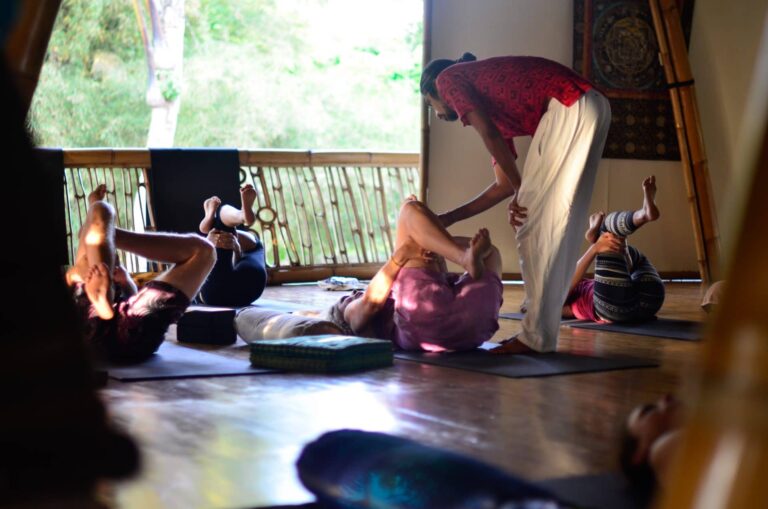
Looking for the best Yoga Teacher Training in Bali is exciting, and a little overwhelming. Bali is one of the world's most beloved places for yoga, so there is no shortage of schools to choose from. Some trainings genuinely change how you move through life. Others look polished online and fall short once you arrive.
A 200 hour YTT is not a holiday with a yoga class attached. It is close to a month of daily practice and quiet growth: long days in the shala, philosophy and meditation, teaching practice with real people, and room to rest and enjoy Bali in between.
Most people start the same way: open tabs, course fees compared side by side, reviews read late at night, all trying to work out what "best" actually means. This guide offers clear, honest standards to hold any program up against.
A quick overview
1. Start with the location and the daily life you want
You will live in one place for close to a month, so that place shapes how you sleep, recover, and stay focused.
Ubud is Bali's inward, jungle-and-rice-field heart, with a strong wellness culture, though busy in peak season. Canggu suits a livelier pace: cafes, surf, a buzzing fitness scene, though some find it distracting mid-training. Sanur is calmer, with long walkable beaches and a local feel, suited to a steady routine and real rest.
Ask yourself what you want your days to feel like outside the training itself: jungle stillness, beach walks, or a busier scene with less quiet time to recover.
2. Look for an established Yoga school with real standards
The clearest difference between a strong school and a short-lived operation is stability: a real, permanent base rather than a rented room for a few weeks, consistent lead teachers, clear student support, and years of operating history behind the marketing.
Legal operation matters too. Courses in Bali have been disrupted when providers were not properly set up, and a professional school is upfront about its cancellation policy and terms. A reasonable benchmark: choose a school that has run Yoga trainings in Bali for at least five years.
3. Decide what Yoga style you want, and what style you need
Many students search for the "best" YTT without being sure what they want to learn, or they want one style but need exposure to others to teach a range of students later. Common styles across Bali's programs include Hatha, for alignment and steady foundations, Vinyasa, for flow and modern class structure, Yin, offered in some programs for slower, deeper practice, and daily meditation and breathwork.
A strong base in both Hatha and Vinyasa tends to produce the most confident new teachers. Read more about how the two complement each other here. Ask any school for the actual daily schedule, since some advertise "multiple styles" that are really one style with a few extra sessions bolted on.
4. Check the 200 hour structure, contact hours, and teaching practice
Not all 200 hour trainings are equal, and the word "hour" deserves scrutiny. Look for around 26 days or more of an in-person 200-hour YTT, a real daily timetable, teaching practice woven throughout rather than one final class at the end, dedicated time for anatomy, alignment, sequencing, and cueing, and a regular meditation practice. In-person training generally gives the strongest support: real-time corrections and personal feedback, hard to replicate through a screen.
5. Confirm certification, Yoga Alliance, and what "certified" means
Some courses call themselves "certified" without being registered with any recognised body. If certification matters to you, look for a school registered with Yoga Alliance offering an RYS 200 aligned program, and confirm what you receive at graduation. Read more about why accreditation matters here.
Extra things people forget to check (but they matter)
Accommodation and recovery. Ask whether the school offers its own accommodation, and how far it sits from the shala. Poor sleep wears down your practice.
Student support. A high standard YTT is about the people as much as the postures. Students should feel seen and genuinely guided.
Real reviews. Read across multiple platforms, not just the school's own site, and look for repeated themes around teacher presence and organisation.
A simple way to choose the best Yoga Teacher Training in Bali
- Do you like the location, and can you picture living there for weeks?
- Is the school established and clear about its policies?
- Does it teach the styles you want to learn and eventually teach?
- Does it offer real contact hours and structured teaching practice?
- Is the certification recognised and right for what you need long term?
Five yeses point to a genuinely high standard training.
Interested in Power of Now Oasis?
We are happy to share our course details, daily schedule, accommodation options, and honest student reviews. Our Yoga Alliance accredited 200 hour YTT runs beachfront in Sanur, blending Hatha and Vinyasa with daily meditation and philosophy, taught by a small, consistent team who know every student by name.
Email us with your timeframe and what matters most, and we will help you find the right fit, even if you are still comparing other schools.