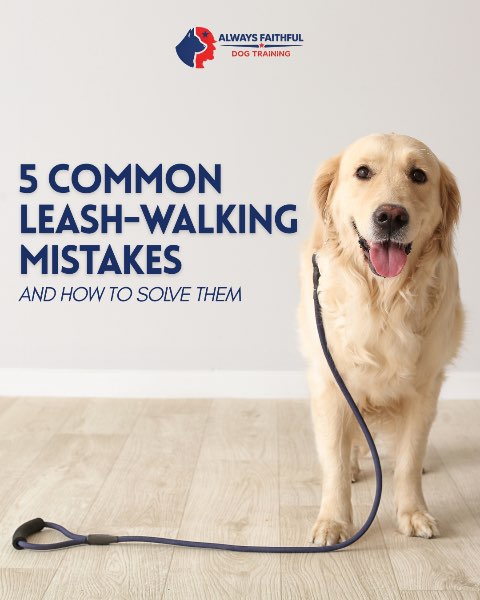
Walking your dog should be enjoyable — not stressful or exhausting. Yet many owners struggle with pulling, lunging, reactivity, or inconsistent leash behavior.
The good news is that most leash issues come down to communication and leadership. When your dog clearly understands expectations and trusts your guidance, walks become calm and controlled.
At Always Faithful Dog Training, we work with owners every day who simply want peaceful, confident walks with their dogs. Here are five of the most common leash-walking mistakes and how to fix them.
1. Letting Your Dog Lead the Walk
When your dog consistently walks ahead and pulls, they begin to assume control of the direction and pace. Over time, this creates tension — both on the leash and in the relationship.
How to Fix It:
Teach your dog to walk beside you, not ahead of you. Structured heel work and clear direction help your dog understand that you set the pace. Leadership-based training focuses on creating calm follow-through rather than constant correction.
2. Being Inconsistent with Expectations
If you allow pulling sometimes but correct it at other times, your dog receives mixed signals. Inconsistent rules create inconsistent behavior.
How to Fix It:
Consistency is key. Every walk should reinforce the same expectations. Clear structure and repetition build reliable habits, which is why private lessons can be so effective — they teach you how to respond consistently in real time.
3. Accidentally Rewarding Pulling
When your dog pulls and still gets to move forward, the pulling is rewarded. Forward motion itself becomes reinforcement.
How to Fix It:
Instead of allowing progress while pulling, reset the walk when tension builds. Leadership-based methods reshape how your dog responds to leash pressure without relying on constant treats or distractions. The goal is calm, attentive walking — not ongoing negotiation.
4. Skipping Foundational Obedience
Leash manners are difficult without a foundation of basic commands. If your dog does not reliably respond to heel, come, or stay, distractions can quickly take over.
How to Fix It:
Strengthen obedience first. A strong foundation gives you tools to redirect attention and maintain control, even in stimulating environments like parks or neighborhoods.
5. Lack of Clear Leadership Leads to Reactivity
When dogs are unsure who is in charge, they may feel responsible for handling situations themselves. This can show up as barking, lunging, stiff posture, or overreacting to other dogs and distractions.
How to Fix It:
Calm, confident leadership changes everything. When your dog trusts you to manage the environment, they no longer feel the need to react. At Always Faithful Dog Training, our private training programs focus on helping owners build that calm authority so walks become structured, controlled, and enjoyable.
Final Thoughts
Leash walking should not feel like a battle. With clear communication, consistent structure, and confident leadership, your dog can learn to walk calmly at your side.
If you are struggling with pulling or reactivity, professional guidance can make the difference. Always Faithful Dog Training provides personalized, leadership-based training designed to help you build reliable obedience and a stronger relationship with your dog — both on and off the leash.