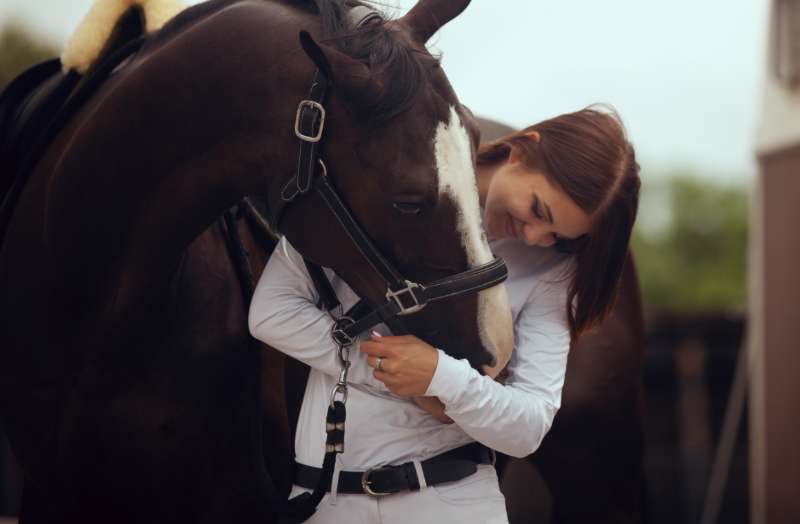
Your horse can't tell you when something hurts, but they will show you. Head shaking, rubbing, refusing the bridle, white hairs at the poll: these aren't quirks or bad behaviour. They're often the only way your horse can say this doesn't fit.
A poorly fitting bridle is one of the most overlooked causes of training problems in Australian horses. The good news is that almost every bridle fit problem is fixable once you know what to look for.
How to fit a bridle: the basics
A well-fitted bridle sits comfortably behind the ears, has a browband flat against the forehead, allows four fingers (sideways) at the throatlash, and shows two fingers of space between the noseband and the nasal bone. The noseband itself should sit one to two fingers below the cheekbone. For bitted bridles, the bit creates one soft wrinkle at the corners of the mouth.
If anything is off, watch for these signs.
10 signs of a poor bridle fit
1. Head shaking when riding.
Often caused by poll pressure, a tight browband pulling the headpiece into the ears, or a noseband on the unsupported nasal bone. Loosen each strap one hole at a time and check.
2. White hairs at the poll, browband or noseband.
These are pressure scars and they're permanent. Stop using the bridle and switch to a wider, padded, anatomical alternative.
3. Rub marks, sores or bald patches.
Common behind the ears, at the corners of the mouth, and under tight nosebands. Check the noseband isn't sitting on soft cartilage, and soften stiff leather with conditioner.
4. Bridle shyness or refusing the bit.
Usually points to a crownpiece that pinches the ears as it goes over. An anatomical headpiece with shaped ear cutouts solves this for most horses.
5. Excessive chewing, gaping or tongue evasion.
The bit may be too low or the noseband too tight. Adjust the bit to one soft wrinkle and allow two fingers under the noseband.
6. Reluctance to flex or come onto the bit.
A tight throatlash restricts flexion at the poll. A flash noseband angled wrongly digs in when the horse rounds. Check all straps with the head lowered, not just at halt.
7. Uneven contact or a one-sided horse.
Stand in front of your horse and check the browband, bit rings and cheekpiece buckles are level. If they have to be on different holes for the bit to sit straight, the bridle is the wrong shape for your horse's head.
8. Ears pinned during tacking up.
Face-pulling and grumpy faces when the bridle goes on are pain anticipation, not attitude. Check every contact point.
9. The bridle slides or sits crooked even when buckled correctly.
This usually means the size combination is wrong. Most horses fall between standard sizes, needing a cob crown with full cheeks, or vice versa. This is where mix-and-match bridles genuinely solve the problem.
10. Performance has gone backwards for no clear reason.
An almost-but-not-quite-right bridle creates low-grade discomfort that shuts down freedom of movement. If saddle, teeth and vet checks are clear, reassess the bridle from scratch.
When to consider a custom bridle
If you've worked through the list and something still isn't right, the issue is almost always that your horse's head doesn't match the standard pony, cob, full or oversize categories. A custom-built bridle, fitted to your horse's actual measurements, removes most fit problems at the source.
Get a bridle that actually fits
At Flexible Fit Equestrian, every bridle is built to your horse's exact measurements using our mix-and-match system. You choose each component in the size that fits, from anatomical crownpieces to cushioned nosebands and premium English leather cheekpieces.
Browse our Mix & Match bridle builder at ffequestrian.com.au or get in touch with our team for help measuring your horse. Every order is backed by our satisfaction guarantee.