ATO Spindle Motors

Electric Motor Store - New York, NY
ATO advanced CNC spindle motors are evolving beyond traditional machining roles, integrating intelligent technologies that align with Industry 4.0 standards.
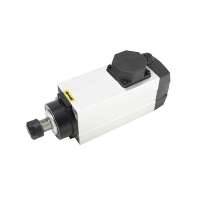
ATO CNC router spindle motors are increasingly equipped with digital encoders, sensors, and closed-loop feedback systems, allowing them to communicate directly with CNC controllers and factory networks. By monitoring key operational parameters such as temperature, load, and speed in real time, ATO spindle motors 18000 rpm/24000 rpm/36000 rpm/40000 rpm/60000 rpm provide actionable data that can be used for predictive maintenance and adaptive performance control. This reduces unplanned downtime, optimizes tool usage, and extends motor lifespan, directly improving overall equipment efficiency.
One of the most significant benefits of ATO smart spindle motors is their ability to enhance automation. In modern production environments, spindles can synchronize seamlessly with automatic tool changers and robotic arms, ensuring precise and timely tool transitions. This synchronization eliminates manual intervention, shortens cycle times, and boosts output quality. For robotic milling stations and smart CNC routers, these capabilities enable continuous, highly accurate machining with minimal human supervision.
The applications of ATO 1.5 kW/2.2 kW/4 kW/4.5 kW/5.5 kW/7.5 kW/12 kW spindle motors span a wide range of industries. Automated manufacturing cells in automotive, aerospace, and electronics sectors rely on them to maintain consistent quality while meeting high-volume production demands. In addition, ATO ATC spindle, air cooled spindle motor and water cooled spindle motors support flexible manufacturing by adapting spindle speed and torque in real time, depending on the material or machining process. This adaptability makes them well-suited for environments where product customization and quick changeovers are required.
By combining durability with digital intelligence, ATO CNC spindle motors become more than just power sources—they act as integral nodes in smart manufacturing ecosystems. Their ability to deliver both machining precision and operational intelligence makes them essential for factories seeking to stay competitive in the era of automation and Industry 4.0.