The Gold Coast is one of Australia's most stunning coastal regions, but its beauty comes with a price. Sitting squarely in Southeast Queensland's storm corridor, properties here face intense weather year after year. Cyclone-influenced systems, severe thunderstorms, and heavy rainfall events are not rare occurrences, they are a seasonal reality. For homeowners and property managers, understanding how to respond when the skies clear is just as important as knowing how to prepare before a storm hits.
The Hidden Danger That Starts After the Storm Ends
Most people assume the danger passes once the wind dies down and the rain stops. In reality, that is when a new set of problems begins. Storm damage to a property rarely stops at what is visible on the surface. Water finds its way into wall cavities, subfloor spaces, ceiling insulation, and structural timbers long before a homeowner realises anything is wrong. By the time discolouration, bubbling paint, or a musty odour appears, secondary damage has often already taken hold.
Moisture trapped inside a building creates the perfect conditions for mould growth, which can begin developing within 24 to 48 hours of exposure. According to Queensland Health, prolonged mould exposure can lead to serious respiratory issues and other health complications, particularly in children, the elderly, and those with existing health conditions. What starts as a minor roof leak or flooded garage floor can escalate into a full-scale structural and health hazard if it is not addressed promptly and correctly. The cost of remediation compounds rapidly the longer the problem is left unattended, making early professional intervention one of the most financially sound decisions a property owner can make.
Why Professional Assessment Makes All the Difference
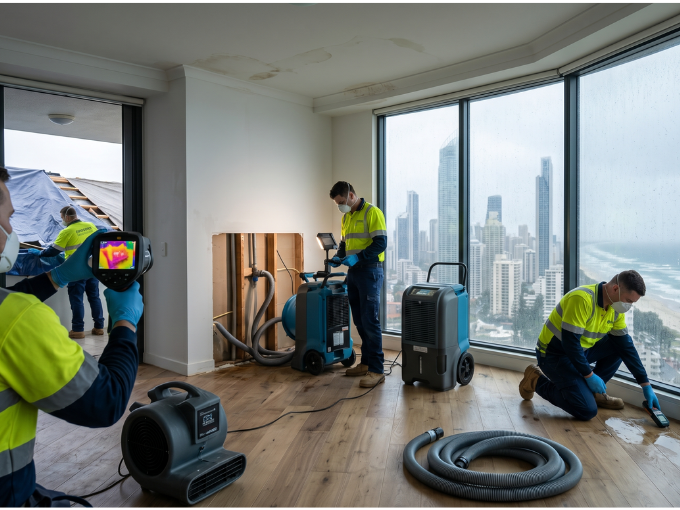
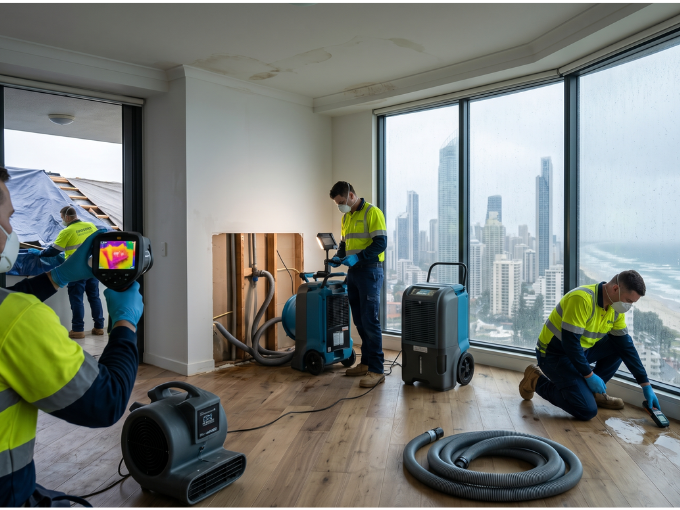
This is precisely why engaging qualified professionals for storm damage restoration in Gold Coast is one of the most important decisions a property owner can make after a major weather event. Certified restoration teams bring more than just labour — they bring thermal imaging equipment, industrial-grade moisture meters, and structural drying systems that simply are not available to the average homeowner. They can identify water intrusion that is completely invisible to the naked eye, map the full extent of damage, and create a documented scope of work that is critical when lodging an insurance claim.
Beyond the technical expertise, professional restorers understand the local building environment. They know how Gold Coast homes are constructed, how the subtropical climate affects drying times, and which materials are most vulnerable to prolonged moisture exposure in this specific region. That local knowledge translates directly into faster, more effective restoration outcomes.
Common Types of Storm Damage Across Gold Coast Properties
Storm damage in this region tends to follow predictable patterns, and knowing what to look for can help property owners act faster and communicate more effectively with both their insurance provider and their restoration team.
Roof and ceiling damage is among the most common outcomes of severe storms. Lifted or displaced roof sheeting, cracked tiles, and compromised flashing all allow water to penetrate ceiling cavities. Once insulation becomes saturated, it loses its thermal effectiveness and becomes a breeding ground for mould. Left unaddressed, saturated ceiling materials can also become dangerously heavy and pose a collapse risk.
Flooded interiors occur when stormwater overwhelms drainage systems or when external floodwaters enter through ground-level entry points. Even shallow flooding can cause significant damage to flooring, skirting boards, cabinetry, and electrical systems. Floodwater also carries contaminants that require specialised cleaning and sanitisation beyond what standard drying alone can achieve.
Structural movement from high-velocity winds can compromise the integrity of load-bearing walls, window frames, and door openings. These issues may not be immediately obvious but can worsen significantly over time if not identified and addressed. A professionally conducted structural assessment after a major storm event is the only reliable way to detect these less visible but potentially serious consequences.
Debris impact from fallen trees, branches, or airborne materials can cause sudden and severe damage to roofs, windows, and external cladding, creating immediate pathways for water entry. Beyond the visible impact point, the resulting water intrusion can travel considerable distances inside the building before it is detected.
Acting Fast Protects Your Investment and Your Health
Time is the critical factor in any storm damage scenario. The longer moisture remains inside a structure, the more extensive and costly the damage becomes. Materials that could be dried and salvaged within the first 48 hours may need full replacement after 72 hours or more. Timber framing, engineered flooring, and plasterboard are particularly sensitive to prolonged moisture exposure, and the costs associated with replacing rather than restoring these materials can be substantial.
From a financial standpoint, prompt professional intervention almost always reduces the total cost of restoration. Insurance providers also respond more favourably to well-documented, swift remediation efforts. According to the Insurance Council of Australia, storm events consistently rank among the most significant categories of residential and commercial property claims in Queensland. Having a professional restoration report from the outset strengthens a claim and reduces the likelihood of disputes over coverage. Attempting to manage the damage independently before an assessor has reviewed the property can in some cases inadvertently complicate the claims process.
What to Expect From a Professional Restoration Process
Understanding the restoration process helps property owners feel more in control during a disorienting time. A professional team will typically begin with a thorough site inspection and moisture mapping, followed by the removal of any standing water using extraction equipment. Industrial air movers and dehumidifiers are then deployed to systematically dry the structure from the inside out, a process that can take several days depending on the severity of the damage.
Once the structure is confirmed dry, any affected materials that cannot be salvaged are carefully removed and disposed of. The space is then treated with antimicrobial agents to prevent mould growth before reinstatement work begins. Throughout this process, reputable restoration companies maintain detailed records including photos, moisture readings, and daily progress logs, all of which serve as valuable documentation for insurance purposes.
Choosing the Right Restoration Partner
Not all restoration companies offer the same level of service, and the difference becomes especially apparent after a significant weather event when demand for qualified teams is high. When selecting a provider after storm damage, property owners should look for teams that hold relevant industry certifications, use evidence-based drying and remediation protocols, and provide clear written documentation of their work at every stage.
The best providers will offer emergency response availability, given that storm damage rarely happens at a convenient time. They will also communicate clearly with both the property owner and the insurance assessor, making the entire process as smooth as possible during what is inevitably a stressful period. Transparency around pricing, timelines, and methodology from the outset is a reliable indicator of a professional and trustworthy operation.
Conclusion
Living on the Gold Coast means accepting that severe weather is part of life. What property owners can control is how swiftly and strategically they respond when it strikes. Professional restoration is not a luxury — it is a necessity that protects the structural integrity of the building, safeguards the health of its occupants, and preserves the long-term value of the investment. Whether dealing with a minor roof leak or extensive flood damage, the sooner qualified help is engaged, the better the outcome for the property and everyone inside it.