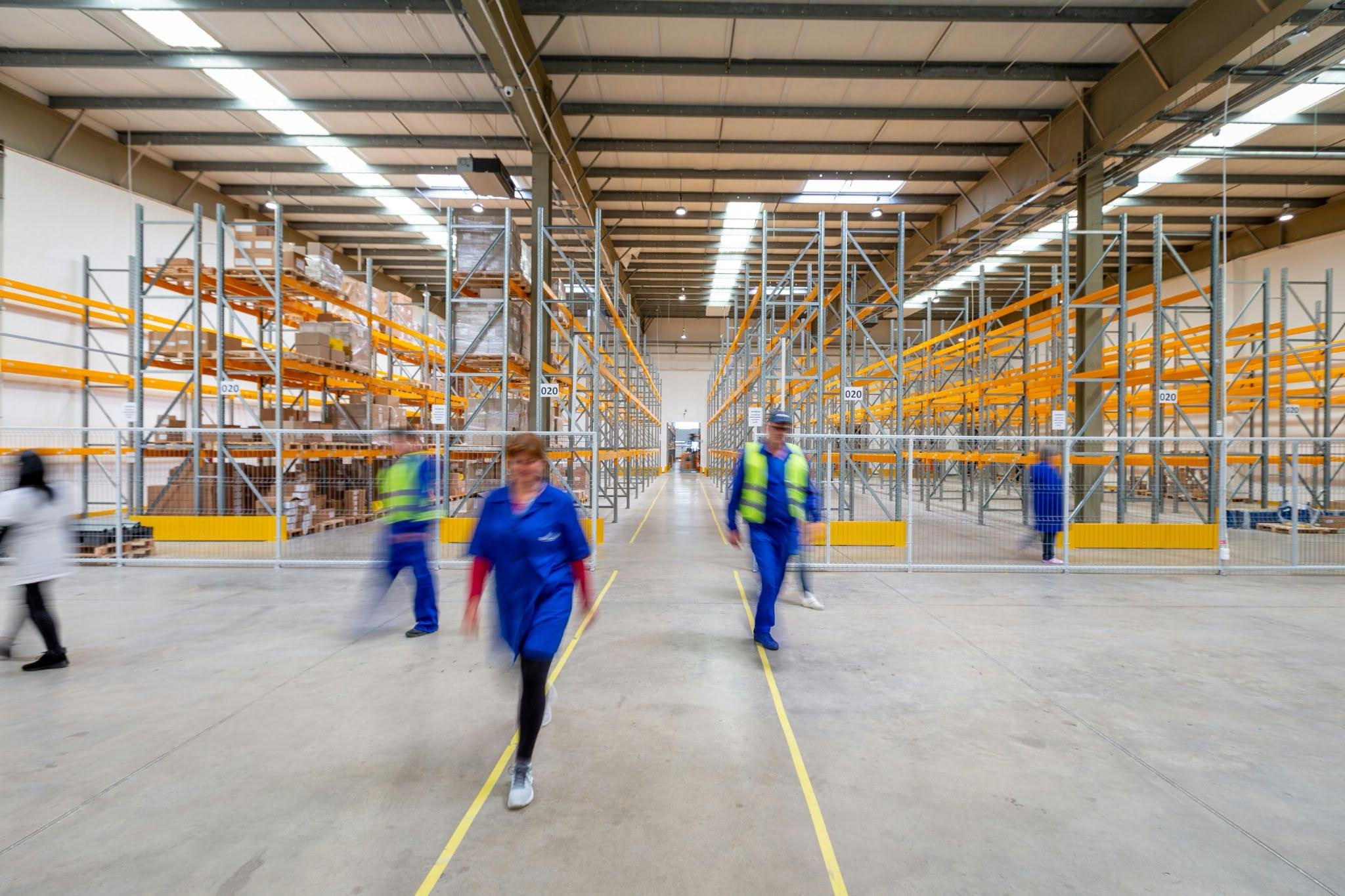
End-of-lease warehouse makes good work succeed or fails on floor readiness and safety. Anchor bolt removal carries the most risk because leftover steel creates trip hazards, forklift shocks, and disputes that cost more than proper extraction.
If you manage a warehouse tenancy or strip-out project, you know the pressure. Landlords expect flush concrete at handover, and Australian safety laws require safe walking and driving surfaces during the work.
Clear scope, dust control, and measurable finish standards keep handover on track. Without them, a small anchor hole can turn into rejected patches, delayed bond release, and extra labour.
Key Takeaways
Fast, clean anchor removal protects safety, schedule, and lease outcomes. These points capture the issues that matter most before work starts.
- Professional extraction reduces safety risk. WorkSafe Victoria requires businesses to control trip hazards, including obstructions and uneven surfaces on factory and warehouse floors.
- Forklift stability depends on floor flatness. WorkSafe Victoria warns that a height difference above 20 mm can contribute to forklift instability and incidents.
- Silica compliance is essential. The Australian workplace exposure standard for respirable crystalline silica is 0.05 mg/m³, and Victoria recommends a lower 0.02 mg/m³ guidance level.
- Lease clauses demand full reinstatement. Most Australian commercial leases require tenants to remove fixtures and make good damage before handover.
- Proper patching prevents long-term slab damage. Corroding embedded steel expands, cracks the concrete cover, and can lead to spalling later.
- Sequencing cuts downtime. Zoning work by aisle and shift helps outbound operations continue while floors are remediated in stages.
What Warehouse Make Good Work Means in Australia
A good scope starts with the lease, not the contractor quote. Australian commercial leases usually require tenants to remove racking, bollards, conveyors, and other fixtures, then restore floors to a stated condition.
The key parties are the outgoing tenant, the landlord or agent, and the make good contractor. Final acceptance happens when the slab meets agreed standards for flatness, finish, cleanliness, and hazard removal.
What Is an Anchor Bolt and Why Removal Matter
An anchor bolt is a fixing that locks equipment into the concrete slab. Common post-installed types include wedge, sleeve, and adhesive anchors used for racking, bollards, conveyors, and barriers.
Leaving them behind creates protrusions, voids, and hidden steel that can crack the slab later. SafeWork NSW says walking surfaces should stay smooth, even, and level, which is why full extraction beats a rough cut in most handovers.
Risk Snapshot: Where Leftover Anchors Hurt You
Leftover anchors raise safety, legal, and cost risks at the same time. WorkSafe Victoria notes that uneven flooring, including level differences above 20 mm, can contribute to forklift instability and incidents.
Pedestrians in pick aisles, staging zones, and loading docks face the same exposure every shift. If a hazard remains at handover and someone is hurt, insurance and liability questions get harder quickly.
Make Good Obligations for Floors
Clear floor standards prevent arguments at the end of the lease. Some leases ask for original condition, while others ask for base building condition, so you need a written agreement on what the landlord will accept.
The tenant usually pays for reinstatement, patching, and defect correction. Put flatness limits, patch finish, colour variance, and inspection evidence into the scope before work begins.
Silica Dust Controls When Removing Anchors
Silica control is not optional when concrete is cut, drilled, or ground. Respirable crystalline silica is a fine dust that can lodge deep in the lungs, and the national exposure standard is 0.05 mg/m³ over eight hours, while Victoria recommends a lower 0.02 mg/m³ guidance level.
Safe Work Australia lists engineering controls, such as on tool extraction with H-class vacuums and wet methods, where practical. Dry sweeping is banned, respirators are used when other controls cannot do enough, and indoor work may need air monitoring.
How Professionals Remove Anchors Without Damaging Slabs
The best removal method clears the hazard while keeping the slab sound for a small, durable repair. Contractors usually choose between pull extraction, cut and core removal, or shearing and grinding below the surface.
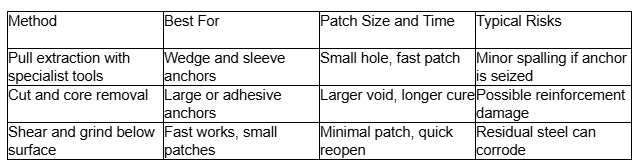
Professional extraction tools usually shrink the patch footprint and reduce cure time compared with coring alone. Matching the method to the anchor type and handover window keeps the job moving and limits rework.
Surface Restoration and Patching That Lasts
A flush patch fails fast if the repair product or prep work is wrong. Non-shrink cementitious grout or epoxy repair mortar is commonly used to fill anchor holes and restore a hard-wearing surface.
Clean and key the hole, apply primer if the product requires it, place the repair, remove trapped air, and finish flush. Cure time, patch hardness, slurry control, and colour match all affect whether the area is ready for forklifts and sign off.
Forklift Ready Acceptance Criteria
Measurable acceptance criteria stop last-minute disputes. Good checks include a 300 mm straightedge test with no rocking, zero steel protrusions above the slab, sound patch edges, and hardness suited to traffic.
A photo record of each location before extraction, during repair, and after curing makes sign-off easier. Add visual checks for smoothness, slip resistance, and clean edges so the landlord sees a complete finish.
Get Make Good Done Right
Early planning gives you the best chance of a first pass handover. Book extraction and patching before the final rush so rack removal, floor cleaning, and inspection can happen in a controlled order.
For time-critical warehouses, make good work, delays usually come from hard-set fixings, tight reopening windows, patch curing limits, and the need to keep aisles safe for pedestrians and forklifts while other contractors finish cleaning, inspections, defect rectification, and landlord walkthrough prep before handover.
In those urgent site situations, professional anchor bolt extractor services can minimise downtime and help leave concrete floors forklift safe at handover.
FAQ
Most delays come from unclear scope, curing time, and missing proof of finish quality. These answers address questions that block sign-off.
When should I hire a professional instead of removing anchors myself?
Hire a professional when you have more than a dozen anchors, adhesive fixings, indoor silica risk, or a hard handover date. A specialist team brings extraction tools, H-class vacuums, and repair materials that reduce slab damage and rework.
How long before forklifts can drive over patched areas?
Cure time depends on the product, patch depth, and temperature. Many cementitious grouts allow foot traffic within a few hours and forklift traffic after about 24 hours, but the data sheet decides.
Who is responsible for colour-matching patches to the existing slab?
The contractor usually handles colour matching unless the lease or scope says otherwise. Agree on acceptable variation before work starts, because a structurally sound patch can still fail visual inspection.
Should I remove adhesive residue from the slab surface?
Yes, residue can stop new repair material from bonding and may be marked as incomplete make good. Mechanical removal is common, and solvent cleaning may be needed for stubborn epoxy traces.