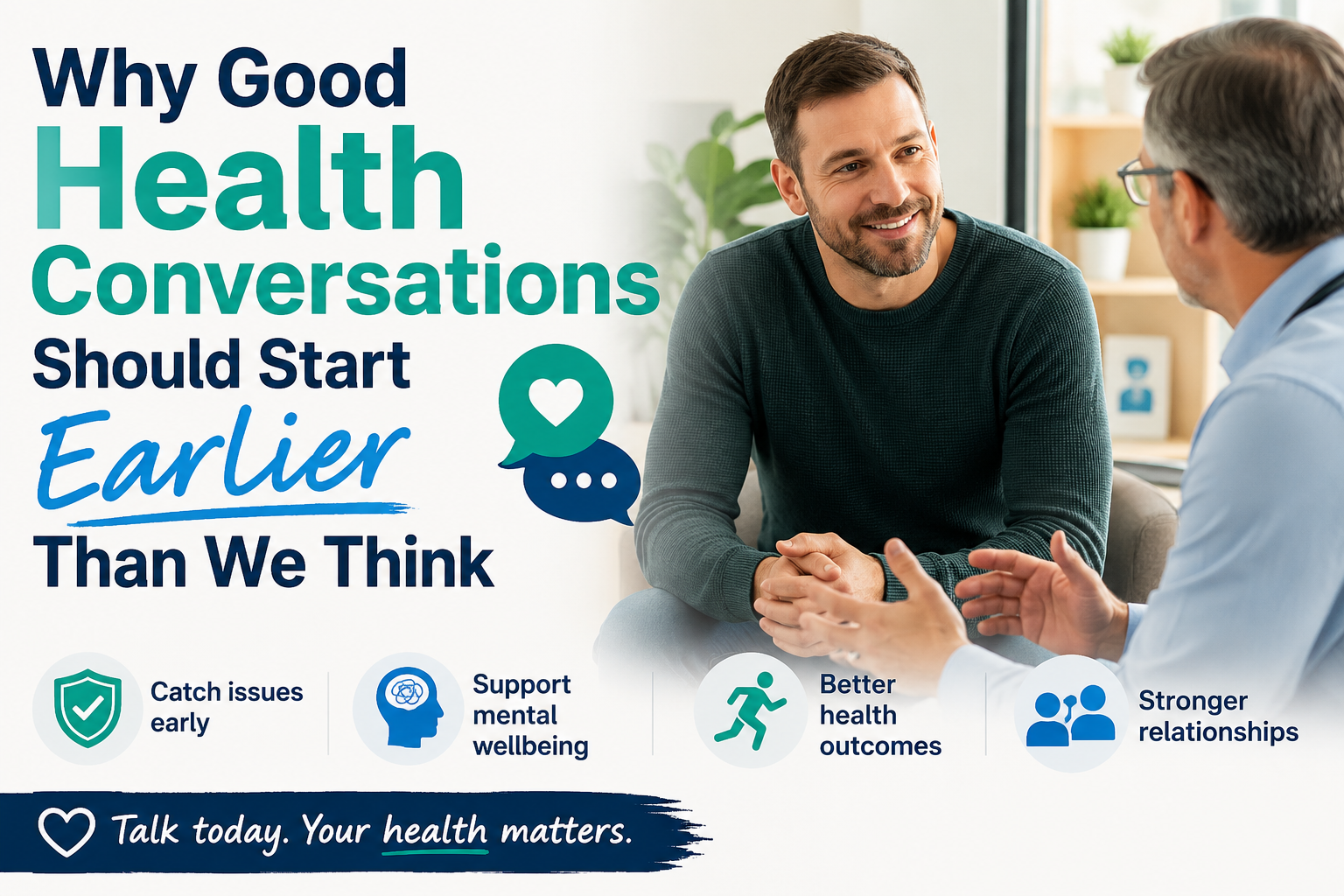
A lot of people are surprisingly good at ignoring small health concerns until they become impossible to ignore. A niggle gets brushed off as “probably nothing”. Tiredness becomes normal because life is busy. Mood changes are blamed on work. Sleep problems are treated like an annoying phase. And because none of these things feel dramatic enough at first, they can sit in the background for months, sometimes years, before anyone properly talks about them.
That habit can be especially common among men, partly because many grew up with the idea that health is something you deal with only when something is clearly wrong. The trouble is, plenty of health issues don't begin with a dramatic warning sign. They build quietly, and the earlier they're discussed, the easier they can be to understand and manage. That's why accessible mens health services matter — not just for serious problems, but for the everyday questions and changes people often hesitate to bring up.
The “Wait and See” Approach Has Its Limits
There's nothing unusual about hoping a concern will sort itself out. Most people have done it at some point, especially when the issue feels awkward, vague or inconvenient to explain. Maybe it's a change in energy, a concern about sexual health, a dip in mood, a fertility question, or simply the sense that your body isn't behaving quite the way it used to.
The problem with waiting too long is that uncertainty tends to create its own stress. What starts as a small question can become something people privately worry about, search online late at night, or avoid because they're nervous about what the answer might be. A proper conversation with a health professional doesn't always lead to a major diagnosis, and often that's the point; sometimes it simply gives someone a clearer idea of what's going on and what to do next.
Earlier conversations can also make health feel less intimidating. Instead of seeing appointments as something reserved for emergencies, they become a normal part of looking after yourself, like servicing a car before it breaks down rather than waiting on the side of the road with smoke coming from the bonnet.
Health Is Connected to Everyday Life
It's easy to think of health as separate from the rest of life, but it rarely works that neatly. Sleep affects patience, concentration and appetite. Stress can show up physically. Relationship tension can be tied to mental health, confidence or sexual wellbeing. Work pressure can make exercise, food choices and medical appointments feel harder to prioritise.
That's why conversations about health need room for context. A symptom is often only one part of the picture, and people are more likely to speak honestly when they don't feel rushed, judged or dismissed. For men in particular, creating space for plain, practical conversations can make a big difference, because the first barrier is often not the problem itself but the discomfort of starting the discussion.
Families and friends can help here too. A casual “Have you thought about getting that checked?” might be the nudge someone needs, especially if it's said without drama. The aim isn't to pressure people or make every small change sound alarming; it's to make health feel normal enough to talk about before things get harder.
Good Information Beats Guesswork
The internet has made health information easier to find, but not always easier to interpret. One search can produce everything from sensible guidance to worst-case scenarios, and it's very easy to come away either unnecessarily frightened or falsely reassured.
Good information helps people ask better questions. It gives them language for what they're experiencing, points them towards appropriate support, and helps separate common concerns from ones that need prompt attention. It also reminds people they're rarely the only person dealing with whatever they're worried about, which can be comforting in itself.
Starting the Conversation Is Often the Hardest Part
Looking after your health doesn't have to mean overhauling your life overnight. Sometimes it starts with booking the appointment, mentioning the thing you've been avoiding, or admitting that something has changed and you'd like to understand why.
The earlier those conversations happen, the more options people usually have. More importantly, they stop health from becoming a private guessing game. Whether the answer is simple reassurance, a lifestyle adjustment, further testing or ongoing support, knowing is almost always better than quietly wondering.