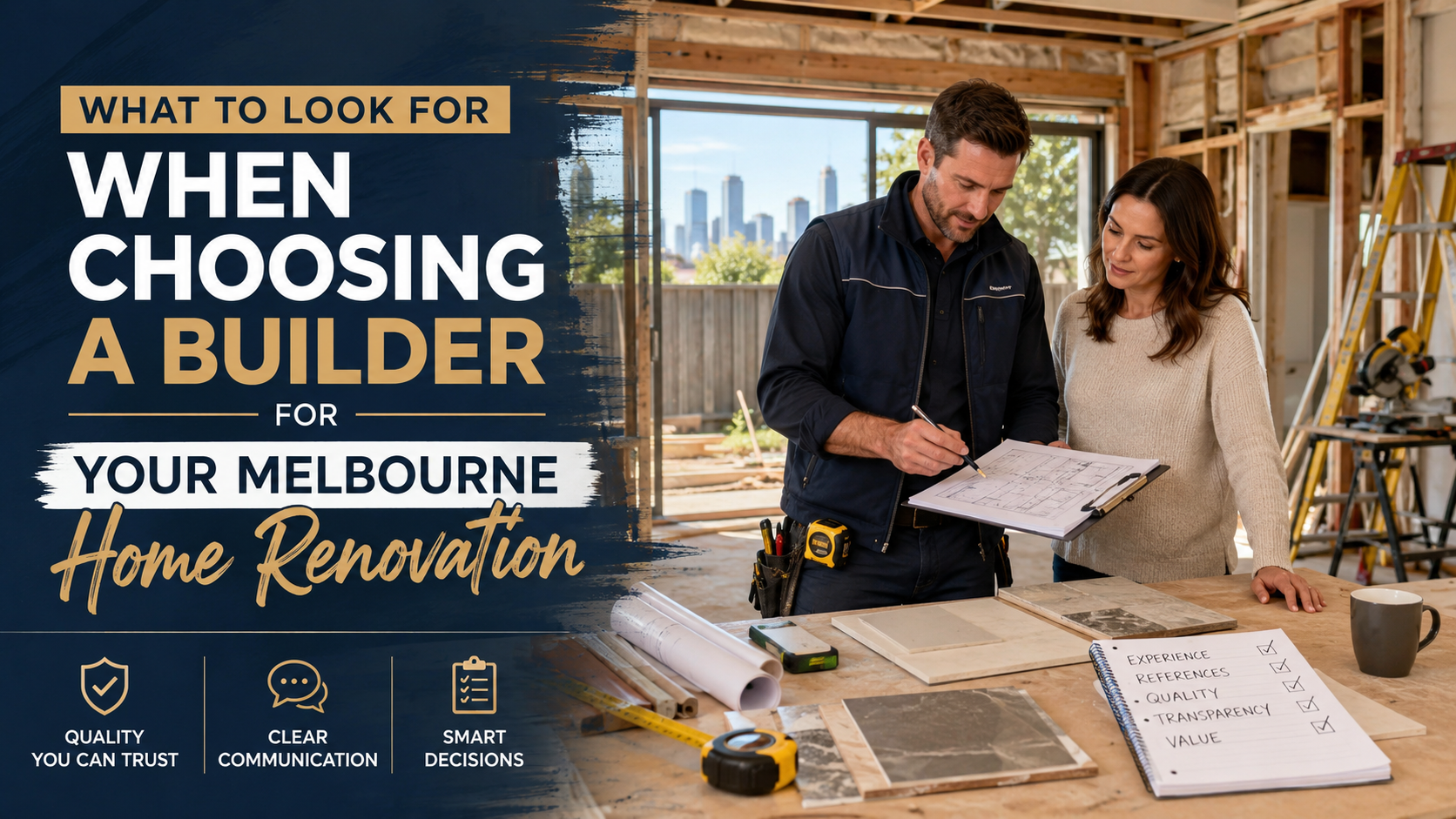
Choosing a builder is one of those jobs that looks straightforward until you start getting quotes.
One builder gives you a figure that seems manageable. Another is considerably higher. Someone else says the work can be finished in a few months, while another builder wants more time. If you have never renovated before, it is difficult to know whether you are comparing three genuinely different approaches or simply three different ways of pricing the same work.
That is why the cheapest quote should not automatically win.
Your builder will be involved in decisions that affect the cost, quality and progress of the renovation. They will also be working around an existing house, which can bring surprises once walls, floors or fittings are opened up. For Melbourne homeowners, the property itself matters too. An older weatherboard house, a brick home from the middle of last century and a more recent suburban property can present very different challenges.
If you are researching a Melbourne builder for renovation or extension work, start by looking beyond the finished-project photos. Experience, credentials, communication, pricing and the contract all deserve a proper check.
Find a Builder With the Right Renovation Experience
A builder can be experienced and still be the wrong fit for your project.
New home construction and renovation work are not identical. With a new house, much of the site and construction process can be planned from the beginning. A renovation starts with something that already exists, and that existing structure does not always behave as expected.
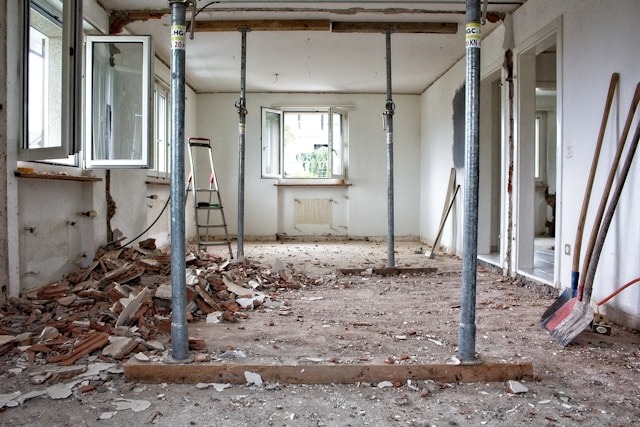
A wall might contain services you did not know were there. Previous alterations may not match the original plans. Floors can be uneven. Old materials may need to be replaced rather than simply covered up.
Ask About Similar Projects
The first useful question is not "How long have you been building?" It is "Have you done this kind of renovation before?"
If you are planning a rear extension, ask about previous extensions. If you want to change the layout of a kitchen and living area, find out whether the builder has handled structural changes of that kind. For a bathroom renovation, ask about similar projects rather than assuming experience with new homes automatically covers everything involved.
Ask to see examples of completed work where possible. More importantly, ask what those projects involved. A photograph of a beautiful finished kitchen tells you very little about how the builder dealt with the awkward parts of getting there.
A good conversation may include problems that appeared during construction and how they were resolved. That is useful information.
Consider the Property Itself
Your home's age and construction should form part of the discussion.
Older Melbourne houses may have been altered several times over the years. You could be dealing with additions that were built at different times, older plumbing or electrical systems, or materials that require specific handling.
You do not need to find a builder who has renovated an identical house. You do need someone who understands that an existing property can require investigation before the final scope is settled.
If the builder immediately gives you a firm answer about every hidden condition without inspecting the property properly, I would ask more questions.
Compare Quotes by Looking at What You Are Actually Getting
Three quotes are only useful if they are based on comparable information.
Consumer Affairs Victoria recommends getting at least three written quotes and comparing what each one covers. It specifically warns that the cheapest quote may leave out items or allow only for basic materials and finishes.
That is easy to miss when you are staring at the final number.
Read the Inclusions and Exclusions
Go through each quote carefully and ask the builder to explain anything you do not understand.
Check which materials and fixtures have been allowed for. Look at preparation work, demolition, waste removal and other costs that can be easy to overlook. If one builder has included a particular finish while another has used a basic allowance, the two prices are not really comparable.
This is also a good point to ask about plans and specifications. The clearer your requirements are before builders prepare quotes, the easier it is to compare their proposals.
A local business directory can also help during the research stage. For example, Top4's building and construction listings can be used as another starting point when researching businesses and building a shortlist.
Understand Variations Before Work Starts
Renovation projects can change after construction begins.
Sometimes the homeowner decides to change something. Other times demolition reveals a problem that could not have been seen beforehand. Either situation can affect the price.
Ask exactly how variations are handled. Will you receive a written price before extra work begins? Who needs to approve it? How will the change affect the schedule?
A vague answer is not helpful when the project is already underway.
You should also understand the payment schedule. Consumer Affairs Victoria provides specific guidance on deposits and progress payments for domestic building work, so it is sensible to check the current requirements before signing or paying.
Check Registration, Insurance and References
Once you have a shortlist, start checking the businesses themselves.
A polished website is not enough. Neither is a stack of positive reviews. You are hiring someone to carry out significant work on your property, so their credentials and business arrangements need to be checked before you commit.
Verify Registration and Insurance
For substantial domestic building work in Victoria, registration and contract requirements apply. Consumer Affairs Victoria states that a major domestic building contract is required for work over $10,000, including renovations, alterations and extensions.
You can also use the Victorian Building Authority's consumer resources to find a registered building practitioner and check information relevant to engaging a builder. The regulator's current website provides guidance for consumers on renovations, building permits and practitioner registration.
Insurance is another question to ask before paying a deposit. Consumer Affairs Victoria advises homeowners to obtain the relevant certificate of currency for domestic building insurance where required.
If you are unsure about what applies to your particular project, get independent advice. Guessing is not worth it.
Speak to Previous Clients
References can tell you things a portfolio cannot.
Ask previous clients whether the builder communicated clearly when problems came up. Find out how changes were handled and whether the final cost differed from the original expectations. You can also ask whether the project stayed reasonably close to the agreed timeframe.
Then ask whether they would hire the builder again.
That question tends to cut through the polished review language.
You can also research builders through local business listings before contacting them. Top4 provides another place to browse building businesses when you are comparing potential companies, although directory information should be treated as a starting point rather than a replacement for checking registration and references.
Pay Attention to Communication and Project Management
You can learn a lot about a builder before they have lifted a single floorboard.
Notice how they handle your questions. Do they explain things in plain language? Do they return calls? Do they tell you when they need more information? If communication is already difficult during the quoting process, do not assume it will magically improve after the contract is signed.
Find Out Who Will Run the Project
Ask who your main contact will be once construction starts.
The person who prepares the quote may not be the person supervising the site every day. Find out who coordinates trades, who deals with problems and how progress updates are provided.
There is no perfect communication system for every homeowner. Some people prefer regular calls. Others want written updates. What matters is having an agreed way to keep track of decisions and changes.
You should also ask how the builder handles subcontractors and scheduling. A renovation involves several different trades, and their work needs to happen in the right order. A delay in one part of the project can affect several others.
Discuss Delays and Living Through the Renovation
Ask for a realistic timeframe rather than the most attractive one.
Materials can arrive late. Work can uncover unexpected conditions. Weather can affect certain jobs. A builder who explains what could cause delays is giving you information you can actually use.
If your family plans to remain in the house, discuss that too.
Ask which rooms will be unavailable and how access to the property will work. A kitchen renovation can affect meals. Bathroom work can create an obvious problem. Dust and noise become much harder to ignore when you are living beside them every day.
It is better to understand the disruption before construction starts.
Read the Contract Before You Sign
This is the part people rush because they are excited to get moving.
Don't.
The contract should clearly reflect what you have agreed with the builder. Consumer Affairs Victoria recommends that homeowners review the contract, plans, specifications and other details carefully before signing. For major domestic building work, the contract must set out key information including the scope of work, contract price, payment arrangements and relevant dates.
Make Sure the Scope Is Specific
Read the plans, quote and contract together.
Check the materials, fixtures and finishes. If you have chosen a particular appliance, tap, tile or other product, make sure the relevant details are recorded rather than relying on a conversation from several weeks earlier.
Look at exclusions too.
If something you expected to be part of the renovation is not included, you want to find that out before work begins.
Also check how changes to the contract will be approved and recorded. A renovation can involve plenty of decisions, and you do not want an informal conversation to become an argument about what was or was not agreed.
Check Responsibilities Before Construction Begins
Make sure you know who is responsible for permits, inspections and other project requirements. The builder may handle some matters while you or another professional may be responsible for others.
You should also understand the expected start and completion dates and how delays are treated under the contract.
If anything is unclear, ask for an explanation before signing. For a significant renovation, getting independent legal advice on the contract can also be sensible. Consumer Affairs Victoria specifically recommends considering legal advice before signing a major domestic building contract.
Conclusion
Choosing a builder for a Melbourne home renovation takes a little more work than comparing three prices.
Look for experience that matches your project and your existing property. Compare quotes based on what they actually include, then check registration, insurance and references. Pay attention to communication because you will be dealing with the builder throughout the project, not just during the quoting stage.
Finally, read the contract carefully and make sure the scope, costs, responsibilities and process for changes are clear.
The renovation will be disruptive enough. Your choice of builder should not make it harder than it needs to be.